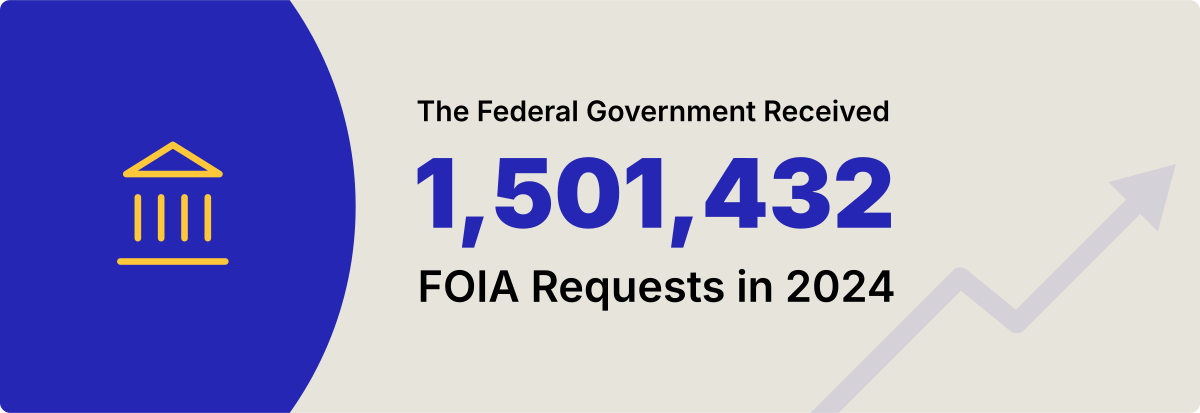
The Freedom of Information Act (FOIA) is facing one of the most challenging periods in its history. The federal government received 1,501,432 FOIA requests in 2024, a record high, according to the U.S. Department of Justice (DOJ).
Mass layoffs and FOIA office closures continue to create significant challenges. Many staff members from non-FOIA roles and other federal agencies have had to step in and fill the gap, even as they deal with an expanding universe of data types and the risks posed by delays and denials.
Overwhelmed Agencies and Litigation Risk
Dwindling staff and office closures at agencies have not only created bottlenecks but have also increased litigation risk. The New York Times filed several FOIA lawsuits against the U.S. government, and a New York Times lawyer suggested a “reduction in forces” among FOIA officers may be one of the driving forces behind their litigation.
Federal agencies are required to respond to FOIA requests within 20 business days. Given the increasing backlogs, the sheer volume of paperwork involved in responding to requests, and ongoing understaffing, agencies are likely to miss more deadlines and risk lawsuits.
Outdated Processes and Increasing Data
Fewer FOIA offices and workers are not the only problem. Manual processes and outdated legacy systems make it difficult to track and respond to FOIA queries, increasing response times and leading to human and compliance errors. Agencies must sort through diverse data sources — including email and chat logs, encrypted files, video, and body camera footage. Weighed down by legacy technology, disconnected workflows, and paper-based or basic digital tools, it’s no wonder many agencies struggle to meet legal and regulatory requirements.
Modernization and Technology
To address the complex challenges of the FOIA lifecycle, many agencies are turning to eDiscovery platforms, which are built for managing large volumes of diverse data types and establishing efficient data-based workflows. Mature eDiscovery technology can be used to simplify FOIA request processing, expedite reviews, and ensure rapid delivery of accurate information. It can also make it easy for agencies to set up citizen-facing online portals that offer request tracking and instant updates, making the process accessible and engaging to constituents.
An End-to-End eDiscovery Platform for Speed and Transparency
Casepoint’s end-to-end eDiscovery platform eliminates the need for limited-capability legacy solutions or multiple solutions. It integrates FOIA workflow tracking and management, a client portal, and compliance reporting so agencies can manage every part of the FOIA process.
-
Automatically populate requests made by the public in their own queue.
-
Conduct extensive reviews of records to evaluate relevance.
-
Quickly group and tag documents with relevant metadata to expedite retrieval and reference.
-
Save time and eliminate manual steps by automating the notification process.
-
Leverage AI-powered redactions with robust quality controls to safeguard accuracy and prevent appeals.
-
Effortlessly monitor progress in responding to FOIA requests and compile timely compliance reports.
A Comprehensive Security Posture
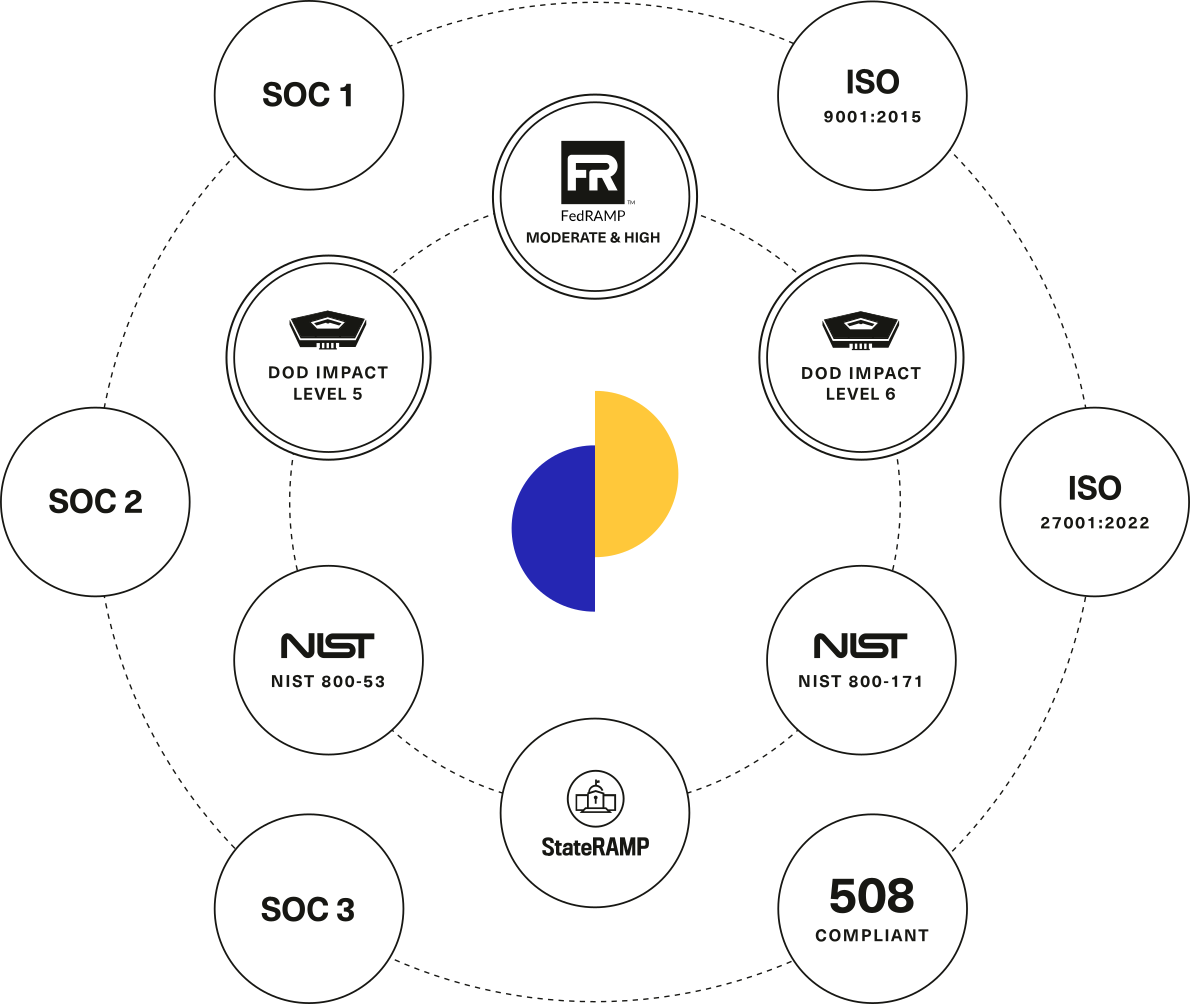
FOIA requests often involve highly sensitive data. At Casepoint, our security credentials are unmatched in the industry, spanning top industry frameworks and certifications.
-
SOC 1 Type II
-
SOC 2 Type II
-
SOC 3
-
ISO 27001:2022
-
ISO 9001:2015
-
FedRAMP® High and Moderate
-
GovRAMP
-
NIST SP 800-53
-
NIST SP 800-171
-
DOD IL4, IL5, and IL6
We maintain these credentials through continuous internal and external audits, risk assessments, and compliance reviews to ensure our controls meet or exceed the most rigorous standards for data protection and regulatory compliance.
Casepoint is committed to continuing to develop innovations to our platform that enhance efficiency, security, and compliance at every step of the FOIA response process. To see how Casepoint can help your FOIA teams be more efficient, please reach out to learn more.

Author
Chief Legal Officer
Ben Tingo is Chief Legal Officer at Casepoint, where he shapes the company’s legal strategy and its use of AI. Before joining the company in 2016, he spent a decade in public and private practice as a civil and criminal defense attorney, representing both individual and corporate clients across diverse practice areas. Ben holds a J.D. from Brooklyn…
Categories:


