
How Advanced Analytics is Transforming eDiscovery
Discover how eDiscovery analytics leverages artificial intelligence (AI) and advanced statistical techniques to extract meaningful insights from vast datasets in legal proceedings. Explore real-world examples, key benefits, implementation strategies, and the future of data-driven legal investigations.
What is eDiscovery Analytics?
eDiscovery analytics applies advanced data analysis techniques—including AI, machine learning, statistical modeling, and natural language processing (NLP)—to electronically stored information (ESI) in legal cases. Unlike traditional manual review, eDiscovery analytics automates the identification of patterns, trends, and critical connections within large datasets, enabling legal teams to:
-
Process vast amounts of data more efficiently
-
Uncover hidden relationships between documents
-
Prioritize relevant evidence for review
-
Reduce human error in document analysis
-
Make data-driven decisions about case strategy
The Role of Artificial Intelligence and Advanced Analytics in eDiscovery
-
Understanding AI in eDiscovery
Artificial Intelligence in eDiscovery simulates human cognitive functions to analyze unstructured data, including:
-
Emails and attachments
-
Instant messages and chat logs
-
Business documents and spreadsheets
-
Social media and web content
-
Audio and video files
AI systems can:
-
Classify documents by relevance and privilege
-
Detect patterns in communication and behavior
-
Predict which files are most critical to a case
-
Identify anomalies that may indicate fraud or misconduct
-
-
Advanced Analytics Models in eDiscovery
Model Type
Application in eDiscovery
Example Use Case
Decision Trees
Classify documents by relevance or privilege
Identifying privileged attorney-client emails
Neural Networks
Detect complex patterns in unstructured data
Finding hidden relationships in chat logs
Logistic Regression
Predict document relevance based on features
Ranking emails by importance to the case
Clustering Algorithms
Group similar documents for batch review
Organizing contracts by type and terms
Natural Language Processing (NLP)
Extract meaning from text data
Analyzing sentiment in internal communications
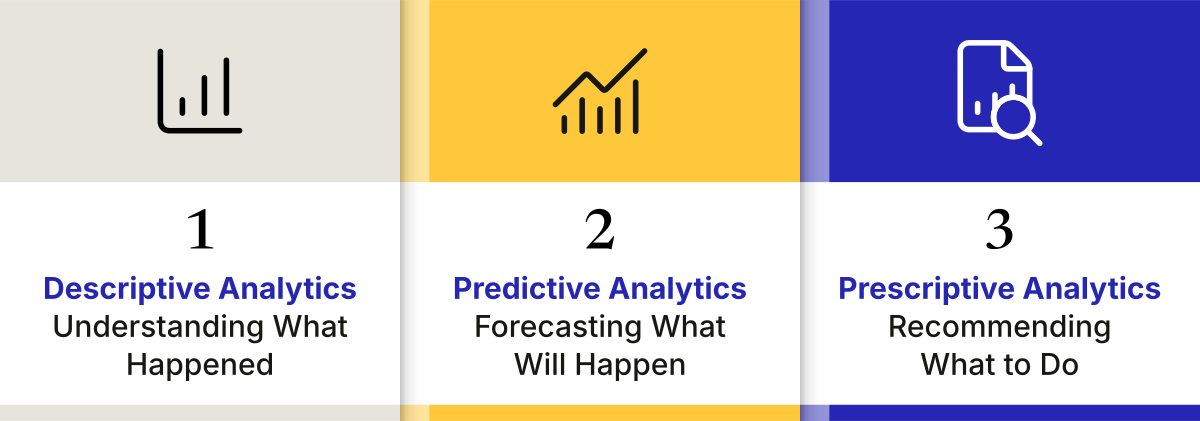
The Three Levels of eDiscovery Analytics
-
Descriptive Analytics: Understanding What Happened
Focuses on historical data analysis to answer:
-
What events occurred?
-
Who was involved?
-
When did key actions take place?
Key Techniques:
-
Data visualization (timelines, heatmaps, network graphs)
-
Frequency analysis (word clouds, term frequency)
-
Communication mapping (email threads, chat networks)
Example: Identifying who communicated with whom and when in a fraud investigation.
-
-
Predictive Analytics: Forecasting What Will Happen
Uses historical data to predict future outcomes, answering:
-
Which documents are most relevant?
-
What risks does this case present?
-
What is the likely outcome?
Key Techniques:
-
Relevance ranking (predictive coding)
-
Risk scoring (identifying high-risk documents)
-
Anomaly detection (unusual communication patterns)
Example: Predicting which documents are most likely to be relevant to a case before full review.
-
-
Prescriptive Analytics: Recommending What to Do
Provides data-driven recommendations for action, answering:
-
What should our case strategy be?
-
How should we allocate resources?
-
Should we settle or go to trial?
Key Techniques:
-
Optimal review strategies (resource allocation models)
-
Case outcome modeling (settlement vs. trial predictions)
-
Cost-benefit analysis (ROI of different review approaches)
Example: Recommending whether to settle or proceed to trial based on evidence strength.
-
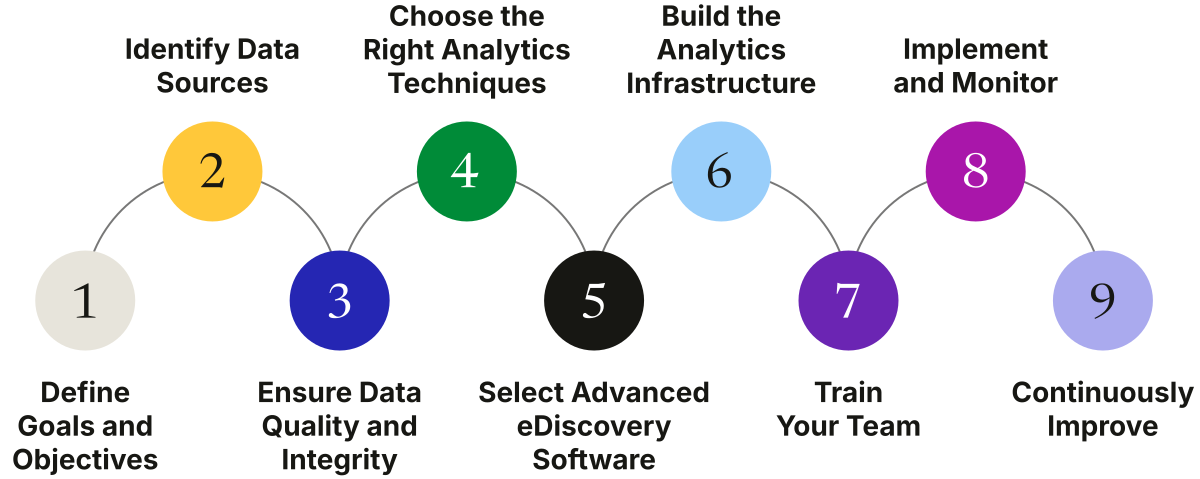
Implementing eDiscovery Analytics: A Step-by-Step Guide
-
Define Goals and Objectives
Determine:
-
What problems need solving (e.g., reducing review time, improving accuracy)
-
What insights are most valuable (e.g., key custodians, critical dates)
-
What metrics will measure success (e.g., review speed, cost savings)
-
-
Identify Data Sources
Common ESI sources for analytics include:
-
Emails and attachments (Outlook, Gmail)
-
Instant messages (Slack, Teams, WhatsApp)
-
Documents (Word, Excel, PDFs)
-
Databases and spreadsheets
-
Social media and web data
-
Audio and video files
-
-
Ensure Data Quality and Integrity
Critical steps:
-
Clean data (remove duplicates, correct errors)
-
Standardize formats (consistent metadata, file types)
-
Validate sources (chain of custody, authenticity)
-
-
Choose the Right Analytics Techniques
Case Type
Recommended Analytics
Tools/Methods
Fraud Investigation
Communication pattern analysis, anomaly detection
Email threading, network visualization
Employment Dispute
Sentiment analysis, keyword expansion
NLP, concept clustering
IP Theft Case
Document similarity, timeline analysis
Clustering, predictive coding
Regulatory Inquiry
Risk scoring, privilege detection
Machine learning models
-
Select Advanced eDiscovery Software
Key Features to Look For:
-
AI-powered predictive coding
-
Email threading and conversation analysis
-
Concept clustering and topic modeling
-
Sentiment and tone analysis
-
Anomaly detection for outliers
-
Visual analytics (timelines, heatmaps)
-
Integration with review platforms
Top eDiscovery Analytics Platforms:
-
Casepoint (AI-driven analytics, predictive coding)
-
Relativity (advanced data visualization)
-
Everlaw (collaborative analytics, NLP)
-
Disco (real-time analytics, cloud-based)
-
Logikcull (automated pattern recognition)
-
-
Build the Analytics Infrastructure
Requirements:
-
Scalable cloud storage for large datasets
-
High-performance processing for fast analysis
-
Secure access controls for sensitive data
-
Audit trails for compliance
-
-
Train Your Team
Essential roles to train:
-
Data scientists (for model development)
-
Legal tech specialists (for tool implementation)
-
Attorneys (for interpreting insights)
-
Paralegals (for applying analytics in review)
-
-
Implement and Monitor
-
Pilot test with a subset of data
-
Refine models based on initial results
-
Track KPIs (accuracy, speed, cost savings)
-
Adjust strategies as needed
-
-
Continuously Improve
-
Stay updated on new analytics techniques
-
Incorporate feedback from legal teams
-
Benchmark against industry standards
-
Explore emerging technologies (e.g., generative AI)
-
Advantages of Using Advanced Analytics in eDiscovery
-
Pinpointing Sensitive Information
AI identifies PII, privileged content, and case-critical data in seconds, reducing the risk of overlooking key evidence.
Example: Quickly flagging all documents containing trade secrets in an IP theft case.
-
Prioritizing the Right Documents
Predictive coding ranks documents by relevance, reducing review time by 40-60%.
Example: Focusing review on the 20% of emails most likely to be relevant in a 10,000-document case.
-
Achieving Work-Product Consistency
Standardized processes ensure uniform quality across all reviews, reducing errors and improving reliability.
Example: Applying the same relevance criteria to all custodian data in a multi-party litigation.
-
Mitigating Risk
Anomaly detection flags unusual patterns (e.g., deleted files, after-hours communications), helping legal teams identify potential misconduct early.
Example: Detecting a sudden spike in data transfers before a key employee’s resignation.
-
Reducing Costs
Automated review cuts manual labor by 50%+, saving $100K+ per large case.
Example: Using AI to cull irrelevant documents before attorney review.
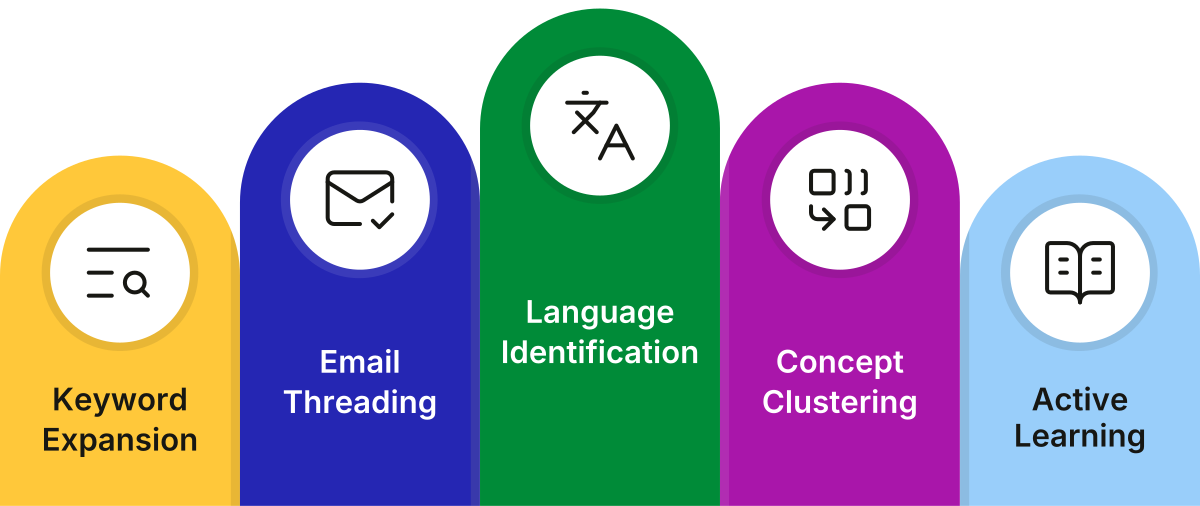
How Advanced Analytics Enhances eDiscovery
-
Keyword Expansion
AI suggests related terms beyond initial search keywords, uncovering hidden connections.
Example: Searching for "bribe" also surfaces "kickback," "payoff," "under the table."
-
Email Threading
Groups related emails into conversation threads, maintaining context and reducing redundant reviews.
Example: Following a complete negotiation thread in a contract dispute.
-
Language Identification
Detects non-English documents for translation or specialized review, ensuring no critical evidence is missed due to language barriers.
Example: Flagging Spanish-language emails in a cross-border investigation.
-
Concept Clustering
Groups documents by topics rather than just keywords, revealing thematic connections.
Example: Identifying all discussions about "Project Alpha" across emails, chats, and memos.
-
Active Learning
Machine learning improves as attorneys code documents, reducing errors and increasing efficiency over time.
Example: The system gets smarter after reviewing 1,000 documents, improving accuracy in the next 10,000.
Real-World Use Cases of eDiscovery Analytics
-
Fraud Investigation
-
Analytics Used: Communication pattern analysis, anomaly detection
-
Outcome: Uncovered off-book payments hidden in encrypted chats.
-
-
Employment Litigation
-
Analytics Used: Sentiment analysis, keyword expansion
-
Outcome: Identified hostile work environment evidence in internal Slack messages.
-
-
Intellectual Property Theft
-
Analytics Used: Document similarity, timeline analysis
-
Outcome: Traced stolen trade secrets to a former employee’s personal email.
-
-
Regulatory Compliance Audit
-
Analytics Used: Risk scoring, privilege detection
-
Outcome: Flagged unauthorized data sharing with third-party vendors.
-
-
Mergers & Acquisitions Due Diligence
-
Analytics Used: Contract analysis, financial anomaly detection
-
Outcome: Discovered undisclosed liabilities in target company’s emails.
-
The Future of eDiscovery Analytics
-
Generative AI for Legal Insights
-
AI-generated summaries of key case documents.
-
Predictive case outcome modeling.
-
Automated legal research based on case facts.
-
-
Blockchain for Evidence Integrity
-
Immutable audit trails for chain of custody.
-
Tamper-proof document authentication.
-
Smart contracts for legal holds.
-
-
Augmented Reality (AR) for Data Visualization
-
3D timelines of communication patterns.
-
Interactive evidence maps.
-
Virtual war rooms for legal teams.
-
-
Quantum Computing for Complex Analysis
-
Faster processing of massive datasets.
-
Enhanced pattern recognition.
-
Breakthroughs in encrypted data analysis.
-
-
Ethical AI and Bias Mitigation
-
Fairness algorithms to reduce bias in predictive coding.
-
Explainable AI for transparent decision-making.
-
Regulatory compliance for AI-driven insights.
-
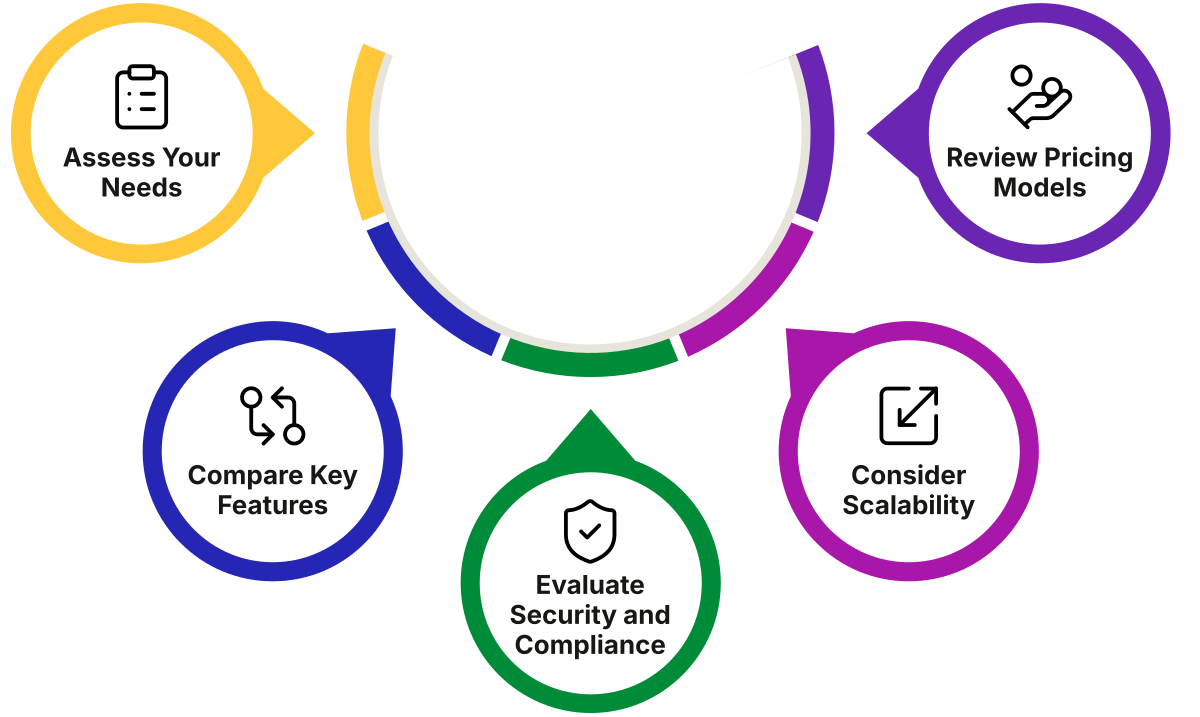
How to Choose the Right eDiscovery Analytics Solution
-
Assess Your Needs
-
Case complexity (simple vs. multi-party litigation)
-
Data volume (GBs vs. TBs of ESI)
-
Budget constraints (in-house vs. outsourced)
-
-
Compare Key Features
Feature
Why It Matters
What to Look For
Predictive Coding
Reduces manual review time
High accuracy rates (>90%)
Email Threading
Maintains conversation context
Visual thread mapping
Concept Clustering
Groups similar documents
Customizable topic models
Sentiment Analysis
Detects tone in communications
Multilingual support
Anomaly Detection
Flags unusual patterns
Real-time alerts
Visual Analytics
Simplifies complex data
Interactive dashboards
Integration
Works with existing tools
API access, cloud compatibility
-
Evaluate Security and Compliance
-
Data encryption (in transit and at rest)
-
Access controls (role-based permissions)
-
Audit trails (for chain of custody)
-
Compliance certifications (ISO 27001, SOC 2)
-
-
Consider Scalability
-
Handles growing data volumes
-
Supports multiple simultaneous cases
-
Adapts to new data types (e.g., collaboration apps)
-
-
Review Pricing Models
-
Subscription vs. perpetual license
-
Pay-per-use vs. unlimited
-
Hidden costs (training, support, upgrades)
-
Conclusion: The Transformative Power of eDiscovery Analytics
eDiscovery analytics is redefining legal investigations by turning raw data into actionable intelligence. By leveraging AI, machine learning, and advanced statistical models, legal teams can:
-
Process data 10x faster than manual review
-
Uncover critical evidence hidden in massive datasets
-
Reduce costs by 40-60% through automation
-
Improve case strategies with data-driven insights
-
Mitigate risks of missed deadlines or spoliation
The future of eDiscovery lies in smarter, faster, and more insightful analytics—enabling legal professionals to navigate complex cases with precision and confidence. As technology continues to evolve, firms that embrace advanced analytics will gain a competitive edge in litigation, compliance, and risk management.
ARTIFICIAL INTELLIGENCE AND ANALYTICS
Unlock the Power of AI in eDiscovery – Explore Our Platform Today!
Categories:


