The Ultimate Guide to Selecting eDiscovery Certifications
Discover how to choose the best eDiscovery certifications to advance your legal career. Learn about top courses, certification benefits, and strategies for becoming a certified eDiscovery specialist in today's technology-driven legal landscape.
The Growing Importance of eDiscovery Certifications
In our digital age, electronically stored information (ESI) has become the backbone of legal proceedings. Every email, social media post, and electronic correspondence represents potential evidence, creating an overwhelming volume of data that requires specialized expertise to manage effectively.
eDiscovery certifications have emerged as the standard for professionals seeking to master this complex intersection of law and technology. These certifications provide structured training and validation of skills that are increasingly essential in modern legal practice.
Why eDiscovery Certifications Matter
-
Standardizing Legal Technology Practices
eDiscovery certifications bring consistency to legal technology practices. They help legal teams establish uniform processes, reduce errors, and maintain high standards across cases. These certifications:
-
Establish uniform methodologies across the industry
-
Ensure reliable evidence handling and processing
-
Reduce training costs for law firms through pre-certified talent
-
Minimize human error through structured programs
-
Create common terminology and processes for eDiscovery workflows
-
Benefits for Legal Professionals
Professionals who earn eDiscovery certifications gain tangible career advantages, including recognition, advancement opportunities, and credibility. Certification can:
-
Enhance credibility by signaling expertise in handling digital evidence
-
Open doors to specialized roles and leadership positions
-
Differentiate professionals in a crowded legal market
-
Increase earning potential for certified specialists
-
Demonstrate commitment to ongoing professional development
-
Benefits for Law Firms and Legal Departments
Law firms and legal departments benefit from having certified eDiscovery specialists on staff. These advantages include:
-
Improved case outcomes with better evidence handling
-
Reduced risk of sanctions or evidence spoliation
-
Increased efficiency in document review and production
-
Better compliance with evolving eDiscovery regulations
-
Enhanced reputation for technological competence
Top eDiscovery Certifications to Consider
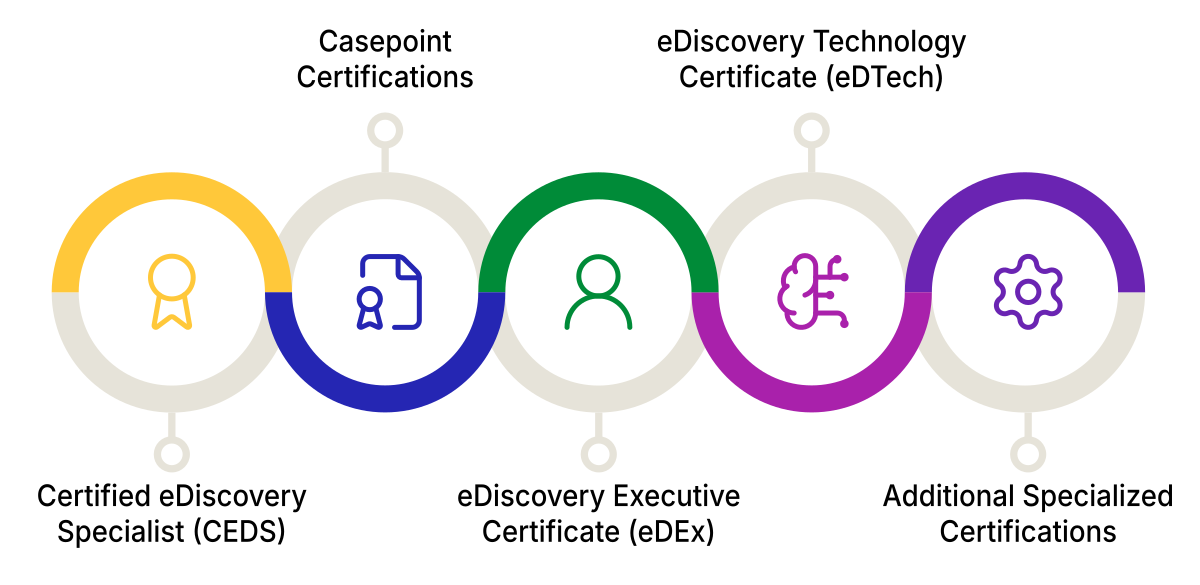
The following certifications are widely recognized in the eDiscovery industry and provide training for various roles and career goals:
-
Certified eDiscovery Specialist (CEDS)
Offered by: Association of Certified eDiscovery Specialists (ACEDS)
Key Features:
-
Comprehensive curriculum covering all aspects of eDiscovery
-
145-question exam testing practical and theoretical knowledge
-
Global recognition as the gold standard in eDiscovery certification
-
Continuing education requirements to maintain certification
-
Digital badges for professional credentialing
Ideal For: Legal professionals seeking broad eDiscovery expertise
-
Casepoint Certifications
Offered by: Casepoint Casepoint provides a free and flexible set of certifications that validate proficiency with the Casepoint platform. Users can earn multiple certifications depending on their role and career goals.
Certifications Include:
-
Reviewer Certification: Confirms the ability to review documents efficiently, identifying key and irrelevant materials.
-
Review Manager Certification: Demonstrates skills in managing large reviews and using reporting tools to meet deadlines.
-
Advanced User Certification: Covers advanced features such as analytics, Clustering, CaseAssist AI, advanced searching, and matter administration.
-
Workforce Administrator Certification: Focuses on workspace administration, role management, data import/export, and processing.
Key Features:
-
Free for all Casepoint users
-
Available entirely online with flexible pacing
-
Hands-on learning integrated with daily platform use
-
Exams are open-book and can be retaken
-
Certifications can be shared on LinkedIn and resumes
Ideal For: Professionals using Casepoint eDiscovery software, from reviewers to administrators
-
eDiscovery Executive Certificate (eDEx)
Offered by: ACEDS
Key Features:
-
Interactive online training with expert instructors
-
Lecture series covering advanced eDiscovery concepts
-
Digital badge and certificate upon completion
-
One-year ACEDS membership included
-
Focus on strategic aspects of eDiscovery management
Ideal For: Legal executives and managers overseeing eDiscovery
-
eDiscovery Technology Certificate (eDTech)
Offered by: ACEDS
Key Features:
-
Hands-on training with multiple eDiscovery platforms
-
Practical skills development in multiple tools
-
Bundled option with eDEx for comprehensive training
-
Focus on technical implementation of eDiscovery
Ideal For: Technical professionals implementing eDiscovery solutions
-
Additional Specialized Certifications
Beyond platform-specific or executive certifications, there are specialized credentials that enhance technical or compliance skills. These include:
-
Certified Computer Examiner (CCE) for digital forensics
-
GIAC Certified Forensic Examiner (GCFE) for advanced forensics
-
Certified Information Systems Security Professional (CISSP) for data security
-
Project Management Professional (PMP) for eDiscovery project management
-
Certified Information Privacy Professional (CIPP) for data privacy compliance
How to Choose the Right eDiscovery Certification
Selecting the right certification involves aligning your career goals, learning style, and market demand. Consider the following:
-
Assess Your Career Goals
Identify which certification best supports your professional path:
-
General eDiscovery expertise: CEDS certification
-
Platform-specific skills: Casepoint Certifications or eDTech
-
Executive-level knowledge: eDEx certificate
-
Technical implementation: eDTech or forensic certifications
-
Niche specialization: Focus on specific eDiscovery subdivisions
-
Evaluate Course Content and Structure
Examine the depth, balance, and practicality of each program:
-
Curriculum depth and comprehensiveness
-
Balance of legal and technical content
-
Hands-on vs. theoretical training
-
Industry recognition and reputation
-
Continuing education requirements
-
Consider Certification Costs and Value
Weigh the financial and time investment against potential career benefits:
-
Exam fees and preparation costs
-
Time commitment for study and examination
-
Return on investment in career advancement
-
Employer support or reimbursement programs
-
Long-term value of the certification
-
Research Industry Demand
Understanding the market ensures that your certification choice is worthwhile:
-
Job postings requiring specific certifications
-
Salary premiums for certified professionals
-
Firm preferences for particular credentials
-
Emerging trends in eDiscovery technology
-
Geographic variations in certification value
-
Examine Prerequisites and Preparation
Make sure you understand the requirements before committing:
-
Experience levels needed for different certifications
-
Prerequisite courses or knowledge
-
Study materials and preparation resources
-
Exam formats and passing criteria
-
Continuing education obligations
Essential Skills for eDiscovery Specialists
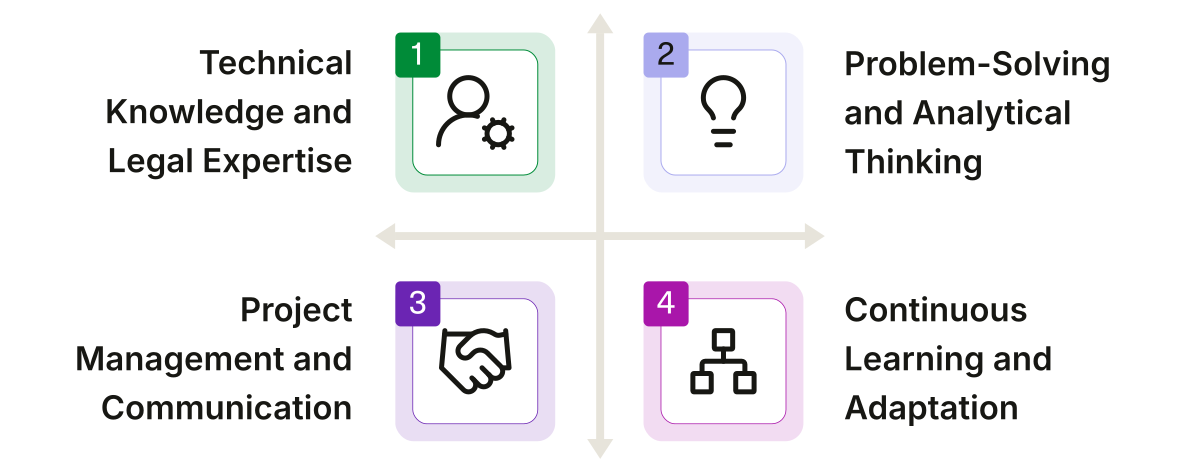
To succeed in eDiscovery, professionals need a combination of legal knowledge, technical expertise, and strategic problem-solving. The following skills are key for managing complex digital evidence and achieving results:
-
Technical Knowledge and Legal Expertise
-
Legal process understanding: Rules of civil procedure, evidence handling
-
Technical proficiency: eDiscovery software, data formats, metadata
-
Data management: Collection, processing, review workflows
-
Compliance knowledge: GDPR, CCPA, HIPAA, and other regulations
-
Emerging technologies: AI, machine learning, blockchain in eDiscovery
-
Problem-Solving and Analytical Thinking
-
Pattern recognition in large datasets
-
Logical reasoning for evidence analysis
-
Creative solutions for technical obstacles
-
Risk assessment in data handling
-
Strategic planning for case management
-
Project Management and Communication
-
Team coordination across legal and technical teams
-
Client communication about technical processes
-
Deadline management for multiple cases
-
Resource allocation for efficient workflows
-
Conflict resolution in high-pressure situations
-
Continuous Learning and Adaptation
-
Staying current with technological advancements
-
Adapting to new regulations and case law
-
Learning new software and platforms
-
Attending industry conferences and webinars
-
Participating in professional networks like ACEDS
Implementation Strategies for Law Firms
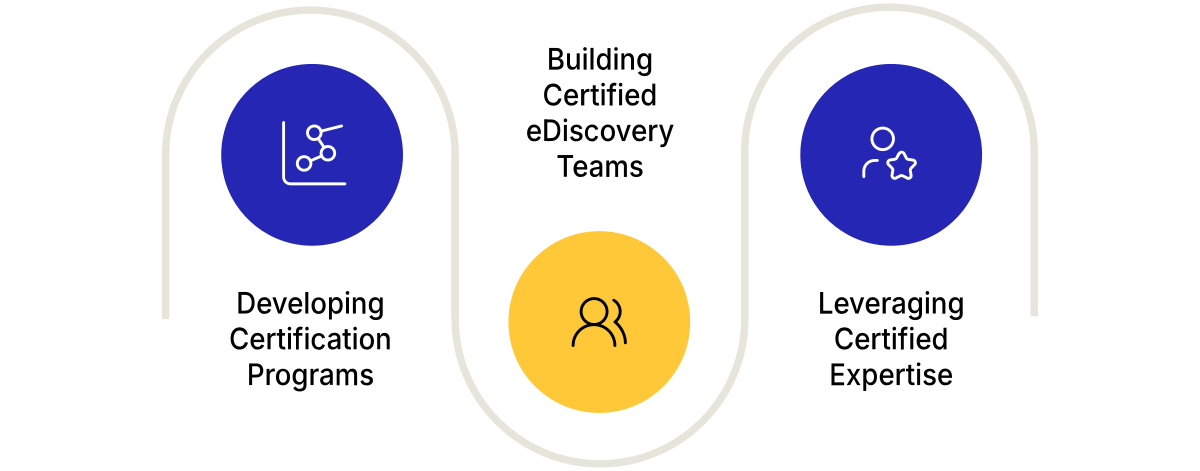
Building an effective eDiscovery team requires more than individual expertise. Law firms can adopt structured strategies to develop certified specialists and leverage their skills across the organization:
-
Developing Certification Programs
-
Create in-house tracks for professional development
-
Offer tuition reimbursement for external certifications
-
Implement mentorship programs pairing junior and senior specialists
-
Provide certification bonuses to encourage professional growth
-
Set team certification goals to build firm-wide expertise
-
Building Certified eDiscovery Teams
-
Combine diverse skill sets across legal and technical expertise
-
Assign certification specialization across different platforms
-
Use cross-training programs to ensure comprehensive knowledge
-
Establish clear career progression paths for certified specialists
-
Encourage knowledge sharing sessions and internal training
-
Leveraging Certified Expertise
-
Assign complex cases to certified specialists
-
Highlight certified expertise in client marketing materials
-
Develop niche practices around eDiscovery expertise
-
Participate in industry standards development
-
Publish thought leadership on trends and best practices
The Future of eDiscovery Certifications
-
Emerging Trends in eDiscovery Education
Certifications are evolving to cover new technologies, privacy, and security needs:
-
AI and Machine Learning Integration – Training on predictive coding and AI-assisted review
-
Cloud-Based eDiscovery – Security and compliance in cloud platforms
-
Data Privacy Specializations – GDPR and CCPA expertise
-
Cybersecurity Focus – Encryption, threat detection, and breach response
-
Blockchain and Cryptocurrency – Analysis and evidence handling
-
The Evolving Role of Certified eDiscovery Specialists
Certified specialists will:
-
Become indispensable in complex litigation
-
Drive innovation in legal technology adoption
-
Bridge the gap between legal and technical teams
-
Ensure compliance with evolving regulations
-
Shape industry standards for digital evidence handling
Conclusion: The Strategic Value of eDiscovery Certifications
eDiscovery certifications are gateways to mastering the intersection of law and technology. Certified specialists help:
-
Ensure justice through proper evidence handling
-
Drive efficiency in legal workflows
-
Mitigate risks of data spoliation or non-compliance
-
Unlock insights from complex digital datasets
-
Future-proof legal practices against technological change
For professionals, certifications support career growth and relevance. For firms, certified teams provide a competitive advantage in complex cases, risk management, and client value.
Contact Us
See How Casepoint Supports Your Next Step
eDiscovery Certifications: A Comprehensive Guide to Professional Development


