
The exponential growth of electronic data has made eDiscovery workflows essential for legal professionals and businesses navigating modern litigation. As every digital interaction creates potential evidence, a well-structured eDiscovery process ensures comprehensive, accurate, and legally defensible handling of electronic information.
Understanding eDiscovery Workflows
eDiscovery workflows provide a systematic approach to managing electronic data throughout the legal discovery process. This structured methodology transforms overwhelming volumes of digital information into organized, searchable, and actionable evidence.
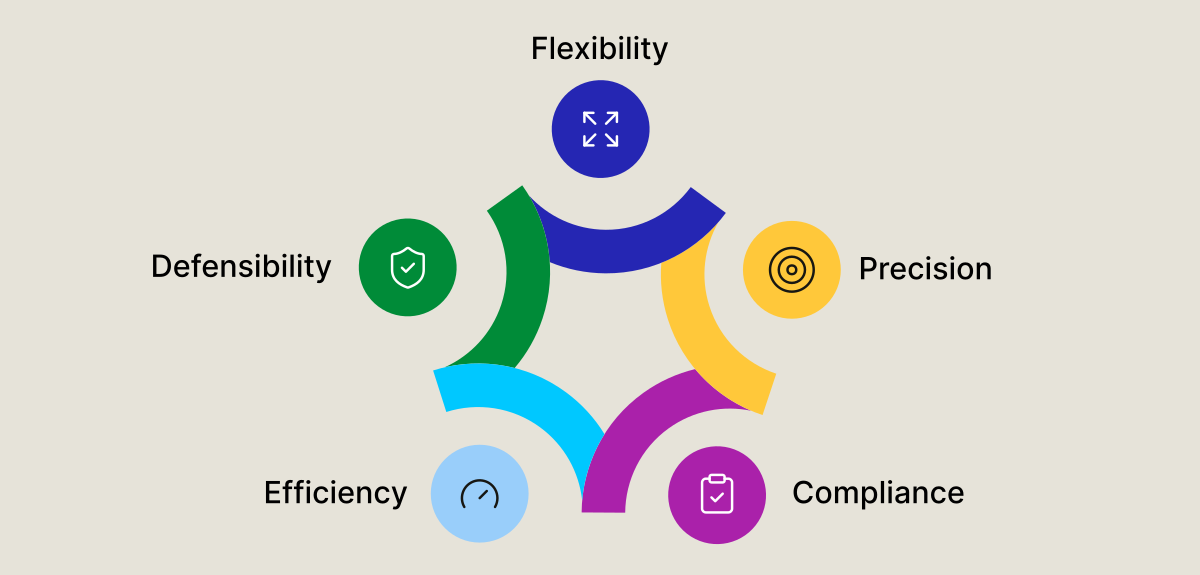
Key characteristics of effective eDiscovery workflows include:
-
Flexibility to adapt to diverse data types and legal requirements
-
Precision in identifying and collecting relevant information
-
Compliance with evolving data privacy and protection regulations
-
Efficiency in processing large datasets while maintaining accuracy
-
Defensibility to withstand legal scrutiny and challenges
The digital landscape's complexity demands workflows that can handle everything from traditional documents to emerging data sources like cloud collaborations, IoT device logs, and social media interactions.
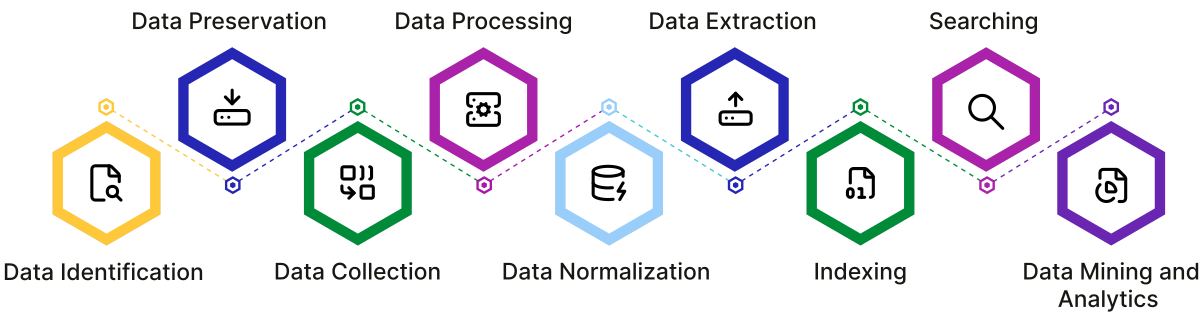
The eDiscovery Workflow Process
-
Data Identification
The foundation of any eDiscovery workflow begins with comprehensive data identification. This critical first step involves:
-
Mapping all potential data sources across the organization
-
Understanding data types and contexts in different repositories
-
Considering unconventional sources like cloud platforms and collaboration tools
-
Documenting the complete data landscape for thorough coverage
Effective identification requires looking beyond traditional sources to include:
-
Enterprise systems (ERP, CRM, HR databases)
-
Cloud services (Office 365, Google Workspace, Dropbox)
-
Mobile devices (smartphones, tablets, wearables)
-
IoT devices (sensors, smart devices, industrial systems)
-
Social media (LinkedIn, Twitter, Facebook, internal platforms)
-
-
Data Preservation
Once relevant data sources are identified, immediate preservation is crucial to maintain evidence integrity. This phase focuses on:
-
Implementing legal holds to prevent data alteration or deletion
-
Creating forensic copies of original data
-
Documenting preservation actions for chain of custody
-
Maintaining metadata that establishes document authenticity
Preservation ensures that:
-
Data remains in its original state for admissibility
-
All versions are preserved including edits and deletions
-
Timestamps and authorship information remains intact
-
A complete audit trail is maintained for defensibility
-
-
Data Collection
The collection phase requires careful execution to ensure data integrity. Key considerations include:
-
Selecting appropriate collection methods based on data types and locations
-
Using specialized tools for different data sources
-
Maintaining chain of custody documentation
-
Preserving data relationships (email threads, document versions)
Collection methods may include:
-
Targeted collection from specific custodians or sources
-
Full disk imaging for comprehensive data capture
-
Remote collection for geographically distributed data
-
Automated collection for large-scale data repositories
-
-
Data Processing
Processing transforms raw collected data into review-ready information through:
-
Data normalization to standardize diverse file formats
-
Deduplication to eliminate redundant information
-
Metadata extraction for contextual understanding
-
File type conversion for compatibility with review platforms
This phase prepares data for efficient analysis by:
-
Organizing information by custodian, date, or content type
-
Creating searchable indices for quick retrieval
-
Filtering irrelevant data to focus review efforts
-
Preserving document relationships and context
-
-
Data Normalization
Normalization addresses the challenge of diverse data formats by:
-
Converting disparate file types to standard formats
-
Resolving format incompatibilities between systems
-
Ensuring consistent presentation of information
-
Facilitating seamless integration with analysis tools
This process eliminates mismatches between different data sources, creating a unified dataset that supports accurate analysis and reduces errors in subsequent phases.
-
-
Data Extraction
Extraction goes beyond surface content to uncover hidden information through:
-
Content extraction from files and communications
-
Metadata analysis revealing creation dates, authors, modifications
-
Contextual understanding of document relationships
-
Comprehensive data profiling for complete evidence pictures
Advanced extraction tools ensure that:
-
All relevant information is captured from each file
-
Hidden metadata is preserved and accessible
-
File relationships are maintained and searchable
-
Data integrity is verified throughout the process
-
-
Indexing
Indexing creates the foundation for efficient data retrieval by:
-
Categorizing and structuring collected information
-
Creating logical organization for quick navigation
-
Enabling sophisticated search capabilities
-
Supporting contextual understanding of data relationships
Modern indexing tools use:
-
Advanced algorithms for pattern recognition
-
Contextual analysis of document relationships
-
Hierarchical organization of information
-
Semantic understanding of content meaning
-
-
Searching
The searching phase transforms organized data into actionable insights through:
-
Context-aware search capabilities beyond simple keyword matching
-
Semantic analysis of document content
-
Advanced filtering by date, author, file type, and other parameters
-
Pattern recognition for identifying relevant information
Effective searching requires:
-
Comprehensive keyword strategies
-
Boolean and proximity search capabilities
-
Concept clustering for thematic organization
-
Predictive ranking of relevant documents
-
-
Data Mining and Analytics
The final analytical phase uncovers hidden patterns and insights through:
-
Holistic data analysis beyond predefined search parameters
-
Pattern recognition across large datasets
-
Predictive modeling based on historical data
-
Visualization tools for understanding complex relationships
Advanced analytics transform raw data into:
-
Clear visual representations of information patterns
-
Predictive insights about case developments
-
Risk assessments based on data trends
-
Strategic recommendations for legal approaches
-
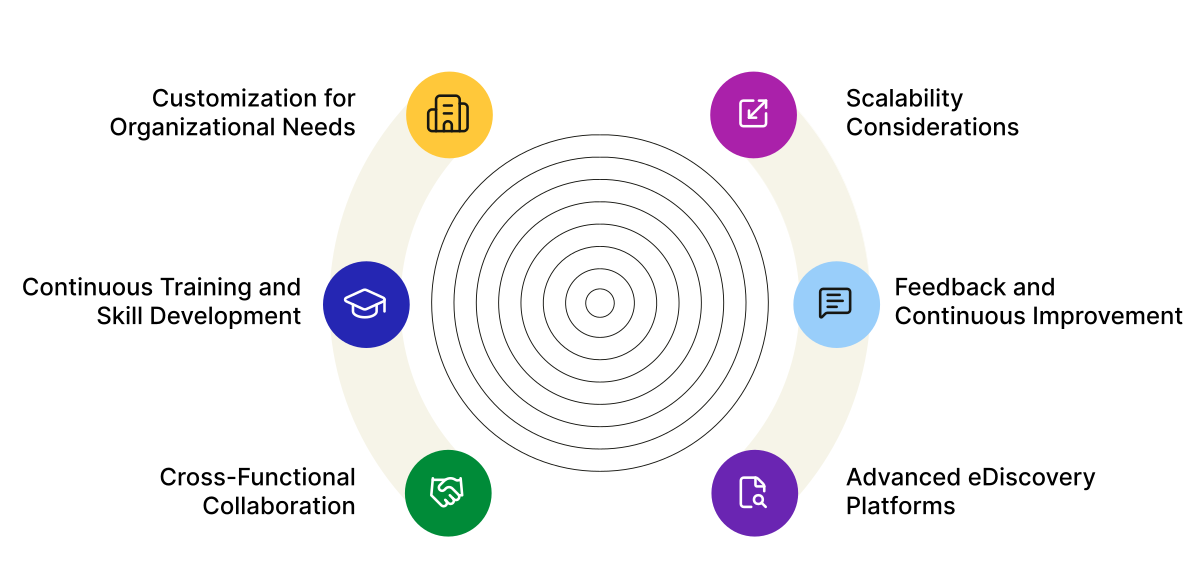
Implementing Effective eDiscovery Workflows
-
Customization for Organizational Needs
Successful eDiscovery workflow implementation requires tailoring to specific organizational requirements:
-
Adapting to unique data environments
-
Addressing case-specific challenges
-
Integrating with existing systems
-
Scaling for growing data volumes
-
-
Continuous Training and Skill Development
As eDiscovery technologies evolve, ongoing education is essential:
-
Keeping abreast of new capabilities
-
Understanding emerging data sources
-
Mastering advanced analytical tools
-
Developing cross-functional expertise
-
-
Cross-Functional Collaboration
Effective workflows require coordination between:
-
Legal teams for case strategy and requirements
-
IT professionals for technical implementation
-
Data scientists for analytical insights
-
Compliance officers for regulatory adherence
-
-
Scalability Considerations
Workflows must accommodate:
-
Growing data volumes from expanding digital footprints
-
Increasing case complexity with diverse data types
-
Evolving legal requirements across jurisdictions
-
Emerging technologies that generate new data sources
-
-
Feedback and Continuous Improvement
Implementing feedback mechanisms ensures workflow evolution through:
-
Regular process evaluations
-
Identifying potential pitfalls
-
Ensuring regulatory compliance
-
Leveraging collective expertise
-
Adapting to new challenges
-
-
Advanced eDiscovery Platforms
Modern eDiscovery platforms like Casepoint enhance workflow efficiency through:
-
AI-powered review systems for quick document identification
-
Technology-Assisted Review (TAR) for prioritizing relevant information
-
Cloud-based collaboration with role-based security
-
Customizable workflows for diverse case requirements
-
Scalable architecture for handling large datasets
-
These platforms transform eDiscovery from a manual, time-consuming process into a strategic, data-driven approach that delivers actionable insights while maintaining legal defensibility and compliance.
Request Demo
Streamline Your eDiscovery Workflows With Casepoint for Faster, Smarter Results
Categories:


