
Why Native File Production is Essential for Modern Legal Proceedings
Discover the critical advantages of native production in eDiscovery. Learn how preserving original file formats enhances legal processes, ensures compliance, and improves efficiency in document review and production.
The Critical Importance of Native Production in eDiscovery
In today's digital legal landscape, electronically stored information (ESI) forms the backbone of most legal cases. However, many legal teams overlook the significance of file format in eDiscovery processes. While discoveries can be produced in various formats, native production—maintaining files in their original format—offers substantial advantages that can determine case outcomes.
What is Native Format in eDiscovery?
Native format refers to the original file format in which a document was created and saved. Unlike converted formats (PDF, TIFF), native files retain all original properties including:
-
Complete metadata (creation dates, authorship, modifications)
-
Embedded objects (formulas, macros, comments)
-
Original structure (spreadsheet formulas, document formatting)
-
Interactive elements (hyperlinks, embedded media)
-
File properties (version history, security settings)
The Significance of Native Format in ESI Production
ESI production services identify, collect, review, and deliver relevant electronic information for legal proceedings. The format chosen for production significantly impacts:
-
Evidentiary value of the information
-
Admissibility in court proceedings
-
Efficiency of review processes
-
Cost-effectiveness of discovery
-
Compliance with legal requirements
While production can occur in any format, native production is increasingly preferred—or even required—by courts and legal frameworks.
10 Compelling Reasons for Native Production
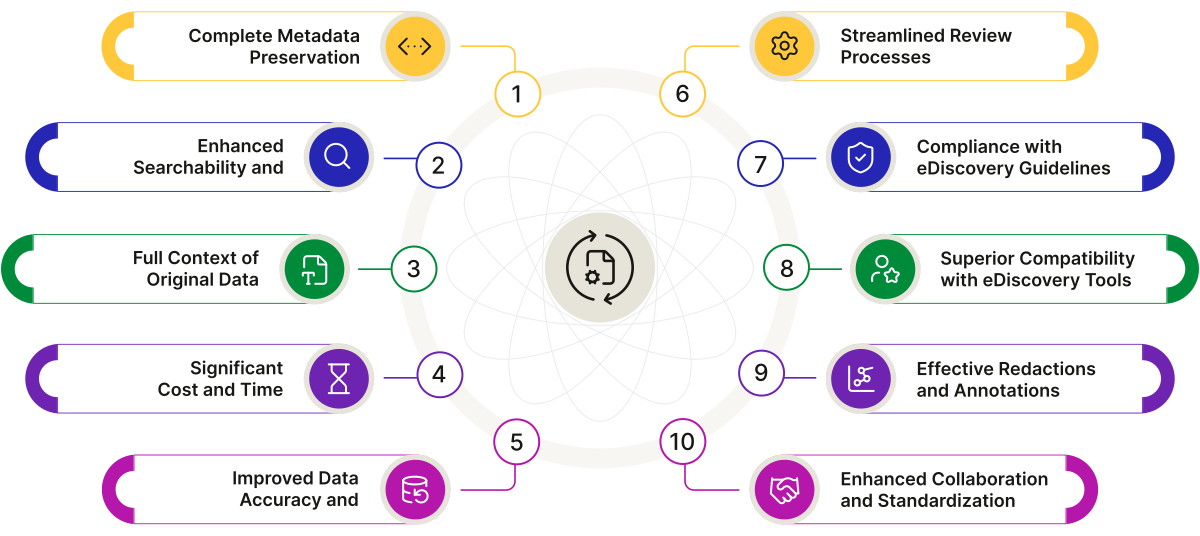
Common Challenges in Native Production
While native production offers significant advantages, legal teams may encounter challenges:
Selecting the Right ESI Production Services
When choosing an ESI production service provider, consider these critical factors:

Implementation Best Practices
The Future of Native Production in eDiscovery
Emerging technologies are enhancing native production capabilities:

Conclusion: The Strategic Advantage of Native Production
While some cases may allow for alternative production formats, native production should be the standard approach for several compelling reasons:
-
Preserves complete evidentiary value of digital information
-
Enhances efficiency of review and analysis processes
-
Ensures compliance with legal and regulatory requirements
-
Reduces costs associated with data processing and storage
-
Minimizes risks of data corruption or spoliation
-
Supports better decision-making with complete information
-
Facilitates smoother collaboration among legal teams
-
Provides defensible production that stands up in court
-
Future-proofs your eDiscovery processes
-
Delivers better case outcomes through comprehensive evidence
To fully realize these benefits, legal teams should:
-
Invest in proper training on native production advantages
-
Select the right technology partners with native format expertise
-
Develop standardized workflows for consistent implementation
-
Stay current with emerging technologies in eDiscovery
-
Foster collaboration between legal and technical experts
By prioritizing native production from the outset of any matter—regardless of its apparent complexity—legal teams position themselves for more efficient, cost-effective, and successful eDiscovery processes that can significantly impact case outcomes.
Categories:


