Understanding Redactions in eDiscovery: Definition, Best Practices, and Automation
Redactions play a critical role in eDiscovery by protecting sensitive information while maintaining the integrity of legal documents. This comprehensive guide explores the definition of redactions, their importance in legal proceedings, different types of redaction techniques, and best practices for implementing automated solutions to ensure compliance and security.
What Is a Redaction?

A redaction is the process of permanently removing or obscuring sensitive information from documents, images, or digital files to prevent unauthorized disclosure. In legal contexts, redactions serve several essential purposes:
-
Protecting personally identifiable information (PII) such as Social Security numbers, financial account details, and medical records
-
Preserving attorney-client privilege and work product protections
-
Complying with court orders and privacy laws including FRCP Rule 5.2 and GDPR
-
Preventing data breaches that could compromise legal proceedings or client confidentiality
Redactions ensure that only relevant, non-sensitive information is disclosed during legal proceedings while maintaining the document's evidentiary value.
Redacted information refers to any data that has been intentionally hidden or removed from a document to comply with legal, ethical, or privacy requirements. Common types of redacted information include:
-
Social Security numbers and taxpayer identification numbers
-
Financial account numbers and credit card information
-
Medical records and protected health information (PHI)
-
Confidential business information and trade secrets
-
Minors' names and personal details
-
Witness and victim identities in sensitive cases
-
Law enforcement investigative details
The redaction process must be thorough and precise to ensure that no sensitive information remains accessible while preserving the document's context and relevance to the case.
Why Are Redactions Necessary in eDiscovery?
-
Legal and Regulatory Compliance
Redactions ensure compliance with key regulations that govern the handling of sensitive information in legal proceedings:
Federal Rules of Civil Procedure (FRCP) Rule 5.2 mandates the redaction of sensitive personal identifiers in court filings. California Rules of Court Rule 1.201 requires the redaction of personal information before public filing. General Data Protection Regulation (GDPR) protects EU citizens' personal data. Health Insurance Portability and Accountability Act (HIPAA) safeguards protected health information. California Consumer Privacy Act (CCPA) regulates the handling of California residents' personal data.
Failure to properly redact sensitive information can result in serious consequences including court sanctions, financial penalties, loss of attorney-client privilege, and reputational damage to legal professionals and their clients.
-
Protection of Sensitive Information
Redactions prevent the unauthorized disclosure of trade secrets and proprietary business information, confidential settlement agreements containing sensitive negotiation details, witness and victim identities in cases involving sensitive or dangerous situations, and law enforcement investigative details that could jeopardize ongoing investigations.
By systematically removing or obscuring this information, legal teams can share documents with opposing counsel, courts, and third parties without risking unauthorized exposure of sensitive details.
-
Efficiency in Legal Proceedings
Proper redactions contribute to more efficient legal processes by focusing document review on relevant content rather than sensitive but irrelevant information, reducing disputes over privileged or irrelevant information that should not be disclosed, and improving case strategy by controlling which information is shared and when.
This targeted approach to information disclosure helps legal teams build stronger cases while maintaining compliance with ethical and legal obligations.
What Is a Redaction Log?
A redaction log serves as a comprehensive record of all redactions made to documents in a legal proceeding. This log typically includes document identification (file name, Bates number, or other unique identifier), location of redacted information (page number, paragraph, or specific text), type of information redacted (PII, privileged content, etc.), legal basis for redaction (specific rule, regulation, or court order), and person authorizing the redaction (attorney, paralegal, or other responsible party).
Why Is a Redaction Log Important?
A redaction log is important for several reasons. It serves as a legal requirement, as courts often require redaction logs to verify compliance with redaction rules and ensure transparency in the disclosure process. It provides transparency by offering a clear audit trail for opposing counsel, judges, and other parties to understand what information was redacted and why. It ensures accountability by documenting redaction decisions, which can be crucial if the redactions are later challenged. It also aids in dispute resolution by helping resolve challenges regarding what information was redacted, the reasons for those redactions, and whether they were properly applied.
Maintaining accurate redaction logs is not just a best practice—it's often a legal requirement that can significantly impact the admissibility of evidence and the overall success of a case.
Types of Redactions in eDiscovery
-
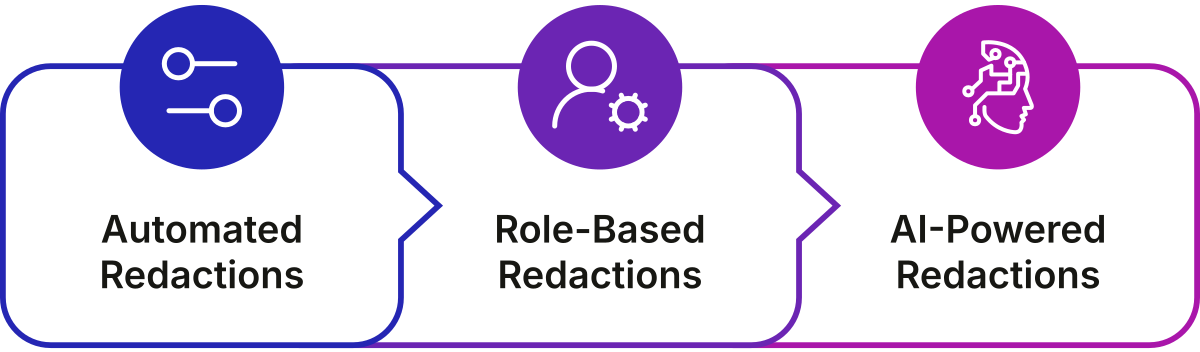
Automated Redactions
Automated redaction uses artificial intelligence and machine learning algorithms to identify and redact sensitive patterns in documents. This approach is particularly effective for large document sets where manual redaction would be impractical, structured data with consistent formats (e.g., Social Security numbers, credit card numbers), and repetitive redaction needs across multiple cases or document types.
Automated redaction systems are programmed with rules to identify specific patterns (e.g., "redact all email addresses"). AI algorithms scan documents to detect matching patterns, and identified sensitive information is automatically obscured or removed. Human review verifies the automated redactions before finalization.
The benefits of automated redactions include time savings (can redact thousands of documents in minutes), consistency (applies redaction rules uniformly across all documents), compliance (ensures no sensitive data is overlooked), and cost-effectiveness (reduces the need for manual review hours).
For example, a law firm handling a class action lawsuit uses automated redaction to remove all Social Security numbers from 10,000 email attachments before production to opposing counsel.
-
Role-Based Redactions
Role-based redactions allow different users to see different versions of a document based on their access level and responsibilities. This approach is particularly useful for internal document sharing where different team members need different levels of access, collaborative reviews involving multiple parties with varying clearance levels, and privileged information protection where only authorized personnel should see certain details.
In role-based redactions, documents are redacted at different levels based on user roles. Authorized users (such as lead attorneys) can view full, unredacted versions. Other users (such as paralegals or external vendors) see appropriately redacted versions. Access controls ensure users only see the versions they're authorized to view.
The benefits of role-based redactions include enhanced security (restricts sensitive data access to authorized personnel only), flexible collaboration (allows teams to work with appropriate data levels), and privilege protection (ensures attorney-work product and confidential information remain protected).
For example, a corporate legal team uses role-based redactions so in-house counsel can review full documents containing trade secrets, while external eDiscovery vendors only see versions with sensitive business information redacted.
-
AI-Powered Redactions
AI-powered redactions represent the most advanced approach, using natural language processing and machine learning to identify and redact sensitive information with contextual understanding. This method excels at complex document types with unstructured data, nuanced privacy risks that require contextual understanding, and large-scale document sets where patterns may evolve.
In AI-powered redactions, AI systems analyze documents to understand context and content. Machine learning identifies sensitive information beyond simple patterns. The system adapts to new data patterns over time. Human reviewers verify and refine the AI's decisions.
The benefits of AI-powered redactions include higher accuracy (detects complex sensitive data that pattern matching might miss), contextual understanding (recognizes when information is sensitive based on surrounding content), adaptive learning (improves with each use and new data patterns), and reduced false positives (smart context awareness minimizes unnecessary redactions).
For example, a healthcare provider uses AI-powered redactions to automatically obscure patient names and medical conditions in thousands of electronic health records while preserving the clinical context needed for litigation.
Common Redaction Challenges and Solutions
One of the most significant challenges in redactions is missed sensitive data. This can be addressed by implementing AI-powered pattern matching to catch all PII and privileged information. Inconsistent redactions can be solved by developing and enforcing standardized redaction rules across all documents and cases. Time-consuming manual review can be mitigated by adopting bulk redaction tools and automated workflows to process large document sets efficiently. Accidental disclosure risks can be reduced by using role-based access controls and implementing double-check verification processes. Non-compliant productions can be prevented by generating automated redaction reports and maintaining comprehensive audit trails. The high costs of manual redaction can be addressed by investing in eDiscovery software with built-in redaction capabilities to reduce labor costs.
Best Practices for Automating Redactions

-
Use eDiscovery Software with Advanced Redaction Features
When selecting redaction tools, look for platforms that offer pattern-based redactions for common sensitive data types (SSNs, credit card numbers, email addresses), bulk redaction capabilities to process thousands of documents simultaneously, image redaction tools for handling PDFs, screenshots, and scanned documents, redaction hit navigation to quickly jump between redacted items during review, and transparency modes that allow authorized users to view original content when needed.
Leading eDiscovery platforms with robust redaction capabilities include Casepoint, Relativity, Everlaw, Logikcull, and Disco.
-
Implement a Standardized Redaction Workflow
Develop a consistent process for handling redactions by identifying sensitive data types that require redaction (PII, privileged information, trade secrets), defining redaction rules specifying what to redact and how to document it, applying automated redactions first to handle the bulk of sensitive information, conducting manual review to verify automated redactions and handle complex cases, generating comprehensive redaction logs for compliance and audit purposes, and performing quality assurance checks on a sample of redacted documents.
-
Train Your Team on Redaction Best Practices
Ensure all team members understand when to redact (legal requirements vs. discretionary protections), how to document redactions properly in logs and reports, common mistakes to avoid such as over-redacting or missing metadata, and effective use of redaction tools including shortcuts and bulk actions.
-
Maintain Compliance with Privacy Laws
Stay current with evolving regulations by understanding GDPR requirements for redacting all personal data of EU citizens, HIPAA protections for PHI in medical records and communications, CCPA rules for removing California residents' personal information, and FRCP Rule 5.2 mandates for redacting Social Security numbers, financial accounts, and minors' names.
A useful approach is to use pre-built redaction templates for common compliance needs to ensure consistency and thoroughness.
The Future of Redactions in eDiscovery
-
AI and Machine Learning Advancements
Emerging technologies will enable context-aware redactions that understand nuanced privacy risks, predictive redaction that anticipates what needs protection, and self-learning systems that improve with each use and new data patterns.
-
Blockchain for Redaction Audits
Blockchain technology will provide immutable logs of all redactions for verifiable audit trails, tamper-proof documentation for court presentations, and smart contracts for automated compliance with redaction rules.
-
Cloud-Based Collaboration
Future developments will include real-time redaction reviews by distributed legal teams, version control for redacted documents across multiple users, and secure sharing capabilities with external counsel and parties.
Conclusion: Why Automated Redactions Are a Game-Changer
Redactions have evolved from a manual, time-consuming process to a sophisticated, technology-driven practice that is essential for modern eDiscovery. By leveraging automated redaction tools, legal teams can save 70% or more time compared to manual redaction processes, significantly reduce human error through AI-powered precision, ensure compliance with court rules and privacy regulations, cut costs by minimizing billable hours for document review, and protect sensitive information without compromising case strategy.
The future of redactions lies in smarter automation, better integration with eDiscovery workflows, and more sophisticated protection of sensitive information. Legal professionals who master these tools and techniques will gain a significant advantage in handling complex cases efficiently and securely.
CONTACT US TO LEARN MORE
Save Time, Reduce Risk, and Protect Sensitive Data with Automated Redactions
What Is a Redaction? The Complete Guide to Secure eDiscovery Practices