Agencies are spending more time and money procuring, learning, and switching between tools than they would if they standardized on a single integrated platform.
For legal, FOIA, investigations, and compliance teams, that fragmentation is especially costly. When data lives across separate systems, agencies face slower response times, more manual work, and greater risk around deadlines, defensibility, and security.
IT Modernization Gets Harder When Agencies Add More Tools
Tool sprawl offers an easy path towards overwhelming agency staff. A survey of 2,187 workers in the U.S. and U.K. found that 90% of workers feel overwhelmed by the number of software tools they use, and 75% said that juggling multiple project management tools made it “impossible to get a clear view of work.”
Vendor fragmentation, especially with legacy tools, strains agencies on multiple levels. Not only are redundant tools at risk of performing overlapping functions, but integration overload can present a major issue, as systems aren’t able to talk to each other as easily as they would under a master contract.
Government agencies have reported using hundreds of outdated tools for day-to-day work. IRS data showed that 259 out of 776 of its applications were legacy tools as of 2022. Out of those, 181 applications were 25 years or older.
Reliance on old technologies like legacy tools or even paper forms can make it impossible to scale systems efficiently — or at all. Even in agencies where paper and pencil is not the norm, siloed systems present integration challenges simply because they are not designed to interoperate.
Lack of unified architecture means agencies wind up maintaining duplicate datasets across multiple applications. Dataset redundancy doesn’t just mean duplicated work effort. It can also lead to distorted analytics, inefficient storage, and millions of dollars in annual losses. Even small duplicate rates can translate into thousands of unnecessary records that have to be maintained, reconciled, or cleaned up — a clear symptom of fragmented systems failing to share unified datasets.
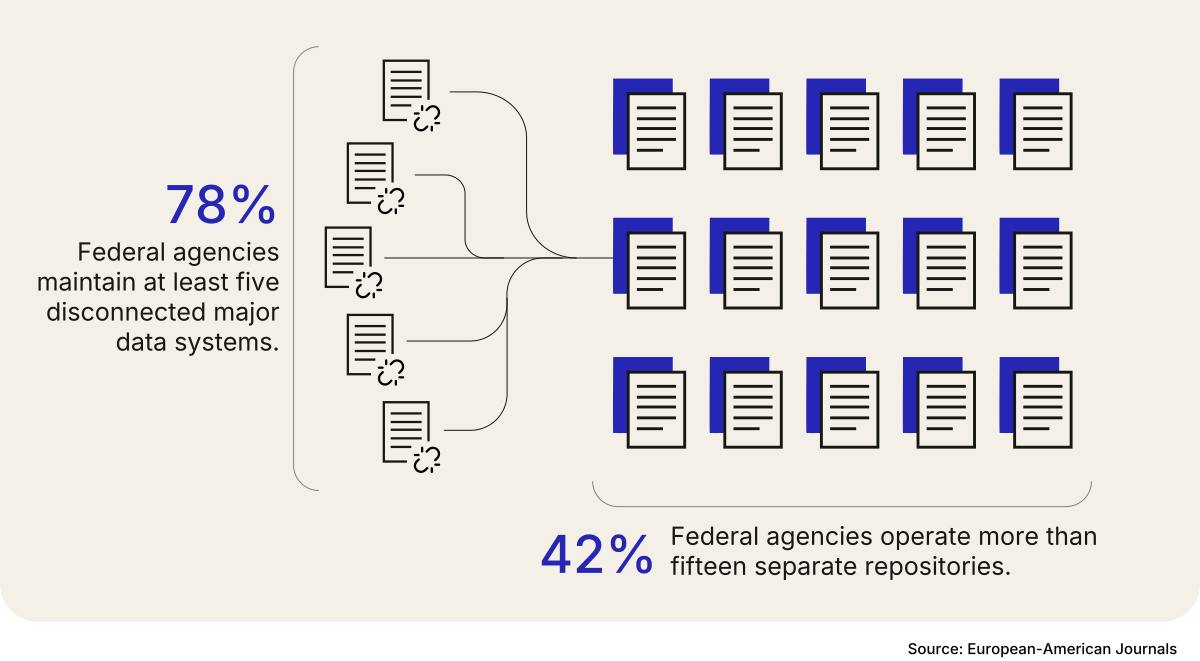
Tool Sprawl Raises the Cost of IT Modernization
The cost of fragmentation is significant and shows up across procurement, maintenance, training, and delays.
IT Procurement Costs
IT procurement is shown to absorb nearly 50% of government agencies’ IT budgets. Agencies face higher costs to manage and secure Federal IT investments, largely because they are using siloed systems that perform a singular function.
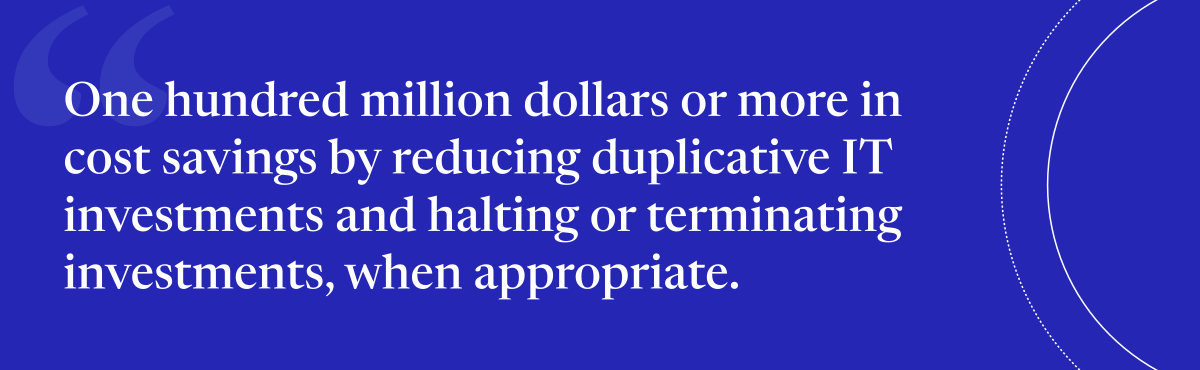
The Government Accountability Office recently recommended annual IT portfolio reviews, which could save agencies "one hundred million dollars or more in cost savings by reducing duplicative IT investments and halting or terminating investments, when appropriate."
Cost of Maintaining Legacy Systems
Each year, the federal government spends more than $100 billion on IT investments. Agencies have typically reported spending about 80% of that amount on operating and maintaining existing systems, including aging legacy platforms that are costly to maintain and difficult to modernize.
Employee Training and Turnover Costs
Employees lose nearly a full workday — or about seven hours a week — navigating duplicate workflows and fragmented tools. On top of the productivity cost, government agencies must also consider turnover rates. Replacing a government worker can cost up to 200% of the worker’s salary, depending on experience and job level. This reflects a number of costs, including recruiting, training, knowledge loss, and service disruption.
Cost of Delays and Missed Deadlines
Requirements evolve during long delays, forcing agencies to redo work they already paid for, as well as being charged by vendors for extended performance periods, change orders, or contract modifications.
Missed deadlines present further expenses, such as required remediation plans, additional reporting, oversight, and compliance costs. In extreme cases, agencies may even face funding restrictions or clawbacks.
What IT Modernization Looks Like for Legal Teams
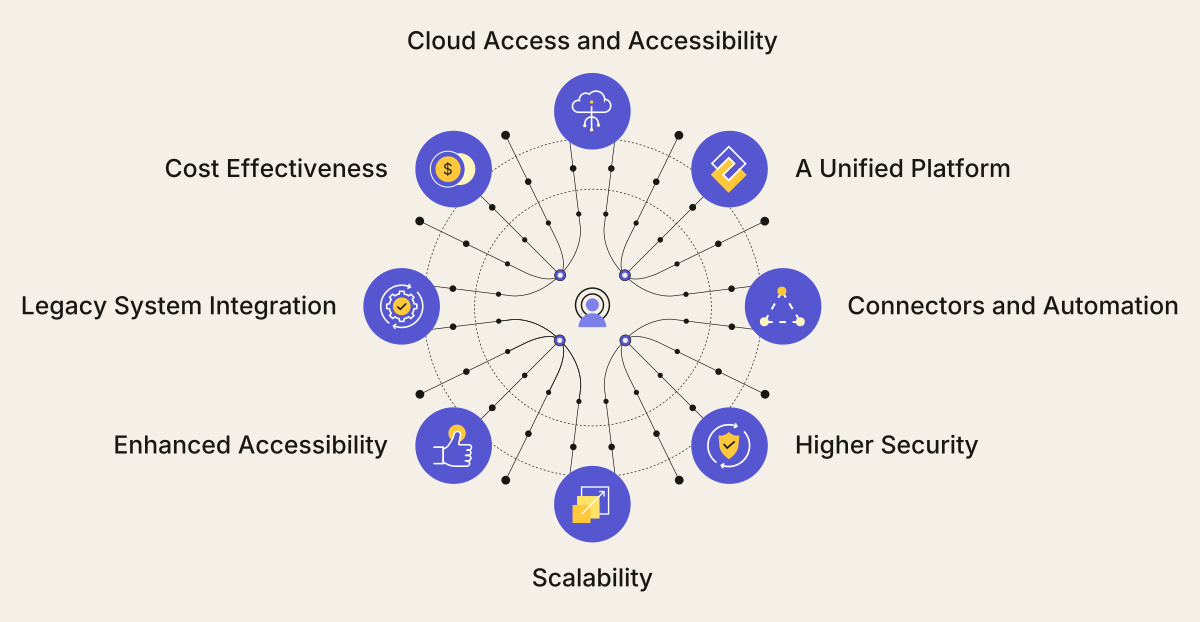
Instead of adding more tools and fragmenting operations further, IT modernization reduces complexity, consolidating legal workflows into a more secure and connected environment.
-
Cloud Access and Accessibility: Cloud adoption helps legal teams reduce reliance on legacy systems while improving security, scalability, and long-term efficiency.
-
A Unified Platform: A unified platform reduces complexity by bringing legal workflows together in one secure environment instead of forcing teams to work across disconnected tools.
-
Connectors and Automation: Connectors and automation streamline data collection across systems, making it easier for legal teams to manage complex information without adding more tools.
-
Higher Security: A unified platform can reduce security risk by limiting silos, credentials, integration points, and other vulnerabilities introduced by multiple vendors.
-
Scalability: Scalable platforms help legal teams adapt to changing requirements, new data types, and greater complexity without replacing their core system.
-
Enhanced Accessibility: A unified cloud environment improves collaboration by giving authorized legal teams secure access to the data they need from anywhere.
-
Legacy System Integration: Integrating legacy systems helps legal teams modernize more effectively without losing access to critical historical data.
-
Cost Effectiveness: Unified platforms lower costs by reducing duplicate tools, training demands, maintenance burdens, and piecemeal vendor spend.
Our whitepaper expands on the ideas in this post, with a closer look at how fragmented legal toolsets increase costs, slow response times, and create operational and security challenges for government agencies. It also examines what agencies stand to gain from a more unified approach.

Author
VP, Customer Engagement
Vina Coonin leads the customer success and customer support functions for Casepoint. Working across strategy, operations, and customer experience, she helps shape how customers experience and feel about the company. Vina brings more than 20 years of experience across government contracting, proposals, consulting, and customer engagement, and she…
Categories:


