skip to content

eDiscovery Agents

eDiscovery IQ Agents

Government, legal, and compliance teams are managing growing discovery and investigative obligations, including larger custodian populations, tighter regulatory and court-ordered deadlines, and review budgets that don't scale with data volume. AI can accelerate that work without sacrificing transparency, auditability, or defensibility.

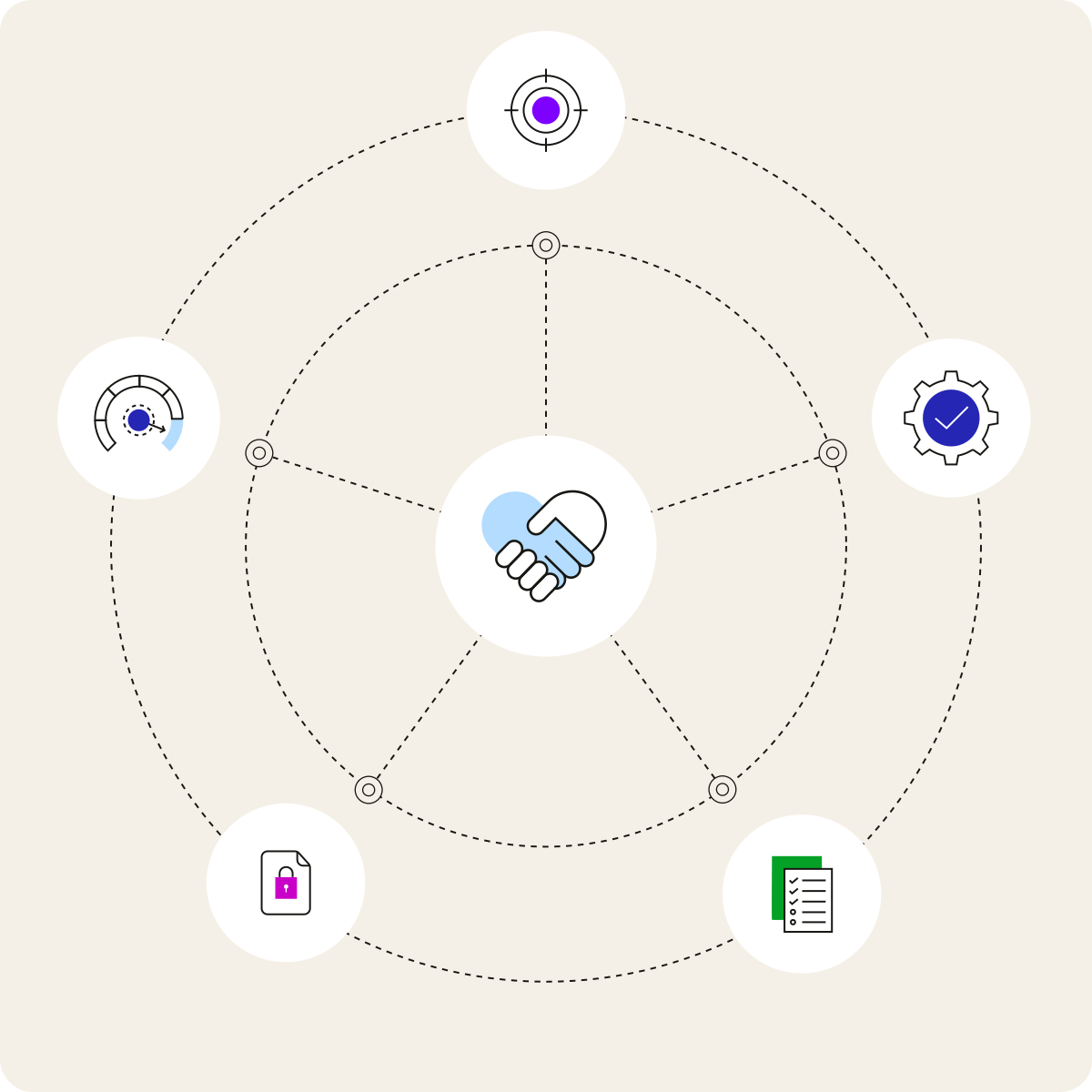
Trust Is Built In

Trust Is Built In

Casepoint's eDiscovery agents run on the same controlled model. Each agent is scoped to a defined review task and tested against a sample of the review population before it's trusted with the full corpus. Every decision is logged and explained, and nothing advances without human sign-off, making the review record defensible to regulators, courts, or oversight bodies.
Meet Our Agents

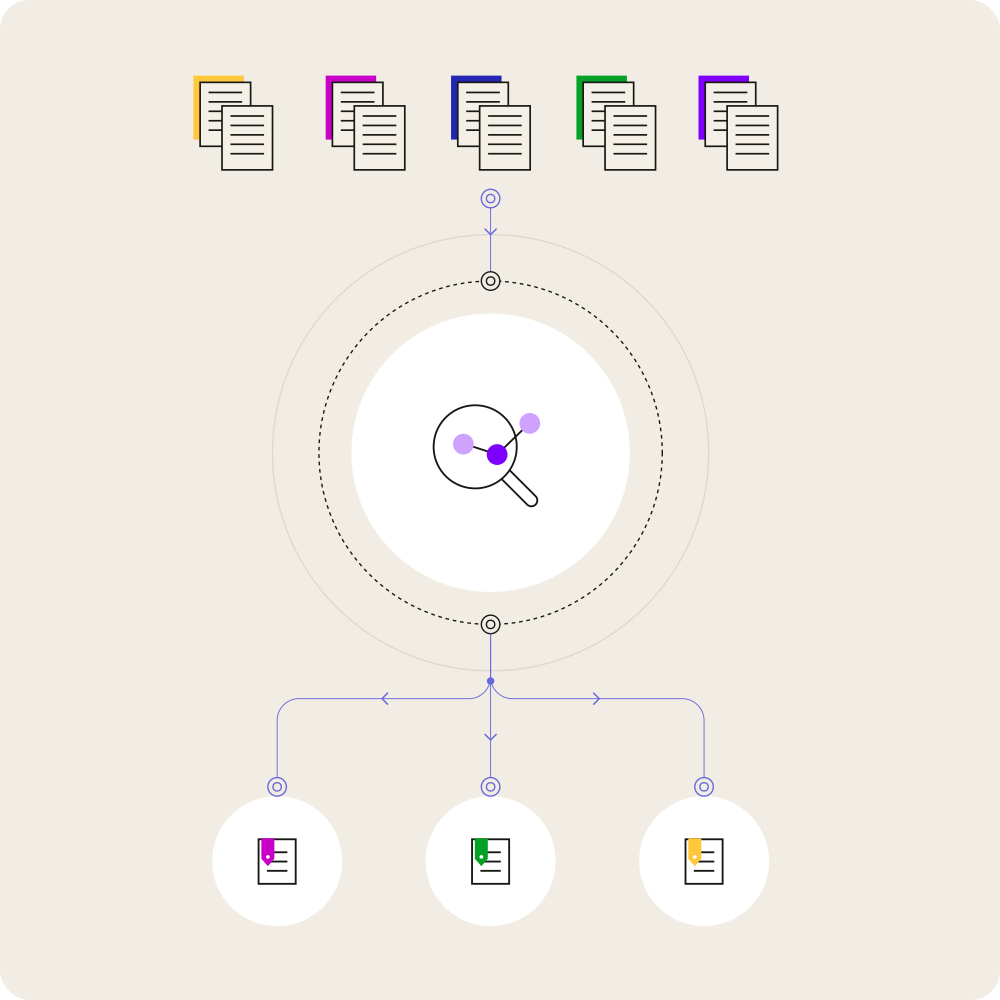
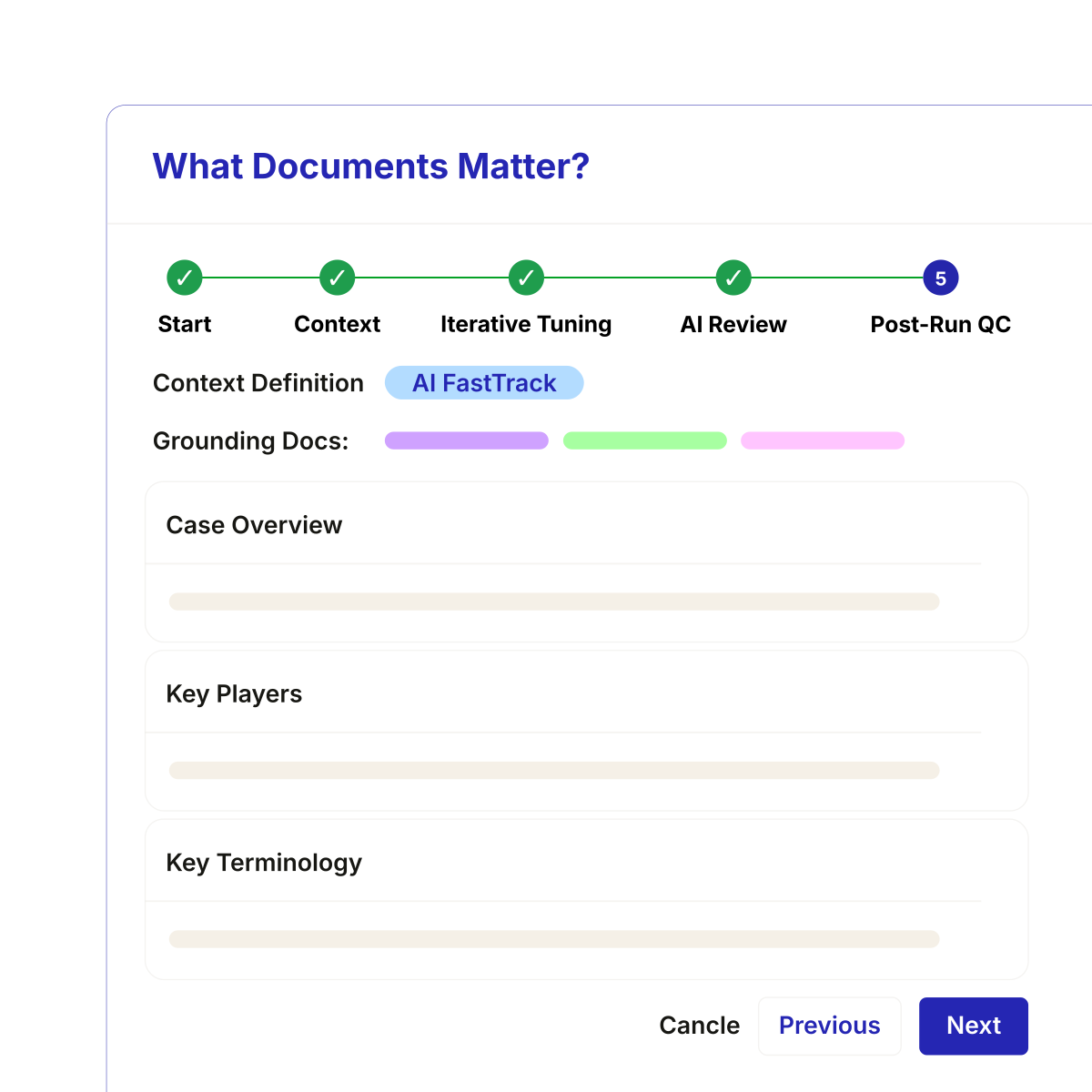
What Documents Matter

1. Relevance Determination Agent

Which Document is Relevant or Responsive?

The Relevance Determination Agent evaluates whether each document in the scoped population is relevant to your matter.

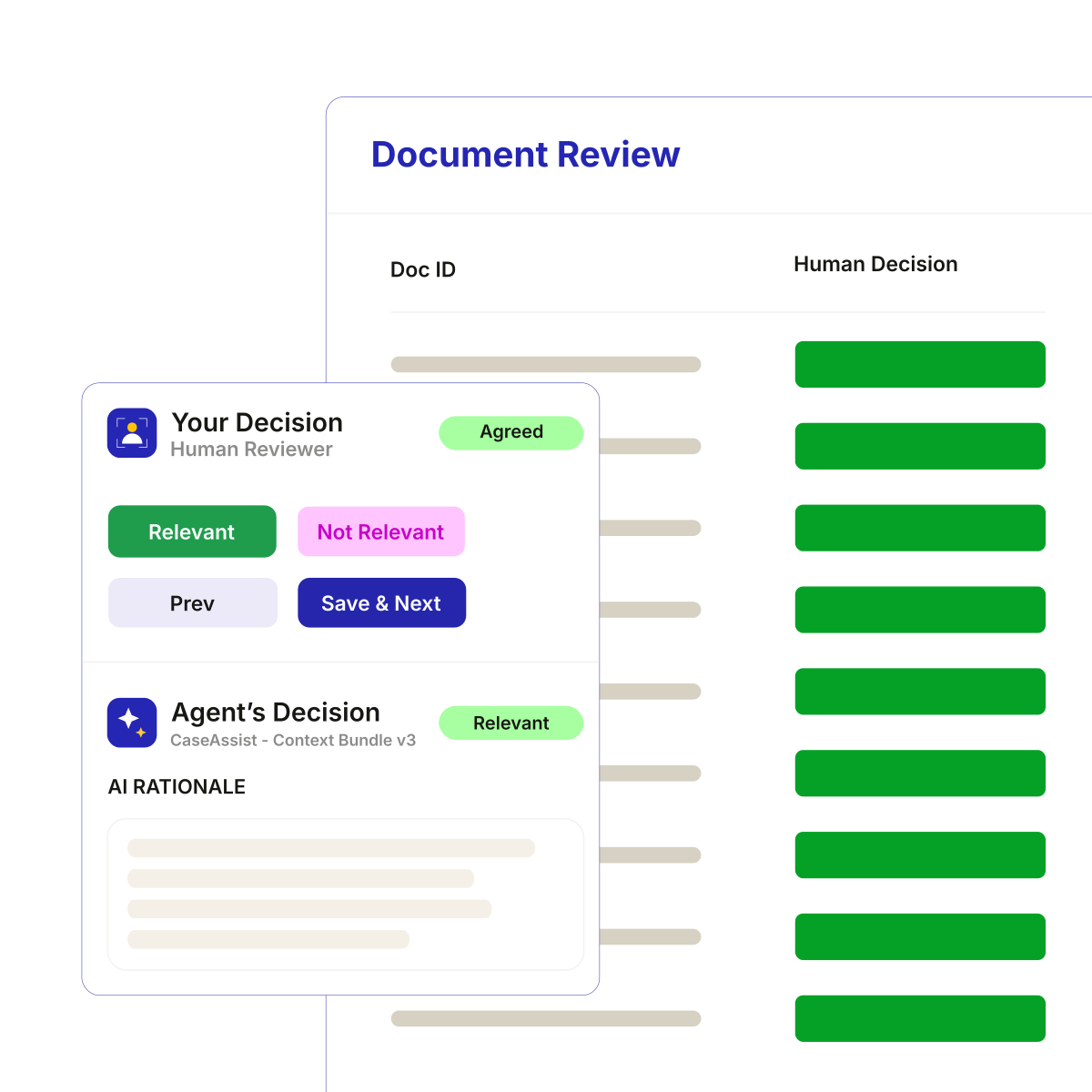
First-pass review is where review budgets disappear. Reviewers read the entire population to find the fraction that matters, and consistency slips as the review runs long. The Relevance Determination Agent evaluates whether each document in the scoped population is relevant or responsive to your matter, with the reasoning behind every determination. Agents cross-check their own outputs using a proprietary multi-model process before results reach a reviewer.

Time and Cost Savings Visibility

Reviewers have visibility into time and cost savings achieved, along with the confidence score breakdown across the review population.

Review and Approve Agent-s Work

Human Reviews Agent’s Work

The agent assigns every document a likelihood score and records every human and AI decision in an audit trail, with human oversight built into every step.

  • Evaluate each document for relevance or responsiveness.

  • Review the reasoning and likelihood score behind every determination.

  • Validate performance against a sample set using recall and precision metrics.

  • See estimated time and cost savings before you proceed.

  • Approve the agent’s progression to the full document set.

What Issues Does This Document Raise?

2. Issue Coding Agent

Why Do These Documents Matter?

Knowing a document is responsive doesn't tell you what it proves. Issue coding is where review slows down: reviewers read the same documents twice, apply codes inconsistently, and the issue picture stays incomplete until the last batch is done. The Issue Coding Agent codes every responsive document against your matter's issue list, so your team starts building the case while review is still underway.

Issue Coding Agent

What Issues Does This Document Raise?

The Issue Coding Agent evaluates every document against the legal, factual, or investigative issues that matter to your case and applies matter-specific codes, with human oversight built into every step.

  • Evaluate documents against defined legal, factual, or investigative issues.

  • Code documents for issues specific to your matter.

  • Review sample results to assess performance and accuracy.

  • Approve the agent’s progression to the full document set.

  • Use optional post-run quality control to calculate final recall and precision for each issue code.

What Happened, and Who Was Involved

3. AI Investigator Agent

What Happened, and Who Was Involved

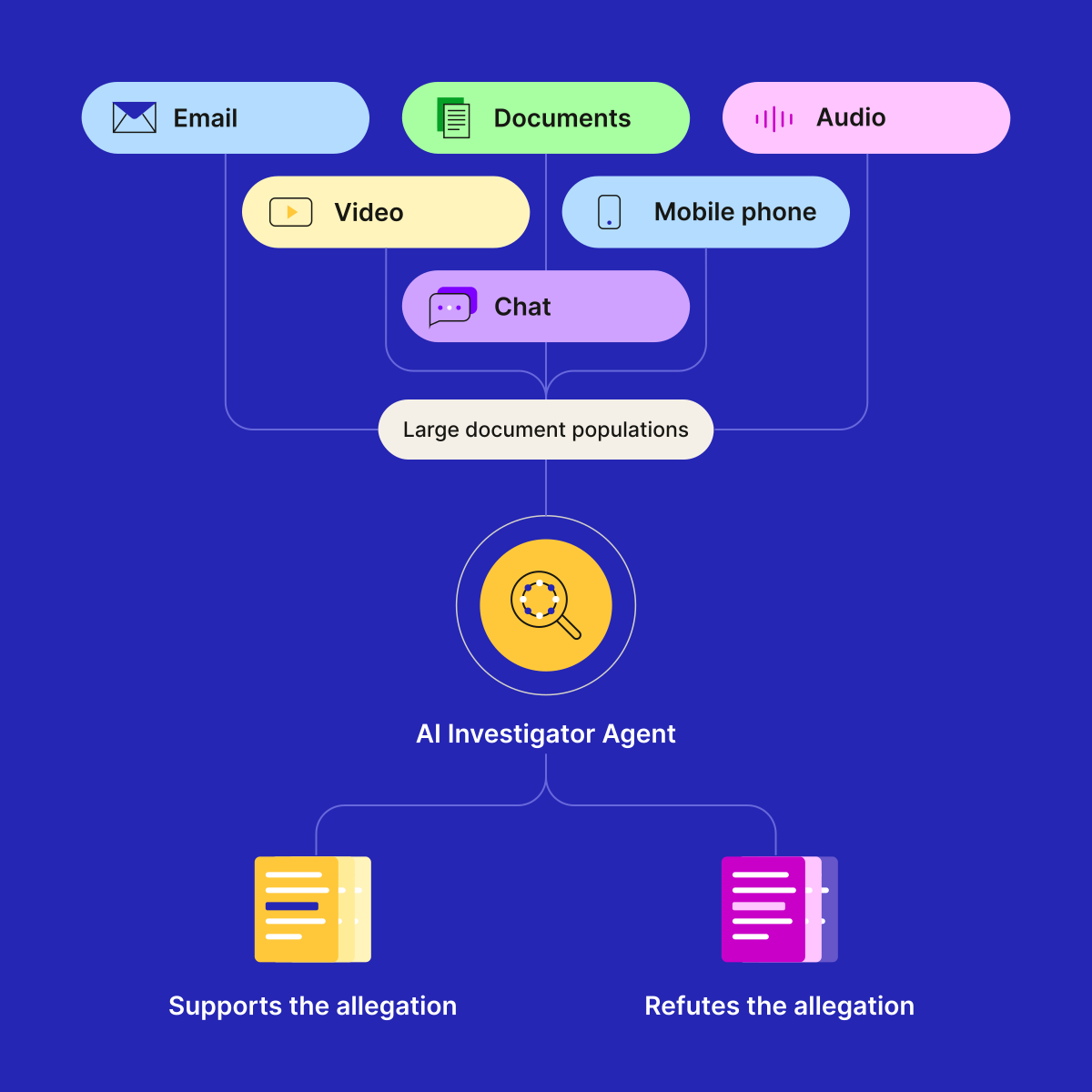
Investigative caseloads are growing faster than the teams that handle them. Evidence now spans email, documents, audio, video, mobile phone, and chat data. Without a technical specialist, investigators end up reading collections one document at a time, only to learn the case has no merit or to miss critical evidence.

The AI Investigator Agent is built for investigators. Describe the investigation, and the agent narrows large document populations to the material most likely to support or refute the allegation. No technical specialist is required.

Build Findings as the Investigation Unfolds

Build Findings as the Investigation Unfolds

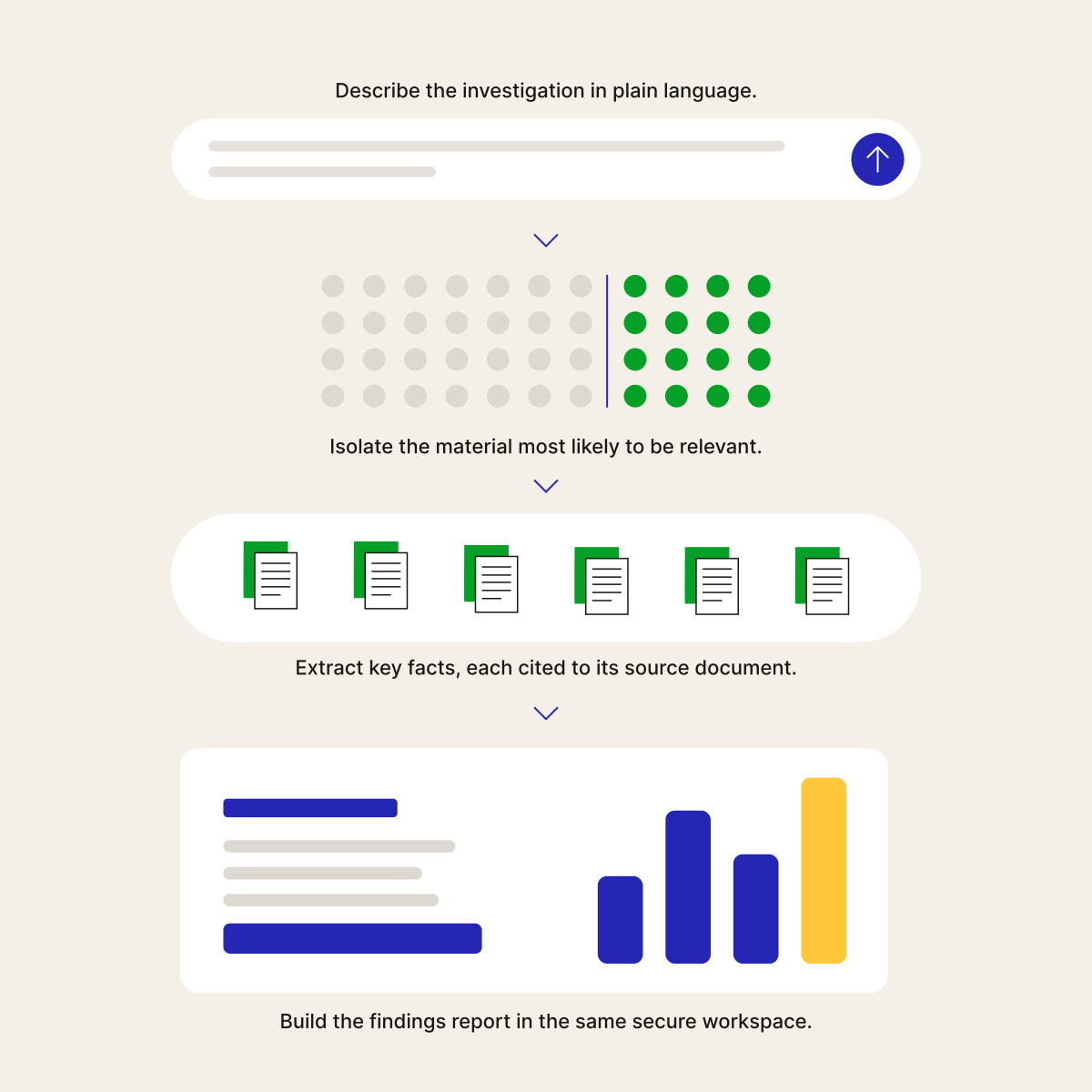
A guided workflow follows how investigations actually work, so investigators build findings while the work is underway instead of rebuilding everything in separate tools.

  • Describe the investigation in plain language.

  • Isolate the material most likely to be relevant.

  • Extract key facts, each cited to its source document.

  • Link documents to key investigative themes.

  • Use timelines and data visualizations to see the full story.

  • Build the findings report in the same secure workspace.

Together, these agents move teams from sorting documents to reasoning about the evidence.

Get Started

See Casepoint IQ Agents in Action

Explore how assistive and agentic AI work together across legal and compliance workflows, with human-in-the-loop governance and defensibility built in.

This form requires JavaScript