Discover how custodian compliance impacts legal holds, regulatory readiness, and defensibility. Learn implementation strategies, communication best practices, and monitoring techniques that help organizations preserve electronically stored information (ESI) effectively during legal and regulatory matters.
Understanding Custodian Compliance in Legal Holds
In today’s complex legal and regulatory environment, organizations must preserve relevant information when litigation, investigations, or audits are reasonably anticipated. While legal holds establish the preservation requirement, custodian compliance determines whether those obligations are actually met.
Custodian compliance refers to the ability of designated individuals to understand, acknowledge, and consistently follow legal hold instructions to preserve relevant data and avoid spoliation.
What Is a Legal Hold?
A legal hold (also called a litigation hold) is a formal directive issued when litigation or an investigation is reasonably anticipated. Its purpose is to suspend normal data disposition and ensure preservation of potentially relevant information. A legal hold:
-
Preserves relevant ESI and records that may serve as evidence
-
Prevents alteration or deletion through routine business processes
-
Maintains data integrity for defensibility and court admissibility
-
Reduces the risk of spoliation sanctions and adverse rulings
Legal hold notices are communicated to custodians — employees or contractors who control or access relevant data — informing them of their obligation to preserve information for the duration of the matter.
Why Custodian Compliance Matters
Even the most well-documented legal hold fails without custodian compliance. Custodians are responsible for day-to-day interaction with data sources, making their behavior critical to preservation success.
Effective custodian compliance ensures that custodians:
-
Understand what data must be preserved
-
Know which actions are prohibited during a hold
-
Acknowledge and comply with hold instructions
-
Maintain preservation until formally released
Poor compliance can result in:
-
Spoliation findings and court sanctions
-
Adverse inferences in litigation
-
Regulatory penalties tied to recordkeeping failures
-
Increased legal costs and reputational harm
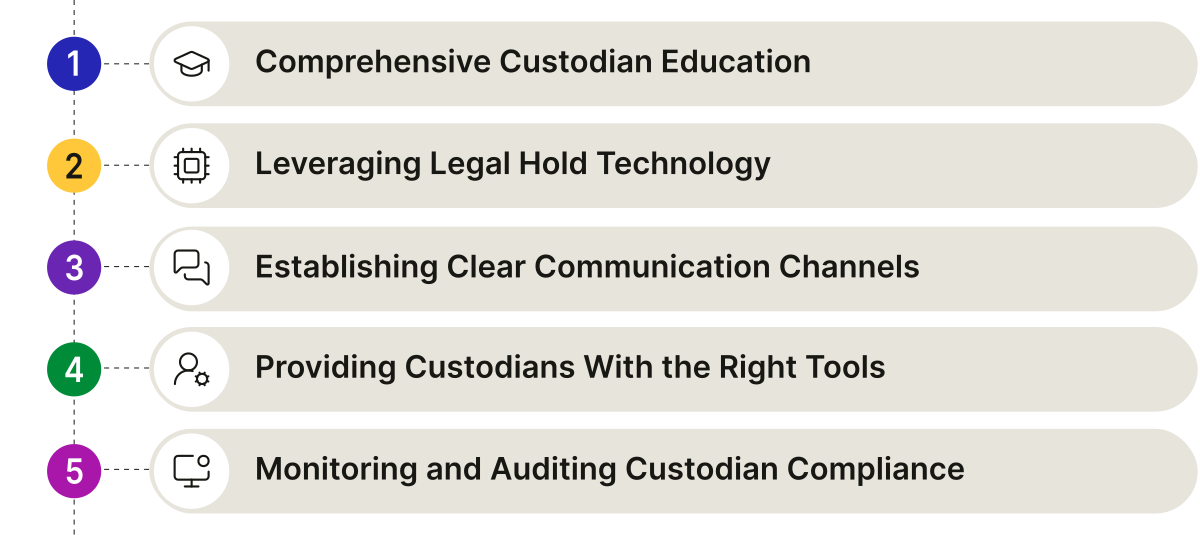
5 Essential Tips for Strong Custodian Compliance
Custodian Compliance and Regulatory Obligations
While legal holds are litigation-driven, custodian compliance also supports broader regulatory and recordkeeping obligations. Many regulations require organizations to demonstrate consistent preservation behavior, accurate record retention, and defensible processes — outcomes that depend heavily on custodian actions.
Strong custodian compliance helps organizations:
-
Align legal hold processes with retention policies
-
Reduce risk during audits and investigations
-
Demonstrate reasonable, repeatable preservation efforts
-
Support long-term defensibility across matters
Technology Considerations for Supporting Custodian Compliance
When selecting legal hold technology, organizations should evaluate:
Building a Culture of Custodian Compliance

Conclusion: Strengthening Custodian Compliance
Custodian compliance is the linchpin of defensible legal data preservation. Organizations that invest in education, technology, communication, and monitoring are far better positioned to:
-
Preserve critical data effectively
-
Reduce spoliation and sanction risks
-
Improve legal and regulatory readiness
-
Streamline legal hold operations
-
Demonstrate defensible, repeatable processes
As data volumes and complexity continue to grow, prioritizing custodian compliance is no longer optional. Organizations that treat it as a core legal and operational discipline will be best equipped to navigate modern litigation and regulatory challenges with confidence.
Categories:


