As electronic discovery becomes increasingly vital in legal proceedings, organizations face the challenge of determining appropriate eDiscovery software investments. The complexity of pricing models, varying organizational needs, and evolving technological requirements make this decision particularly nuanced. An eDiscovery calculator approach helps organizations systematically evaluate their requirements and budget constraints to make informed decisions about eDiscovery software investments.
Understanding eDiscovery Software Needs
Before evaluating costs, organizations must assess their specific eDiscovery requirements. Key considerations include:
-
Case complexity and volume: Simple cases require different capabilities than complex, multi-party litigation
-
Data types and sources: The variety of electronic data (emails, documents, collaboration platforms) affects processing needs
-
Geographical scope: International cases may require multi-language support and cross-border compliance
-
Team size and expertise: User-friendliness and training requirements vary based on team technical proficiency
-
Growth projections: Anticipated increases in caseload or data volume influence scalability needs
-
Security requirements: Data sensitivity and compliance obligations affect platform selection
Organizations should also consider their long-term vision, including expected growth in caseload, expansion into new litigation areas, and evolving technological needs.
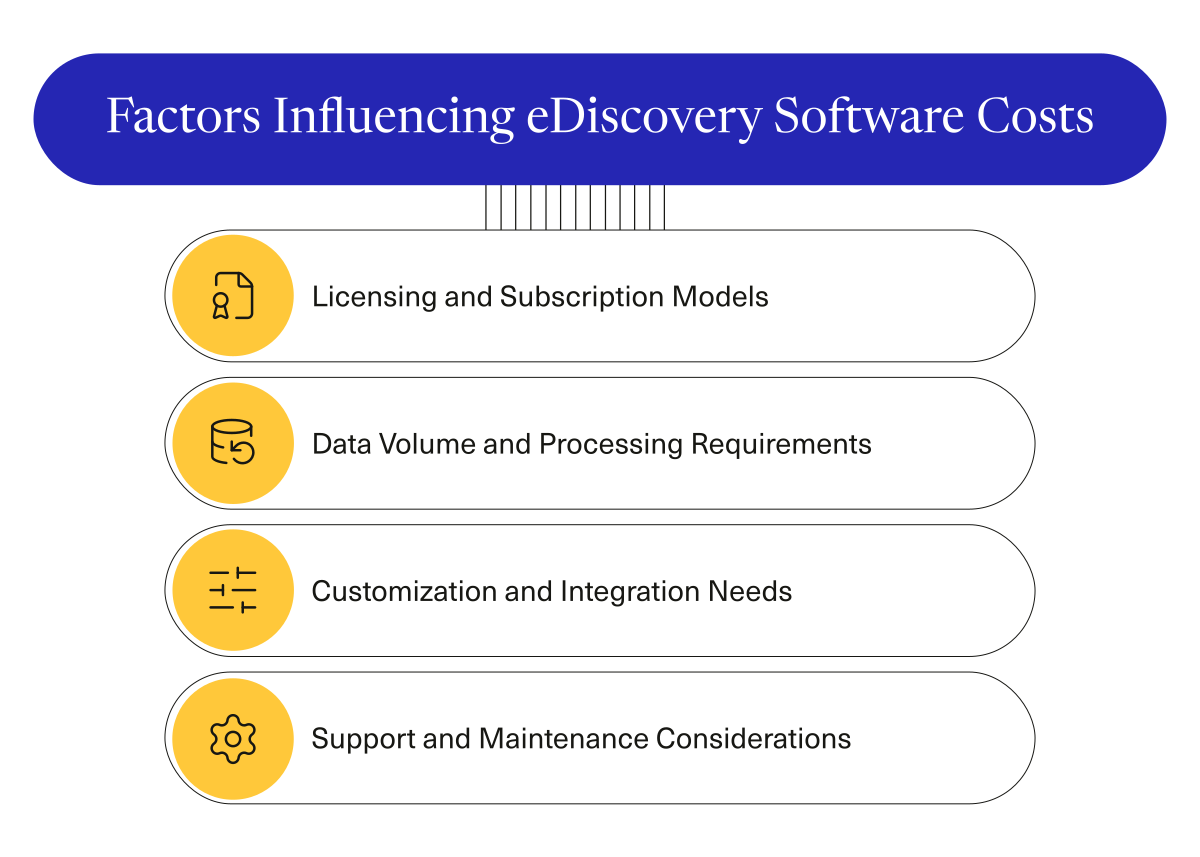
Factors Influencing eDiscovery Software Costs
Several key factors impact the overall cost of eDiscovery solutions:
-
Licensing and Subscription Models
eDiscovery software is typically offered through either subscription or perpetual licensing models:
-
Subscription models provide flexibility with monthly or annual payments, often including regular updates and support. These are ideal for organizations with fluctuating needs or those preferring predictable operating expenses.
-
Perpetual licenses involve a one-time purchase cost, potentially offering long-term savings for organizations with stable, long-term requirements. However, they may require additional costs for updates and support.
The choice between models depends on organizational preferences for flexibility versus long-term cost savings, as well as the predictability of eDiscovery needs.
-
Data Volume and Processing Requirements
The amount of data to be processed significantly impacts costs:
-
Storage requirements for large datasets
-
Processing power needed for complex analytics
-
Bandwidth needs for data transfer and access
-
Scalability to handle growing data volumes
Organizations must anticipate data growth and ensure their chosen solution can scale accordingly without prohibitive cost increases.
-
Customization and Integration Needs
Specialized requirements can affect pricing:
-
Custom workflows tailored to organizational processes
-
API integrations with existing systems (CRM, document management)
-
Specialized analytics for unique data types
-
Compliance adaptations for industry-specific regulations
These customizations often require additional development time and expertise, contributing to higher costs.
-
Support and Maintenance Considerations
Ongoing support is crucial for eDiscovery software:
-
Technical support for troubleshooting and optimization
-
Regular updates for security patches and feature enhancements
-
User training to maximize platform utilization
-
Compliance updates to meet evolving regulatory requirements
Comprehensive support packages typically come at a premium but can significantly enhance the software's value and longevity.
Setting a Realistic eDiscovery Budget
-
Assessing Financial Capacity
Organizations should conduct a thorough financial assessment:
-
Review current IT and legal technology budgets
-
Forecast future financial commitments
-
Consider contingency funds for unexpected costs
-
Engage finance teams for comprehensive financial planning
-
Evaluate return on investment potential
This assessment provides a clear picture of available resources and helps prioritize eDiscovery investments.
-
Comparing Software Options
A systematic comparison approach includes:
-
Feature-to-cost analysis of different platforms
-
Free trial evaluations to test functionality
-
User testimonials and expert reviews
-
Total cost of ownership calculations over 3-5 years
-
Scalability assessments for future needs
This comparative analysis helps identify the best value proposition for specific organizational needs.
-
Evaluating Long-Term Value
Beyond initial costs, consider:
-
Potential efficiency gains from automation
-
Time savings in document review and production
-
Risk reduction through improved compliance
-
Adaptability to evolving case requirements
-
Integration capabilities with existing systems
Platforms that offer comprehensive features at competitive prices, like Casepoint's all-inclusive pricing model, often provide better long-term value.
Balancing Costs with Benefits

-
Evaluating Advanced Features
When considering premium features:
-
Assess actual utility for your organization's cases
-
Prioritize features that address specific pain points
-
Gather team input on practical needs
-
Compare cost-to-benefit ratios for each feature
-
Consider future-proofing capabilities
Advanced analytics, AI-powered review, and predictive coding can significantly enhance efficiency but may not be necessary for all organizations.
-
Exploring Cost-Saving Strategies
Organizations can reduce eDiscovery costs through:
-
Open-source alternatives for basic functionality
-
Bundled service packages from vendors
-
Cloud storage options to reduce infrastructure costs
-
Training optimization to maximize software utilization
-
Periodic software reviews to identify cost efficiencies
Casepoint's cloud-centric platform, for example, offers comprehensive features at predictable costs, reducing the need for additional investments.
-
Avoiding Investment Extremes
Strike a balance between:
Careful evaluation of current and future needs helps achieve this balance.
Future-Proofing Your eDiscovery Investment
-
Preparing for Data Growth
Anticipate increasing data volumes by:
-
Choosing scalable solutions
-
Budgeting for data storage expansion
-
Evaluating processing capacity needs
-
Planning for diverse data types
-
Considering cloud-based flexibility
-
Adapting to Technological Changes
Stay prepared for evolving eDiscovery technologies by:
-
Monitoring industry trends
-
Participating in vendor updates
-
Investing in team training
-
Evaluating emerging analytics tools
-
Maintaining flexible budget allocations
Conclusion
Determining the right eDiscovery software investment requires a comprehensive evaluation of organizational needs, budget constraints, and long-term value potential. By systematically assessing requirements, comparing options, and considering both immediate and future needs, organizations can make informed decisions that balance cost with capability.
Platforms like Casepoint, with their transparent pricing models and comprehensive feature sets, offer organizations predictable costs and powerful capabilities. The key to successful eDiscovery software investment lies in thorough evaluation, strategic planning, and a focus on long-term value rather than just initial costs. This approach ensures organizations have the right tools to succeed in today's complex legal environment while maintaining financial prudence.
Contact Us
See How You Can Optimize Your eDiscovery Investment With Casepoint
eDiscovery Calculator: Determining the Right Investment in eDiscovery Software