A FedRAMP® Authorized investigation platform is a secure cloud system for agency investigations, litigation, and FOIA response. It combines FOIA request management software with defensible data preservation, legal hold controls, and ESI review. This structure helps agencies manage sensitive records without adding fragmented tools.
Federal teams face pressure from statutory deadlines, oversight demands, and high-volume records. That pressure grows when collection, review, redaction, and production happen across separate systems.
A FedRAMP-compliant investigation software environment reduces that exposure while supporting scalable operations when FOIA lifecycle work overlaps complex litigation.
What Is FedRAMP?
FedRAMP is a federal cloud security framework for cloud products used by government agencies. It sets baseline controls before sensitive records move into approved cloud environments. These controls help agencies assess vendors through one consistent security standard.
The process also includes cybersecurity authorization, which verifies how a platform protects government data. This review checks policies, technical controls, access safeguards, and incident response procedures. After authorization, continuous monitoring confirms those safeguards stay active over time.
FedRAMP has three impact levels: low, moderate, and high. Low covers systems with limited risk, moderate covers systems where a breach may cause serious harm, and high applies to sensitive unclassified data where exposure may severely affect agency operations, public trust, or individual safety.
For legal, FOIA, and compliance workloads, these impact levels help agencies match security needs to the sensitivity of the data. A FedRAMP investigation platform applies these standards to legal, FOIA, and compliance workloads. It supports secure collection, review, preservation, and production inside a controlled system. This structure gives agencies stronger oversight when sensitive ESI moves across investigation teams.
What Is FedRAMP-Compliant Investigation Software?
FedRAMP-compliant investigation software gives agencies a secure cloud workspace for sensitive legal and investigative records. That workspace connects eDiscovery, FOIA management, legal holds, and compliance investigations. Each function supports defensible review while keeping ESI under controlled access.
A compliant eDiscovery software setup helps teams collect, search, review, and produce records through a documented process. That process then supports legal hold notices, custodian tracking, and preservation status. Better preservation reduces disputes when requests expand into litigation.
Digital evidence management adds structure when records come from emails, shared drives, devices, and cloud repositories. That structure becomes stronger when FOIA request management software handles intake, review, redaction, and production. Together, these tools help agencies to protect evidence and answer requests with confidence.
Why FedRAMP Compliance Matters
FedRAMP compliance gives agencies a verified structure for security and data protection. It helps procurement teams to compare government investigation software against government procurement requirements and consistent federal security standards. It also keeps continuous monitoring tied to authorization, access, and control evidence.
This strict authorization baseline promotes absolute audit readiness during legal inspections. Consequently, guarded cloud networks eliminate structural vulnerabilities across distributed personnel. Secure architectures ultimately maintain public trust throughout administrative workflows.
Key Features
A compliant eDiscovery software setup keeps each step tied to defensible evidence handling.
-

Secure cloud infrastructure
Sensitive ESI stays protected during collection, processing, review, redaction, and production inside a controlled federal environment.
-

Role-based access control
Access permissions give each user only the records their role requires during every authorized review stage.
-

Audit trails
Detailed logs connect every action to a user, timestamp, record set, and case activity for stronger defensibility and oversight.
-

Legal hold and evidence preservation
Preservation controls protect relevant records before deletion, alteration, transfer, or custodian turnover across the full preservation window.
-

AI-powered document review
AI-assisted review helps prioritize relevant records without weakening secure investigation software controls or protected evidence review workflows.
-

Workflow automation
Repeatable FOIA and litigation steps become automated workflows with clear ownership from intake through final production.


Benefits for Federal Agencies
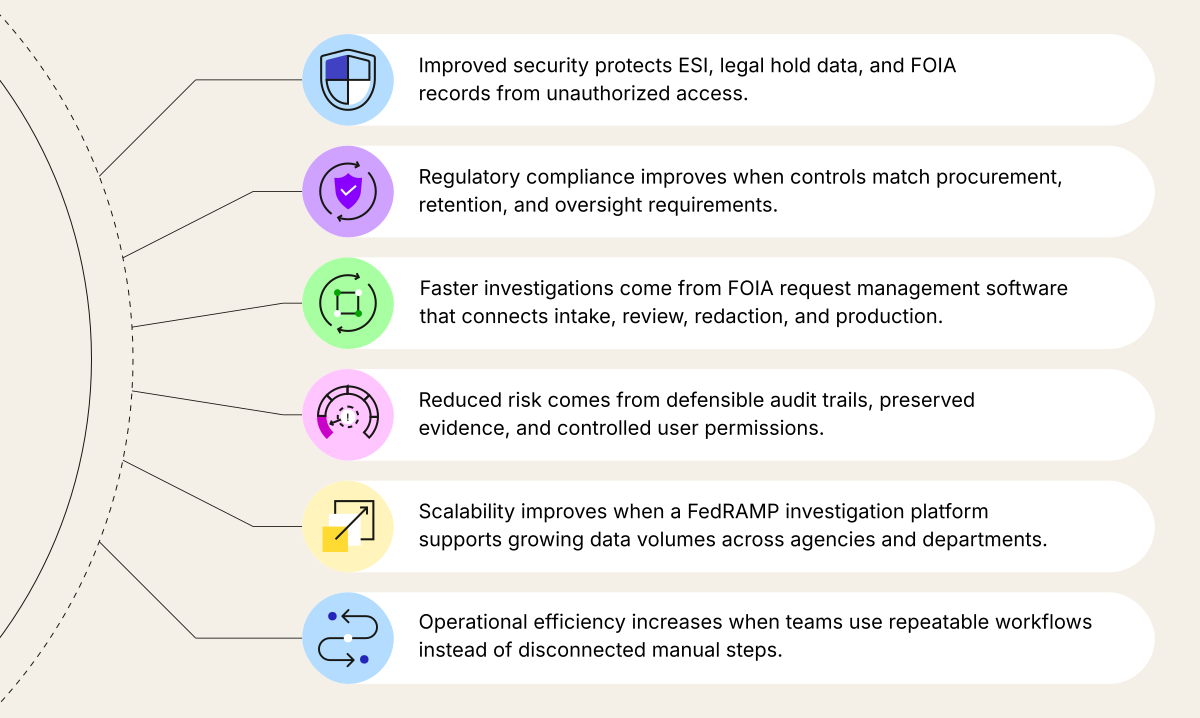
A secure federal investigation system should improve how agencies protect records, meet obligations, and move work forward. These benefits usually appear in six practical areas:
-
Improved security protects ESI, legal hold data, and FOIA records from unauthorized access.
-
Regulatory compliance improves when controls match procurement, retention, and oversight requirements.
-
Faster investigations come from FOIA request management software that connects intake, review, redaction, and production.
-
Reduced risk comes from defensible audit trails, preserved evidence, and controlled user permissions.
-
Scalability improves when a FedRAMP investigation platform supports growing data volumes across agencies and departments.
-
Operational efficiency increases when teams use repeatable workflows instead of disconnected manual steps.
How AI Enhances Investigations
AI enhances investigations by reducing manual review across large evidence collections. Secure AI investigation software can support automated document review while staying inside authorized environments. This pairing protects sensitive data while accelerating early case assessment. It also helps teams separate routine records from files that need attorney review.
AI can prioritize evidence, group similar records, and flag patterns across communications. Strong models also support anomaly detection when records show unusual behavior or missing context. These signals help reviewers focus on risk, privilege, and relevance with better consistency. Faster pattern recognition helps teams resolve matters before deadlines create procedural risk.
Final Thoughts
Secure, compliant federal investigation systems need authorized cloud controls, defensible processes, and disciplined data handling. These safeguards become more critical when agencies handle sensitive government data across legal, FOIA, and compliance work. FedRAMP High authorization gives those records the highest protection level available for federal cloud systems.
Casepoint delivers FedRAMP-compliant investigation software that protects data security and supports scalable legal operations. It unifies legal hold, FOIA, investigations, discovery, and defensible workflows. This connected approach helps agencies control fragmented records, preserve ESI, and advance matters confidently.
Frequently Asked Questions (FAQs)
-

What is FedRAMP-compliant investigation software?
It is an authorized cloud platform for legal holds, FOIA response, investigations, and records review. It preserves evidence, controls sensitive data, and documents actions for defensible agency decisions.
-

Why do federal agencies need FedRAMP-compliant investigation software?
Federal agencies need FedRAMP-compliant systems because sensitive records require protected access, defensible evidence handling, and government investigation software that supports deadlines, audits, litigation, and oversight.
-

What is the difference between FedRAMP Moderate and FedRAMP High?
FedRAMP Moderate supports cloud systems with moderate impact risk, while FedRAMP High applies stronger controls for highly sensitive government data.
-

How does AI improve government investigations?
AI investigation software reduces manual sorting by identifying relevance, privilege, and unusual patterns faster, while reviewers still control final decisions and defensible production choices securely.
-

What features should agencies look for in FedRAMP-compliant investigation software?
Agencies should choose legal hold, audit trails, secure access, FOIA workflows, review analytics, and production controls within a secure investigation software for ESI protection and defensibility.


Categories:


