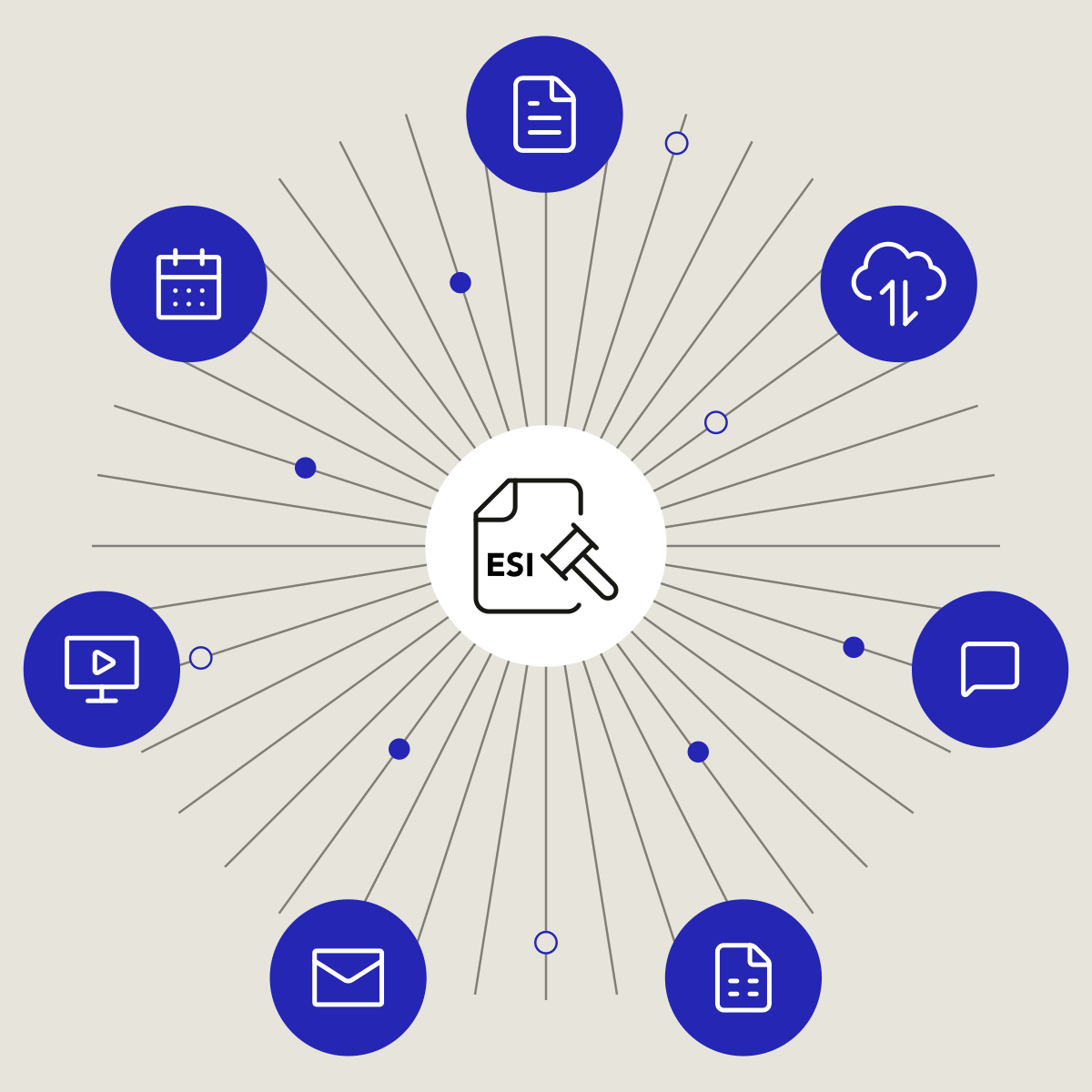
Discover the fundamentals of Electronically Stored Information (ESI) and its critical role in modern legal proceedings. Learn about ESI types, management challenges, best practices, and the technological advancements shaping its handling in corporate legal environments.

Understanding Electronically Stored Information (ESI)

In today's digital age, the legal documentation and evidence landscape has evolved dramatically, making Electronically Stored Information (ESI) a cornerstone in legal proceedings. ESI encompasses all digital data that may serve as evidence in legal matters, representing a fundamental shift in how legal professionals approach evidence collection and case preparation.

What is ESI?

What is ESI A Comprehensive Guide to Electronically Stored Information in Legal Contexts Internal Graphics What is ESI-

Electronically Stored Information (ESI) refers to any information created, stored, or used in digital form that can be retrieved, manipulated, transmitted, and stored electronically. This dynamic component of modern legal practice includes a wide array of digital formats:

  • Emails and attachments containing business communications

  • Word-processing documents including contracts and reports

  • Spreadsheets and databases storing financial and operational data

  • Voicemails and audio recordings capturing verbal communications

  • Social media content from platforms like LinkedIn, Twitter, and Facebook

  • Digital images and videos serving as visual evidence

  • Instant messages and chat logs from collaboration platforms

  • Website content and metadata providing contextual information

  • IoT device data from connected sensors and smart devices

  • Cloud-stored documents in services like Google Drive or Dropbox

For corporate legal teams, effectively managing ESI extends far beyond simple digital file handling. It plays a pivotal role in:

  1. Legal Proceedings: Serving as critical evidence in court cases

  2. Regulatory Compliance: Ensuring adherence to data protection laws

  3. Risk Mitigation: Preventing data breaches and legal sanctions

  4. Case Strategy: Strengthening legal arguments with digital evidence

  5. Corporate Protection: Safeguarding reputation and financial stability

  6. Discovery Efficiency: Accelerating evidence collection and review

Mastering ESI management enables legal teams to:

  • Uncover substantial evidence that can determine case outcomes

  • Maintain compliance with evolving data protection regulations

  • Avoid costly legal penalties and reputational damage

  • Gain strategic advantages in litigation and investigations

  • Adapt to the increasingly digital nature of business operations

The range of Electronically Stored Information continues to expand, presenting both opportunities and challenges for legal professionals:

What is ESI A Comprehensive Guide to Electronically Stored Information in Legal Contexts Internal Graphics Common Types of ESI and Their Legal Significance
  • Business Emails

    • Contain critical conversations, decisions, and agreements

    • Often serve as primary evidence in corporate litigation

    • Require careful preservation of metadata and attachments

  • Corporate Documents

    • Include contracts, policies, financial records, and reports

    • Form the backbone of business operations and legal history

    • Must be managed with version control and access tracking

  • Multimedia Files

    • Videos and images provide powerful visual evidence

    • Increasingly important in marketing, HR, and compliance cases

    • Require specialized handling for authenticity verification

  • Collaboration Platform Data

    • Messages from Slack, Teams, and other tools contain informal but valuable communications

    • Often reveal real-time decision-making processes

    • Present challenges in collection and context preservation

  • Database Records

    • Store structured business-critical information

    • Require specialized tools for extraction and analysis

    • Often contain sensitive customer or financial data

  • Mobile Device Data

    • Text messages, call logs, and app data provide personal insights

    • Increasingly relevant in employment and IP disputes

    • Present unique collection and privacy challenges

  • Social Media Content

    • Public and private posts can serve as evidence

    • Require careful authentication and context analysis

    • Raise complex privacy and admissibility questions

  • IoT and Sensor Data

    • Emerging as new evidence sources in product liability cases

    • Require specialized expertise for interpretation

    • Present novel challenges in collection and preservation

ESI plays a transformative role in the discovery phase of legal proceedings:

  • The ESI Discovery Lifecycle

    • Identification: Locating potential sources of relevant ESI

    • Preservation: Implementing legal holds to prevent data loss

    • Collection: Gathering ESI from diverse sources

    • Processing: Preparing data for review and analysis

    • Review: Evaluating ESI for relevance and privilege

    • Analysis: Extracting insights and connections

    • Production: Presenting ESI as evidence

  • Why ESI is Transforming Legal Discovery

    • Volume: Digital data grows exponentially, requiring efficient management

    • Complexity: Diverse formats and sources complicate collection and analysis

    • Speed: Rapid data processing enables quicker case preparation

    • Insights: Advanced analytics reveal patterns and connections

    • Compliance: Digital evidence must meet strict legal standards

    • Strategy: ESI can make or break legal arguments

Challenges in Managing ESI

Corporate legal teams face significant challenges in ESI management:

  • Volume and Complexity

    • Data explosion: Exponential growth of digital information

    • Format diversity: Hundreds of file types and platforms

    • Source proliferation: Data spread across devices and clouds

    • Storage costs: Managing terabytes of potential evidence

  • Legal and Regulatory Compliance

    • Evolving laws: Keeping pace with changing regulations

    • Jurisdictional differences: Navigating international data laws

    • Privacy concerns: Balancing discovery with data protection

    • Spoliation risks: Avoiding accidental data destruction

  • Technological Hurdles

    • Legacy systems: Integrating old and new technologies

    • Data silos: Connecting disparate information sources

    • Security risks: Protecting sensitive information

    • Skill gaps: Training teams on new tools and methods

  • Operational Challenges

    • Resource constraints: Managing costs and personnel

    • Time pressures: Meeting tight legal deadlines

    • Quality control: Ensuring accurate and complete collections

    • Defensibility: Maintaining chain of custody and audit trails

Best Practices for ESI Management

To effectively manage ESI, corporate legal teams should implement these best practices:

What is ESI A Comprehensive Guide to Electronically Stored Information in Legal Contexts Internal Graphics Best Practices for ESI Management
  • ESI Identification and Collection

    Comprehensive Approach:

    • Develop clear understanding of legal matter requirements

    • Map potential ESI sources across the organization

    • Employ advanced eDiscovery tools for comprehensive collection

    • Coordinate across departments to access all relevant data

    Technological Solutions:

    • Use AI-powered collection tools for efficiency

    • Implement automated data mapping solutions

    • Leverage cloud connectors for remote data sources

    • Maintain chain of custody documentation

  • Preservation and Processing

    Legal Hold Implementation:

    • Issue preservation notices promptly

    • Document all preservation actions

    • Monitor compliance continuously

    • Update holds as cases evolve

    Data Processing:

    • Convert data to reviewable formats

    • Remove duplicates to reduce volume

    • Preserve metadata for authenticity

    • Organize data for efficient review

  • Review and Analysis

    Efficient Review Strategies:

    • Utilize predictive coding for relevance ranking

    • Implement advanced search and filtering

    • Categorize documents by legal significance

    • Track review progress and quality

    Analytical Techniques:

    • Apply data visualization for pattern recognition

    • Use concept clustering for thematic analysis

    • Leverage timeline tools for chronological understanding

    • Employ sentiment analysis for communication tone

  • Production and Presentation

    Evidence Preparation:

    • Format ESI for court presentation

    • Redact sensitive information appropriately

    • Prepare explanatory metadata

    • Create comprehensive indices

    Strategic Use:

    • Highlight key evidence in presentations

    • Use visual aids for complex data

    • Prepare for technical explanations

    • Anticipate opposing counsel's challenges

Technological Advancements in ESI Management

Modern technologies are transforming ESI handling:

  • Artificial Intelligence and Machine Learning

    • Predictive coding for relevance ranking

    • Natural language processing for content analysis

    • Pattern recognition for connected evidence

    • Continuous learning from review decisions

  • Cloud-Based Solutions

    • Scalable storage for growing data volumes

    • Remote access for distributed teams

    • Automated updates for compliance

    • Cost-effective models for resource management

  • Advanced Analytics

    • Data visualization for pattern recognition

    • Concept clustering for thematic organization

    • Timeline analysis for chronological understanding

    • Anomaly detection for unusual patterns

  • Blockchain for Evidence Integrity

    • Immutable records for chain of custody

    • Tamper-proof documentation of collections

    • Verifiable authenticity of digital evidence

    • Transparent audit trails for legal defensibility

As technology continues to evolve, ESI management will face new challenges and opportunities:

Electronically Stored Information has fundamentally transformed legal practice, making digital literacy an essential skill for modern legal professionals. By understanding the full scope of ESI, implementing best practices for its management, and leveraging advanced technologies, corporate legal teams can:

  • Navigate complex digital landscapes with confidence

  • Uncover critical evidence that determines case outcomes

  • Maintain compliance with evolving regulations

  • Optimize resources through efficient processes

  • Gain strategic advantages in litigation and investigations

  • Future-proof operations against technological changes

As the digital environment continues to evolve at rapid pace, the ability to effectively manage ESI will remain a cornerstone of successful legal practice. Legal teams that master ESI management will be best positioned to handle the challenges of modern litigation, regulatory compliance, and corporate governance in an increasingly digital world.

The integration of technology in legal practices—particularly AI, machine learning, and advanced analytics—will continue to redefine how ESI is handled. Staying ahead in this dynamic environment requires not just technological proficiency but also a deep understanding of legal trends and regulatory changes, ensuring that legal teams remain both effective and compliant in their ESI practices.

What is ESI? A Comprehensive Guide to Electronically Stored Information in Legal Contexts

Categories: