
Hidden process and data inefficiencies are quietly inflating legal spend. Bringing technology in-house converts those hidden costs into repeatable workflows, measurable outcomes, and stronger operational control.
This blog highlights the practical steps legal leaders can take to bring technology in-house while improving efficiency, controlling costs, and increasing internal capacity. We’ll outline the core challenge, the strategic approach successful teams use, and a compact implementation checklist that can be adapted to your legal department.
The Challenge
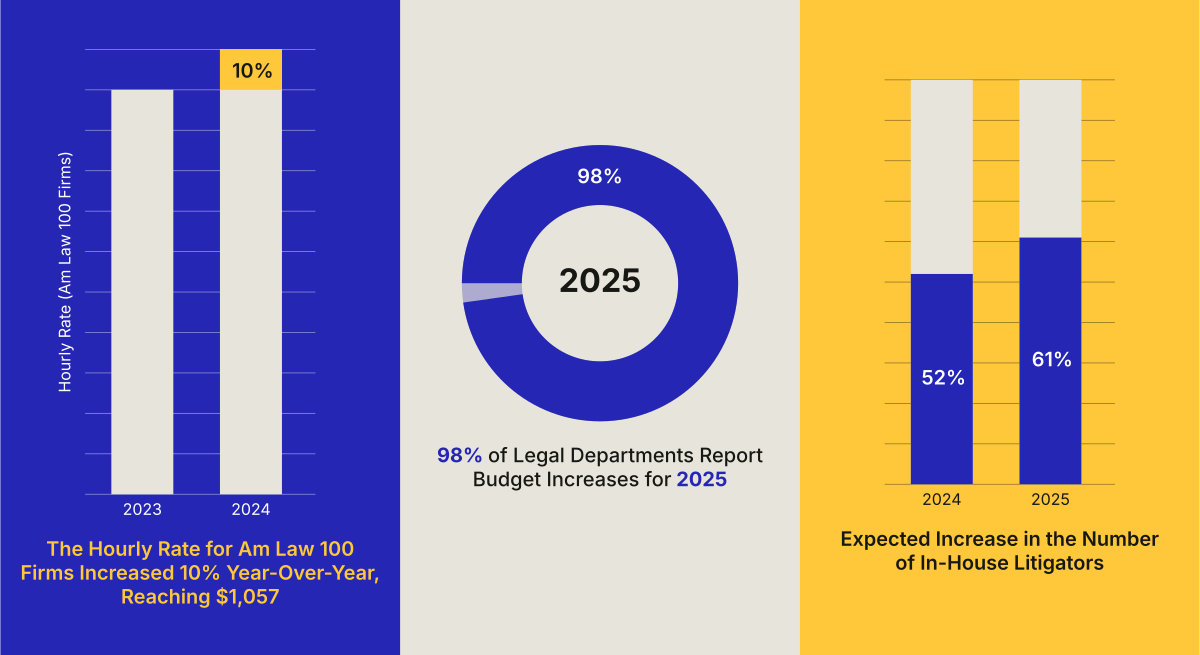
Legal departments in corporate and government settings are under mounting pressure to control costs while delivering high-quality legal services. One key strategy for addressing this challenge is reducing the reliance on expensive outside counsel. In 2024, according to a report from Legal Dive, the typical blended hourly rate for Am Law 100 firms increased 10% year-over-year, reaching $1,057.
This cost pressure is compounded by growing workloads — 98% of legal departments report budget increases for 2025, based on an Axiom Law survey. Plus, Norton Rose Fulbright’s 2025 Annual Litigation Trends Survey reported that 61% expect to increase the number of in-house litigators, up from 52% in 2024. This shift signals a clear move toward insourcing, cost efficiency, and increased internal capacity.
Legal departments must determine what functions can be efficiently managed in-house through technology enablement, such as automating routine tasks, and what tasks actually require external expertise. Government agencies face similar pressures as they balance fiscal responsibility with mission-critical operations.
The Strategic Approach
Adopting in-house technology effectively requires balancing long-term investment with short-term operational gains. Leading legal departments are focusing on platforms instead of isolated, point solutions. They concentrate on technologies that:
-
Integrate With Existing Systems: Ensure seamless data sharing with robust cloud connectors.
-
Leverage Advanced eDiscovery Tools: Cull data to precise, relevant review sets before giving outside counsel access — reducing external review fees and overall document volumes.
-
Maintain Data Custody and Control: Retain full care, custody, and control of sensitive information for security and compliance throughout investigations and litigation.
-
Automate Routine Tasks: Use workflow automation for functions like legal holds and early case assessments.
-
Scale Across Functions: Support a unified approach that spans multiple legal functions and business units.
For government agencies, solutions that advance efficiency, accountability, and measurable results are particularly valuable. By prioritizing technology that supports these goals, legal teams can reduce reliance on outside counsel and better manage their overall legal spend.
An Implementation Checklist: Metrics, KPIs, and Action Steps
Define Success Metrics
-
Task Efficiency: Target a 30–40% reduction in time spent on routine tasks.
-
Matter Management: Increase the proportion of matters handled in-house compared to matters that are outsourced.
-
Adoption Rates: Achieve widespread user engagement with new technology across the legal department.
-
Cost Savings: Quantify cost avoidance by reducing external counsel reliance.
-
Budget Predictability: Enhance financial planning accuracy in uncertain economic conditions.
Key Performance Indicators (KPIs)
-
ROI on Technology: Monitor cost savings relative to technology expenditure.
-
Cycle Time Improvements: Track reductions in processing times for legal tasks.
-
Self-Service Rates: Measure the percentage of routine legal requests completed without external assistance.
-
Quality and Accuracy: Assess improvements in legal outcomes post-automation.
-
Cost-Containment Impact: Confirm that technology investments align with broader organizational cost-saving strategies.
Action Steps
-
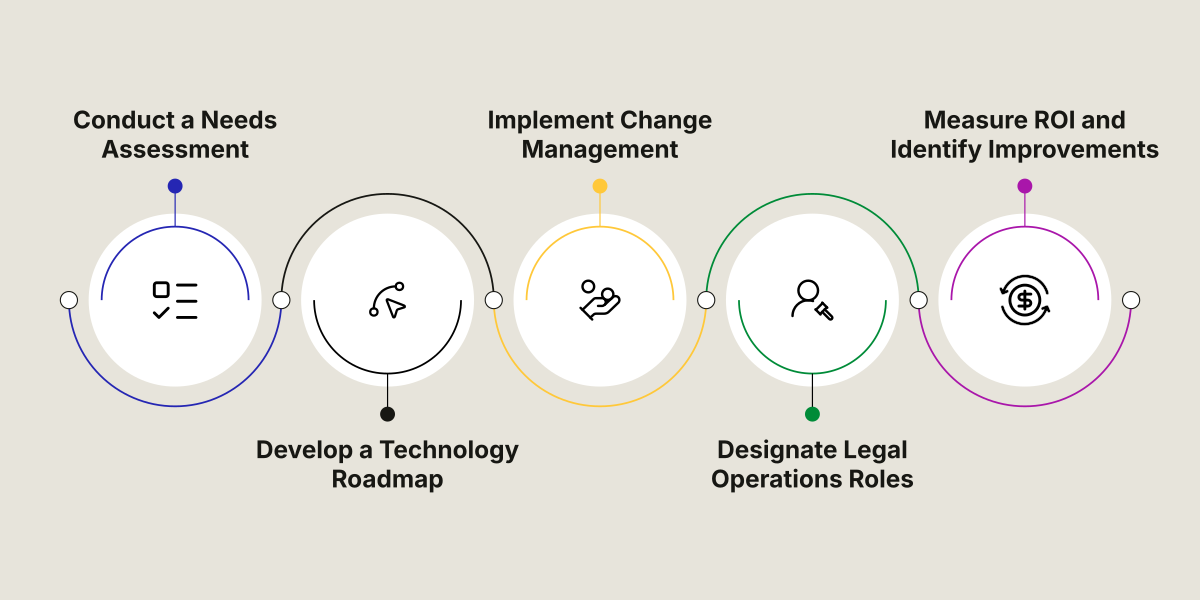
Conduct a Needs Assessment: Review current workflows and time-tracking data to identify key areas for technology deployment.
-
Develop a Technology Roadmap: Create a flexible plan that aligns technology investments with strategic business objectives and current economic realities.
-
Implement Change Management: Establish a structured program to promote technology adoption and support staff throughout the transition.
-
Designate Legal Operations Roles: Assign dedicated roles focused on technology optimization and tracking measurable outcomes.
-
Measure ROI and Identify Improvements: Define ROI metrics, monitor technology performance, and evaluate opportunities to refine processes and increase value.
Why Bringing Technology In-House Matters

Bringing technology in-house helps legal teams control costs while improving internal capabilities. By adopting integrated platforms, automating routine workflows, and maintaining data custody, teams can reduce external spend, increase speed, enhance quality, and gain greater control over legal outcomes. In constrained budget environments, these improvements create value across lower external review fees, more efficient matter triage, and more predictable legal budgets.
Technology investments are strategic assets: pair them with change management, clear KPIs, and dedicated legal operations leadership to realize both short-term gains and long-term transformation.
Want to go deeper? This blog builds on themes from our broader 2026 strategic playbook, which outlines five priorities for legal leaders and provides a practical roadmap to support strategy, KPIs, and long-term value creation.
Get the tools you need to strategically address evolving challenges and drive operational excellence.

Author
VP of Product Marketing and Revenue Enablement
Amit Dungarani serves as Vice President of Product Marketing and Revenue Enablement at Casepoint, where he leads strategic initiatives to align the company's comprehensive portfolio of enterprise solutions with the complex needs of large corporations and government agencies. With over 23 years of leadership experience spanning enterprise…
Categories:


