At the end of 2027, Relativity will sunset its support for their on-premises Server product. The announcement has left many organizations scrambling, including federal agencies that must either follow through with the forced migration or examine their options through procurement.
As eDiscovery continues to move to cloud platforms, agency leaders need to figure out how to follow suit. What security practices and platform capabilities are needed to support the mission successfully?
Why the Cloud Is the Answer
The shift is already taking place across government agencies, corporations, and outside counsel. Cloud is dominating email, collaboration platforms, core business applications — and eDiscovery is no exception. The Relativity Server sunset is simply one proof point to a clear narrative taking place in the industry.
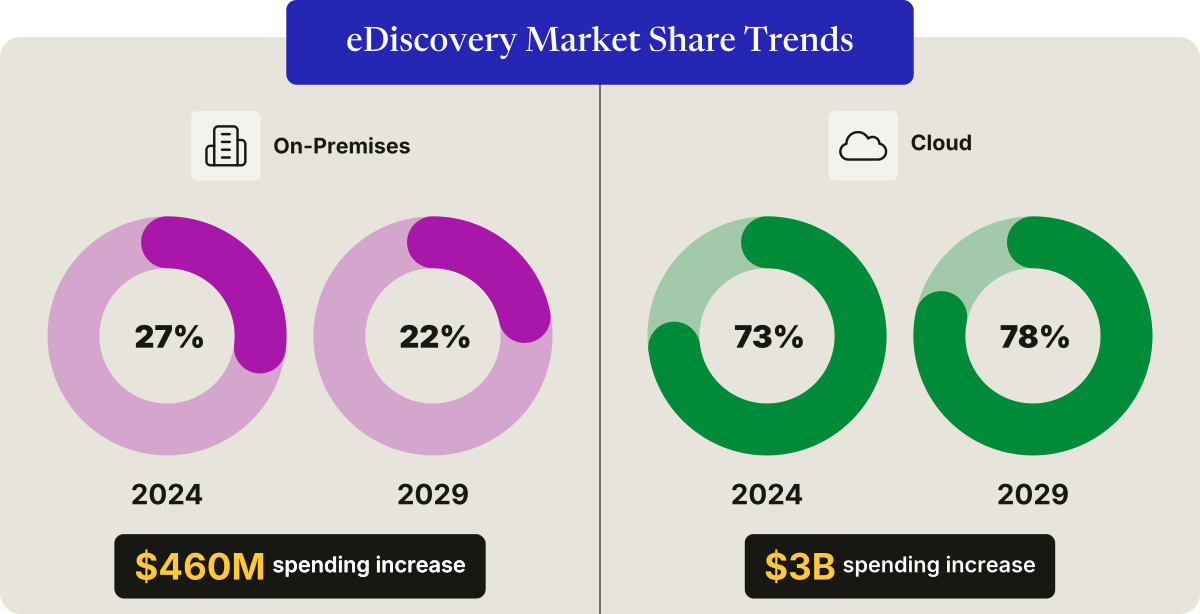
Cloud adoption in eDiscovery is accelerating six times faster than on-premises, according to Complex Discovery. From 2024 to 2029, cloud eDiscovery spending is projected to increase by about $3 billion over five years, compared to a modest $460 million for on-prem eDiscovery spending.
Why is the shift to cloud happening? Modernizing technology requirements are driving agencies to the cloud, where innovation moves fastest and the biggest advantages are realized.
-
Better Innovation: Legal data is largely in the cloud and growing quickly. Working in the cloud gives you immediate access to new features, AI, workflow improvements, and automated data collection capabilities that streamline and accelerate the process between data owners and the offices responding to data requests.
-
Faster Upgrades: Stay current without long delays for patches, compatibility fixes, or version rollouts.
-
Reduced Infrastructure and Budget Burden: Free IT from server maintenance and redirect spend locked in hardware, licenses, and upkeep toward higher-value work.
How Should Agencies Approach Security in the Cloud?
Cloud solutions in eDiscovery offer advantages over on-prem across the board. And while eDiscovery supports far more than litigation — including investigations, compliance, and internal reviews — security is the defining factor for federal agencies.
It’s true that security is a priority for every organization evaluating the cloud. The difference for agencies is the level of classification, compliance documentation, and formal authorization required before any system can support mission work. You can see that take shape in how the United States Department of the Air Force (Air Force), Judge Advocate General (JAG) Corps selected its enterprise cloud-based data discovery platform. The Air Force JAG Corps was looking for a way to modernize its tech stack through cloud-based functionalities while meeting security requirements, including DOD IL5 and Air Force ATO.
In general, how does the cloud compare to on-premises eDiscovery solutions for security? There are some common themes involved here.
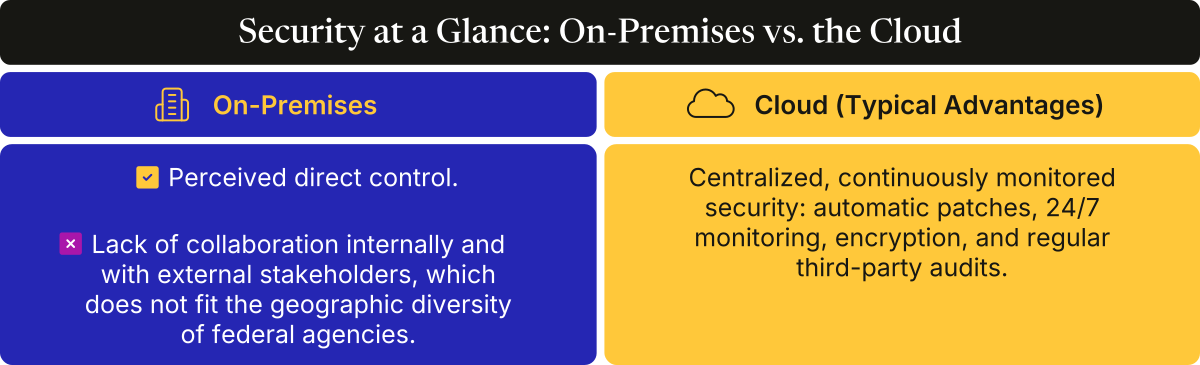
Best-in-class cloud providers will deliver industry-leading certifications like DOD IL5/IL6, FedRAMP® High, SOC II, ISO 27001, and NIST. They’ll also provide strong encryption practices (like being AES-256 and FIPS-aligned), plus have continuous vulnerability scanning and third-party penetration testing as standard.
Note that Casepoint is the only legal technology provider to achieve any of the highest security standards: FedRAMP High and DOD IL5/IL6. No other provider in the industry to date has any of those credentials. For IL6, there are only six cloud providers in the world with this distinction to handle “secret” level information: Amazon, Casepoint, Google, Microsoft, Oracle, and Palantir. Contact Casepoint to learn more about these security standards and how they help federal agencies protect their information.
Facing the Relativity Server Sunset: Next Steps for Federal Teams
What’s happening with Relativity should serve as a signal for agencies to reassess their eDiscovery strategy in the cloud. More directly, it can serve as a wake-up call to evaluate options and make an informed decision.
After all, there’s no simple solution. Agencies facing the sunset will be migrating and making a major change, which can be scary and confusing.
We’ve put together a guide to help you navigate this transition, address longstanding challenges, and choose a path that sets your agency up for long-term success.

Author
Vice President of Business Development, Government
With over 26 years of experience in business development and sales strategy, Kelly Swank has a proven track record of driving revenue growth and fostering long-term relationships with key government customers. As the Vice President of Business Development for Government at Casepoint, Kelly oversees the company’s DOW sales strategy, strategic…
Categories:


