The U.S. government has seen a significant erosion of trust from the general public. One 2025 Partnership for Public Service study found that only 33% of Americans trust that the government has their best interests in mind, and 67% stated they believe the government is “corrupt.” Low trust has been a consistent issue throughout the 2020s, pointing to a clear need for meaningful change in the way that institutions operate.
FOIA and Declassification Under Growing Strain
Reinstituting public trust can seem like a tall order for government institutions that are already overwhelmed. In a 2024 Freedom of Information Act (FOIA) report, records have grown by nearly 1 million requests over the past 10 years. Institutions at every level have been hit with record high numbers of records requested and processed. Even as organizations proactively release data, officials still struggle to meet public needs in a way that fortifies trust in government-released information.
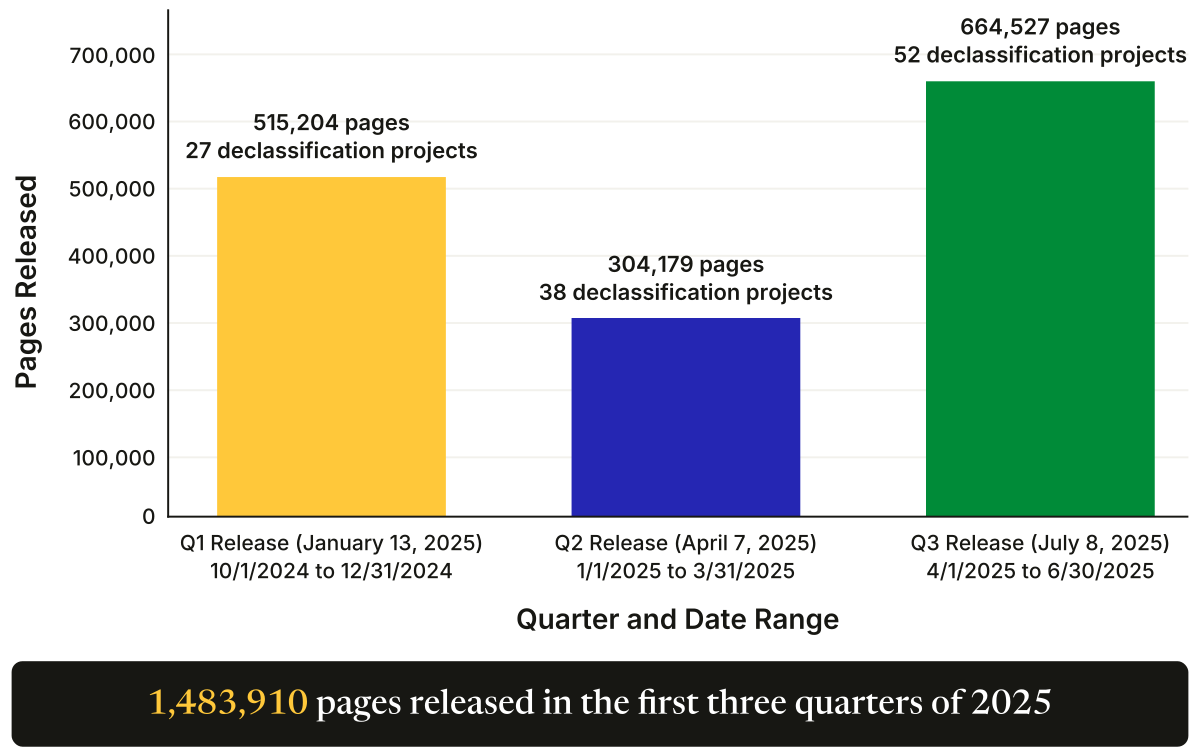
Another topic in government transparency is declassification, which refers to the formal process that removes secrecy markings so records can be released to FOIA requests. More than 1 million documents have been released in the first three quarters of 2025, according to the National Declassification Center, posing challenges for the sheer number of records being released.
Leaders have known that declassification can emphasize the people’s democratic right to transparency. Consequently, when classified documents are mishandled, a seed of tension is planted between the people and the government. Once the public disengages — a reasonable assumption given the lack of trust found in the survey mentioned earlier — it can be difficult to re-earn their trust. This is especially true when institutions face the challenges they are currently burdened by.
These trust gaps are not the result of a single failure, but of several compounding operational challenges facing agencies.
-
Expansion of Declassification Responsibilities Into New Agencies: Agencies that have rarely released records and declassified documents in the past are now being brought onboard to review, redact, and release sensitive data.
-
Coordination Efforts Introduce Risk of Delay: When content proves relevant to multiple departments, those departments must be brought in for review. This not only increases the amount of time reviews take, but it forces workers who would not normally review documents to quickly adapt to a new and complex process. Many agencies also have unique declassification rules (such as the FBI and CIA), which can mean additional steps and more thorough review.
-
Manual Processes Slow Down Reviews: Along with the potential delays presented by onboarding new agencies and coordinating between departments, manual processing can act as a mountain-sized speed bump. Reviewing and redacting information entirely by hand takes time, and long delays lead to lower trust.
How Agencies Are Addressing Operational Bottlenecks Through Technology
Operational pressures like slow reviews, coordination delays, and manual redaction are amplified by legacy tools that weren’t designed for today’s scale or complexity. As discussed in our recent blog, agencies are increasingly moving beyond these older systems to platforms that support faster, more secure, and more auditable workflows. Legacy tools ultimately heighten risk rather than reduce it.
What can a modern platform bring to FOIA and declassification workflows — and other legal functions at government agencies? Here’s a look at some major advantages.
Streamline Coordination and Core Workflows Through the Cloud
Normally treated as an IT optimization tool, the cloud actually boasts total digital transformation of organizations that use it with an eye towards innovation. Through the cloud, organizations are able to accelerate the process between data owners and those responding to requests. Casepoint’s cloud collection software centralizes resources (like data collection, collaborative tools, and email capabilities) for collecting data straight from a single cloud repository. Automated data collection capabilities help streamline coordination efforts within and across agencies.
Maximize Efficiency and Security with eDiscovery
A cloud-based eDiscovery tool can eliminate many of the issues that institutions face when it comes to releasing and declassifying documents. Casepoint’s platform allows agencies to manage and track FOIA workflow in a timely, organized manner. That means automatic review of records for relevancy, AI-powered redactions leveraged with robust quality controls, an expedited retrieval and referral process, and much more. For a full rundown of how eDiscovery can help agencies facilitate every part of the FOIA process, take a look at our blog on the future of FOIA.
Preserve Critical Data Quickly and Securely With Legal Hold Software
Spreadsheets and manual processes are no longer the standard across legal institutions. Instead, agencies are turning to the Casepoint platform for managing every detail of the process, which takes place securely alongside FOIA and eDiscovery workflows. Automated notifications, dashboards, and reporting streamline custodian management, saving time and improving compliance. The platform makes the legal hold process seamless and defensible.
Utilize Tech That Boasts High Security Standards
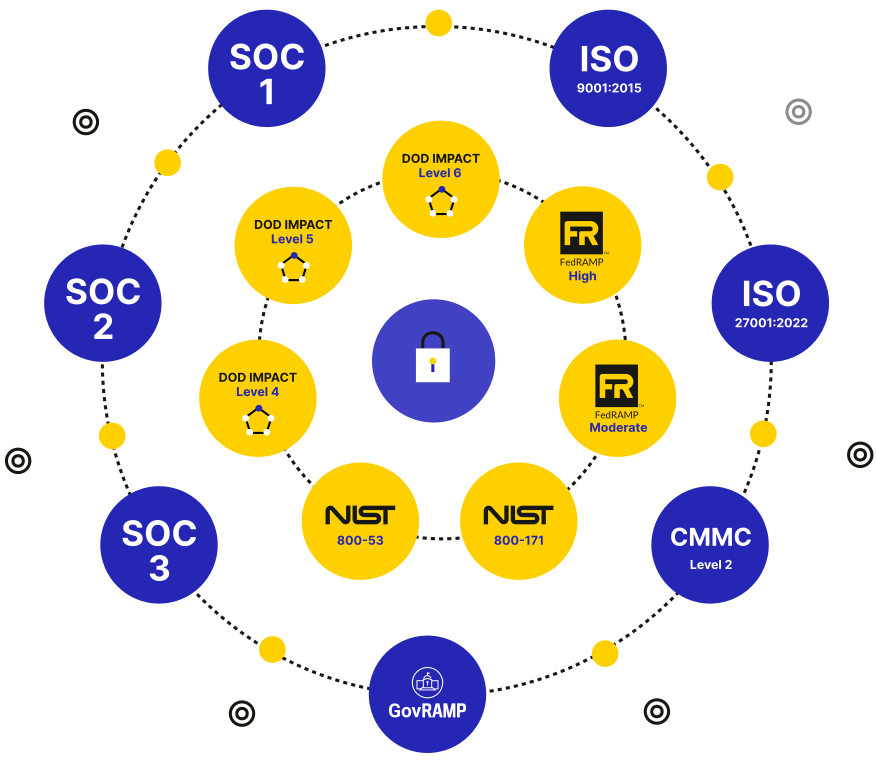
As FOIA requests are often inundated with sensitive data, Casepoint offers unmatched security credentials:
-
SOC 1 Type II
-
SOC 2 Type II
-
SOC 3
-
ISO 27001:2022
-
ISO 9001:2015
-
FedRAMP® Moderate and High
-
GovRAMP
-
NIST SP 800-53
-
NIST SP 800-171
-
DOD IL4, IL5, and IL6
Casepoint is currently the only legal technology provider that operates at the highest standard of security. No one else has FedRAMP High or DOD IL5 or IL6. And there are actually only six cloud providers worldwide with the IL6 distinction: Amazon, Casepoint, Google, Microsoft, Oracle, and Palantir.
Modern platforms like Casepoint streamline workflows and improve efficiency while meeting the highest security standards. Centralized coordination and automated review help agencies reduce risk and build secure, defensible processes.

Author
Vice President of Business Development, Government
With over 26 years of experience in business development and sales strategy, Kelly Swank has a proven track record of driving revenue growth and fostering long-term relationships with key government customers. As the Vice President of Business Development for Government at Casepoint, Kelly oversees the company’s DOW sales strategy, strategic…
Categories:


