

Corporate legal departments and law firms currently encounter unprecedented data growth and mounting compliance demands. Expanding workloads force organizations to move away from slow manual review methods.
Modern legal teams now use legal AI tools to improve processing speed, accuracy, and overall efficiency. Legal AI tools help legal and compliance teams to replace manual handoffs with secure, AI-powered workflows for eDiscovery, FOIA, investigations, and compliance. This supports faster legal outcomes while reducing operational bottlenecks across complex matters.
Why Legal Teams Face More Pressure Than Ever
Corporate and government legal teams routinely manage expanding volumes of digital evidence, emails, and complex business documents. Stricter regulatory obligations continue to increase compliance pressure, requiring precise recordkeeping across every single active matter.
Leadership teams and enterprise clients constantly expect faster turnaround times for critical legal decisions. Meanwhile, limited internal resources and rising operational costs create significant financial strain on existing departments. The growing adoption of AI in legal industry operations can help teams manage these institutional pressures.
Why Traditional Legal Workflows Are No Longer Sustainable
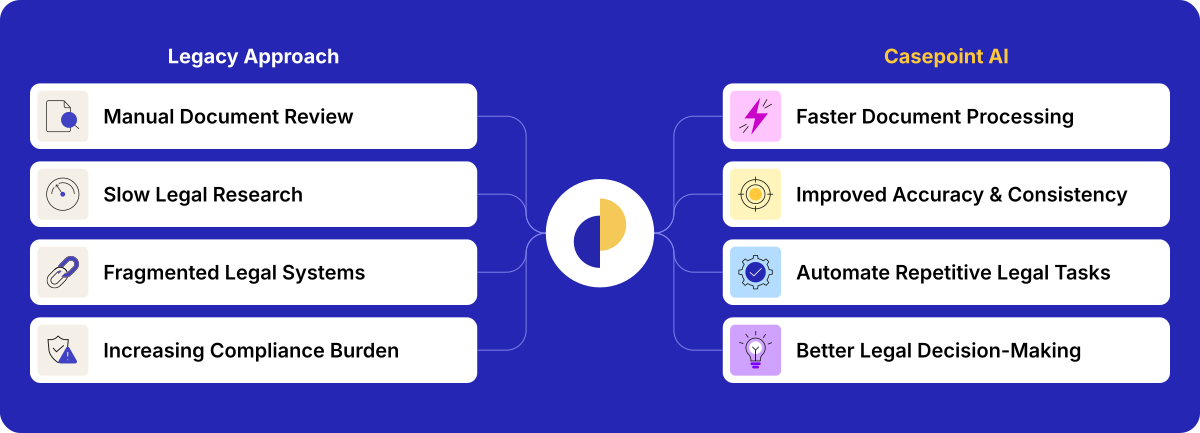
Legacy operational processes create severe administrative friction across modern corporate and government legal teams.
-

Manual Document Review
Manual file evaluation consumes excessive staff hours and increases operational expenditure drastically. Relying on manual checks introduces significant risks of human error into legal discovery.
-

Slow Legal Research
Searching case law and statutory precedents manually causes noticeable delays in strategic legal decision-making. Practitioners waste valuable time locating authoritative decisions across scattered printed sources.
-

Fragmented Legal Systems
Storing documentation across disconnected platforms limits overall visibility and weakens cross-departmental collaboration. So internal legal teams struggle to align strategy when active case files remain isolated.
-

Increasing Compliance Burden
Maintaining audit-ready records becomes increasingly difficult without centralized technical infrastructure. Inconsistent documentation standards eventually force organizations to adopt specialized legal automation software.
Why Legal AI Tools Are Transforming Legal Operations
Modern technology helps legal departments modernize daily operations through intelligent document management.
-

Faster Document Processing
Advanced platforms rapidly analyze vast datasets to identify relevant and privileged files. Legal AI tools shorten review timelines significantly across complex litigation matters.
-

Improved Accuracy and Consistency
Automated review reduces manual mistakes while ensuring uniform evaluation standards. Standardized processes establish dependable quality controls across every corporate litigation workflow.
-

Automate Repetitive Legal Tasks
Systematic document tagging, automated case routing, and structured file classification reduce routine administrative effort. Implementing AI legal workflows allows legal professionals to focus on high-priority strategic responsibilities.
-

Better Legal Decision-Making
Machine learning models reveal hidden patterns and potential legal risks during early case assessment. These strategic insights guide early settlement choices and long-term litigation tactics effectively.
Key Areas Where Legal Teams Use AI
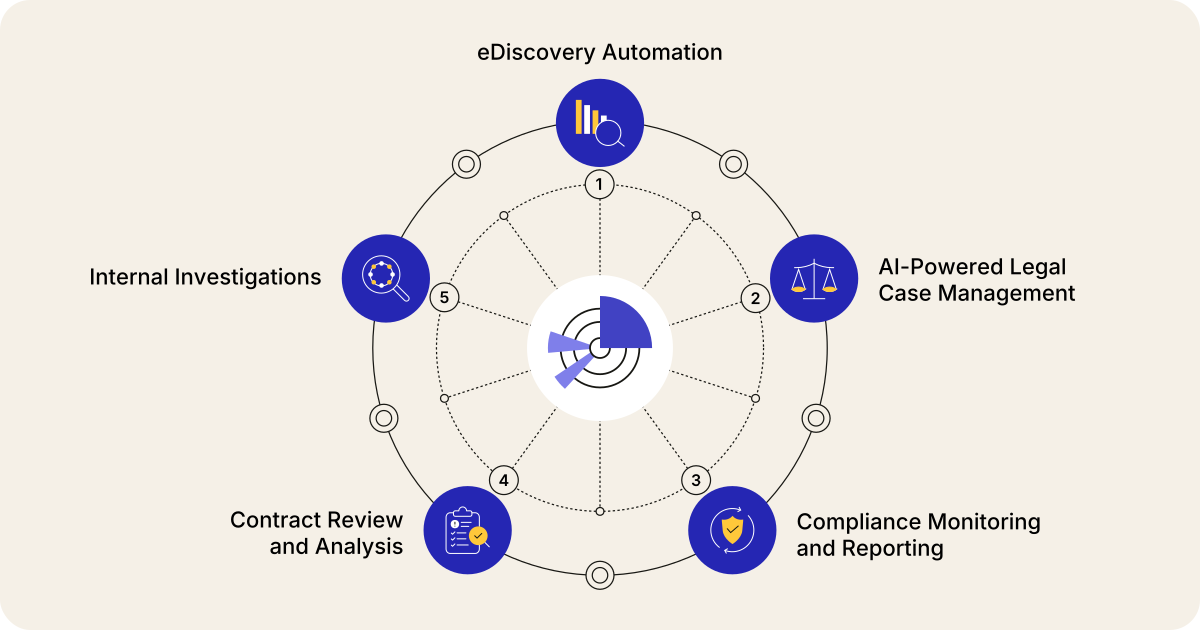
Here's how modern legal departments apply advanced algorithms to manage complex data loads across core operations:
-

eDiscovery Automation
Teams rely on eDiscovery automation to streamline document review and data ingestion.
-

AI-Powered Legal Case Management
Organizations deploy legal case management AI to structure timelines and track workflows.
-

Compliance Monitoring and Reporting
Software monitors regulatory changes and generates structured reports for audit readiness.
-

Contract Review and Analysis
System algorithms analyze contract terms to detect non-compliant clauses and risks.
-

Internal Investigations
Pattern recognition tools scan enterprise communications to surface critical evidence during inquiries.
Benefits of Legal AI Tools for Modern Legal Teams
Adopting modern legal technology delivers the following advantages across complex corporate and agency litigation:
-

Faster case resolution
Structured early data assessment accelerates review timelines.
-

Lower operational costs
Deploying legal automation software reduces manual data processing expenses.
-

Improved accuracy and consistency
Advanced algorithms reduce human error during evidence categorization.
-
Better compliance and audit readiness
Centralized audit trails support strict regulatory reporting requirements.
-

Flexible legal operations
Cloud platforms accommodate growing file volumes without operational friction.
-

Stronger risk identification and legal insights
Analytics tools highlight critical case facts early in proceedings.
Challenges of Adopting Legal AI Tools
Data privacy and security concerns often complicate software implementation within government agencies and corporate legal departments. Integrating new software with legacy infrastructure requires rigorous data governance protocols to safeguard sensitive enterprise files. Additionally, organizations should use transparent, explainable AI with human review to support defensible legal and regulatory work.
Successful legal tech adoption also relies on continuous human oversight to validate automated findings. Legal teams must establish structured change management programs to train staff and align technical tools with existing workflows.
The Future of AI in the Legal Industry
The role of AI in legal industry workflows is steadily transitioning from a specialized feature to standard business practice. Modern legal platforms continue expanding to provide unified cloud automation across every single stage of the litigation lifecycle.
Accelerating legal tech adoption among federal agencies and corporate legal departments reflects growing organizational trust in hybrid workflows. Combining human legal judgment with automated data processing maintains operational accuracy while enabling legal teams to manage complex enterprise records efficiently.
How the Casepoint Platform Supports AI-Powered Legal Workflows
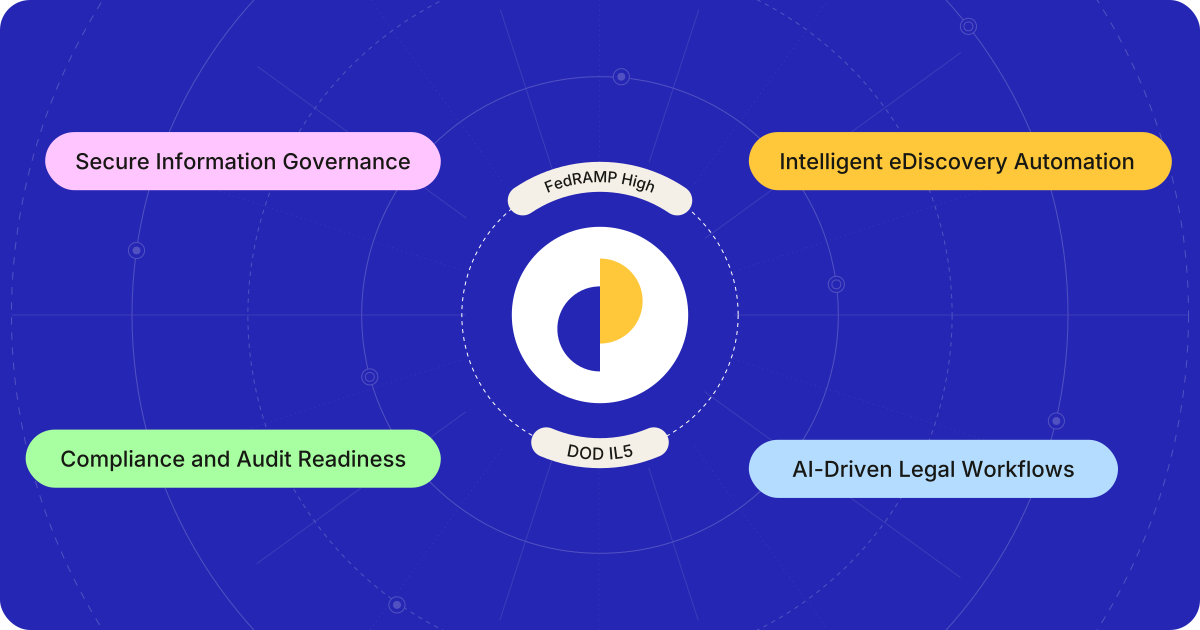
Casepoint helps legal teams use AI-powered workflows to streamline complex litigation and high-volume data management.
-
Intelligent eDiscovery Automation
The platform delivers continuous eDiscovery automation to accelerate document review, speed up file filtering, and improve legal data analysis.
-

AI-Driven Legal Workflows
Structured AI legal workflows increase processing speed across demanding government investigations, regulatory FOIA requests, and enterprise litigation.
-

Secure Information Governance
Casepoint helps protect sensitive enterprise records with FedRAMP High and DOD IL5 authorizations.
-

Compliance and Audit Readiness
Legal case management AI helps teams track work, follow consistent review steps, and preserve audit trails across Casepoint workflows.

Final Thoughts
Advanced software solutions transform how legal departments handle expanding workloads and strict compliance requirements. Artificial intelligence assists legal professionals by improving accuracy, review speed, and strategic decision-making rather than replacing legal expertise.
To support that shift, dedicated platforms like Casepoint support responsible technology adoption through secure infrastructure designed for compliance and adaptable legal workflows. These structured tools maintain strict operational control during complex legal operations.
Frequently Asked Questions (FAQs)
-

What are legal AI tools?
They are software applications that use advanced algorithms to automate legal analysis, document review, and data organization.
-

How do legal AI tools improve legal workflows?
They speed up review tasks, reduce manual errors, and simplify legal operations.
-

What is eDiscovery automation?
eDiscovery automation uses technology to collect, process, and analyze electronic evidence efficiently for litigation and compliance requirements.
-

Can AI replace lawyers?
AI can assist legal professionals with repetitive tasks, but cannot replace strategic human reasoning, ethical judgment, or courtroom representation.
-

What should organizations look for in legal AI tools?
Buyers should prioritize strict security authorizations, defensible workflows, and verified audit trails.
Categories:


