
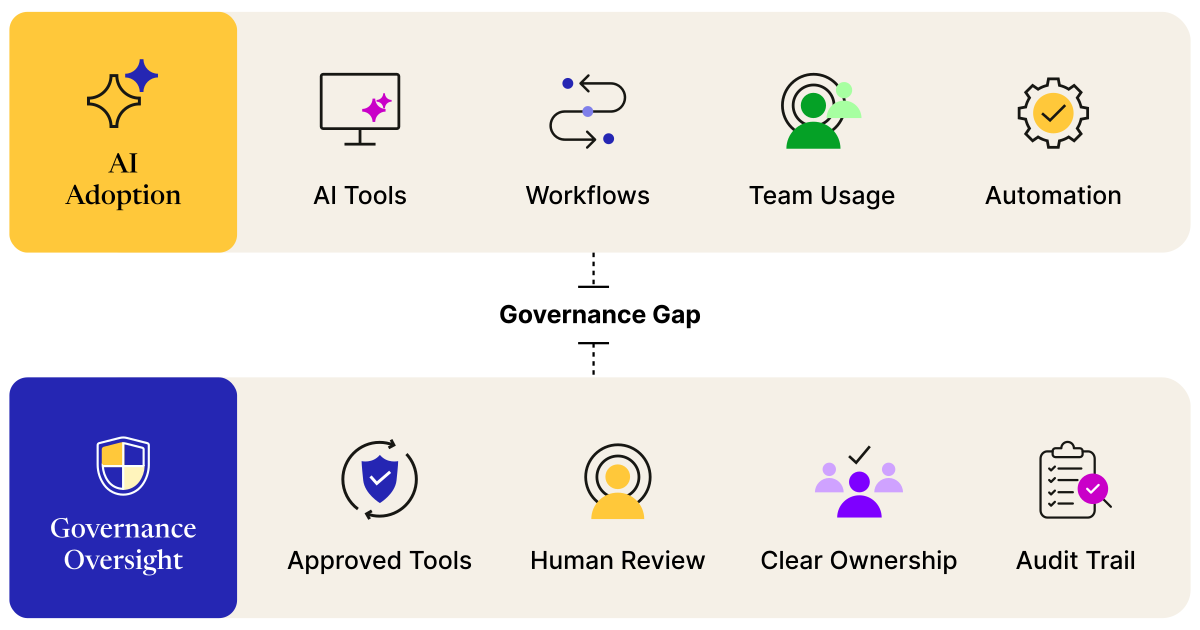
As AI adoption accelerates, many organizations are discovering what some observers call an "AI security confidence paradox": leaders feel increasingly confident about using AI, even as their governance and control frameworks lag behind.
According to Delinea's 2026 Identity Security Report, 87% of organizations say their identity security posture is prepared to support AI-driven automation at scale, yet 46% admit their identity governance around AI systems is deficient. That gap reflects a broader maturity problem. Many organizations still lack formal AI policies, clear ownership structures, and governance processes that can keep pace with deployment.
So where do legal teams go wrong?
-
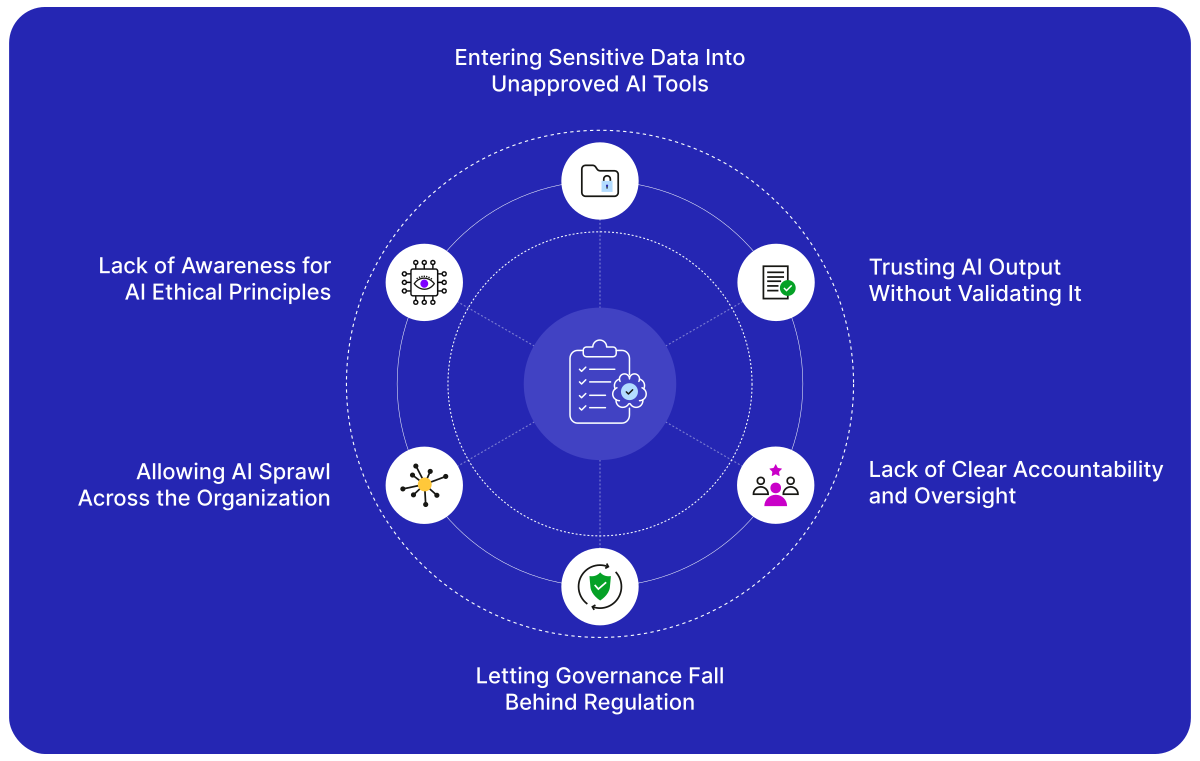
Entering Sensitive Data Into Unapproved AI Tools
Data privacy and confidentiality risks should be front of mind before anyone pastes sensitive information — such as contracts, client data, internal memos, or litigation materials — into an AI tool. That risk is especially high when teams use public or unapproved tools that do not offer the level of security, retention controls, or contractual protections legal work requires. In our AI Maturity in the Legal Industry whitepaper, multiple surveys found that at least half of respondents were already using AI in ways that should concern legal teams, and one legal-industry survey found that more than 80% were using tools their company had not provided or formally approved.
If sensitive information is entered into the wrong system, legal teams may create privilege, confidentiality, data protection, and compliance issues. Strong governance starts with clear rules on what data may be used with AI, which tools are approved, and when human review or escalation is required. Data classification controls and practical training can help reinforce those guardrails.
-
Trusting AI Output Without Validating It
Generative AI can produce polished output that sounds reliable and is still wrong. In legal work, that creates obvious risk. AI can cite nonexistent cases, misstate regulations, oversimplify facts, or generate flawed contract language. Left unchecked, those errors can lead to bad advice and sanctions or regulatory scrutiny.
That’s why review cannot be optional. Legal teams need a clear validation process for AI-assisted work, especially in higher-risk matters. Source checking, expert review, and limits on where AI may be used can reduce the chance that a confident error turns into a legal problem.
-
Lack of Clear Accountability and Oversight
When no one clearly owns a tool, oversight slips and accountability gets blurry.
Each AI tool should have a named owner and a clear review process. Someone should be able to explain who approved it, how it was evaluated, and who is responsible for it now.
Without that structure, follow-up becomes inconsistent. Problems are easier to miss. It also becomes harder to answer basic questions later, especially if an issue arises.
-
Letting Governance Fall Behind Regulation
AI regulation is changing quickly. Legal teams cannot assume that today’s approach will still hold up tomorrow. Rules may shift by location or by use case, and that creates pressure to keep adjusting.
A better approach is to build governance around durable controls. Risk review, documentation, and oversight tend to hold up better than a reactive scramble each time a new rule appears.
That does not remove the need to monitor legal developments. It does make governance steadier. Legal teams are in a stronger position when the foundation is already sound.
-
Allowing AI Sprawl Across the Organization
AI sprawl occurs when different teams adopt different AI tools without centralized oversight, leading to a fragmented ecosystem of tools, vendors, and data flows.
In addition to the risk involved, it’s also difficult for organizations to enforce consistent standards around data usage, tool validation, and human oversight. This fragmentation increases the likelihood of non-compliance, as regulations demand clear audit trails, defined ownership, and organization-wide policies.
This is why contracting once is often ideal. Besides increasing high-level visibility of AI usage, contracting once often lowers costs, increases security, and leads to fewer training burdens.
-
Lack of Awareness for AI Ethical Principles
Since AI systems learn from historical data, it can sometimes produce outcomes that disadvantage certain groups. For high-stakes areas like hiring, lending, insurance, and legal decision-making, this sort of bias leaves organizations vulnerable to non-compliance with anti-discrimination laws, consumer protection statutes, and emerging AI-specific regulations that require fairness and accountability. In fact, the New York State Human Rights Law (NYSHRL) now requires “employers who use automated employment decision tools (AEDTs) to substantially assist or replace discretionary decision-making to conduct bias audits and make the results of the bias audit publicly available.”
As regulations begin to reflect discriminatory behavior in AI, it’s crucial to mitigate these risks through bias testing, diverse data training, and, as always, continuous human oversight in decision-making. For audit processes especially, legal teams should also maintain clear documentation of how AI systems are developed and used.

Author
Director of Sales Engineering
Kevin Albert serves as Director of Sales Engineering at Casepoint. He leads the sales engineering function, aligning technical strategy, resources, and solution design with customer requirements and contractual obligations. He partners closely with sales, product, and operations to guide complex engagements, support demos and evaluations, and serve…
Categories:


