
Imagine a health system responding to an investigation into its billing practices.
Evidence is scattered across internal systems and an outside billing company. Some documents contain sensitive patient information unrelated to the investigation, requiring careful review before they can be shared.
For healthcare legal teams preparing for 2027, this is the time to examine readiness. After all, can the team preserve and gather the evidence it needs while maintaining appropriate privacy controls? The answer depends on how well those responsibilities connect across the legal workflow.
Where Does the Evidence Live?
The location of patient records doesn’t tell the legal team where all the evidence lives. Relevant information can extend into employee communications and systems operated by outside vendors.
HHS’s guidance on HIPAA risk analysis takes a similarly broad view of patient information: its scope includes electronic protected health information regardless of location, including information handled by vendors or consultants. Legal can draw on the documentation developed for that analysis, working with IT and privacy teams to identify sources and expand the search to related business records.
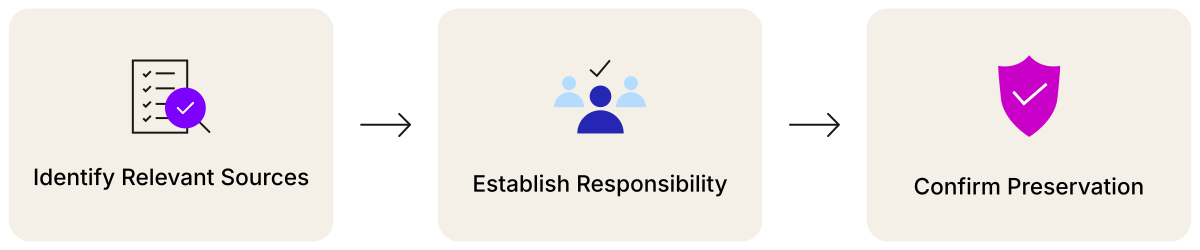
The next step is to turn that knowledge into a plan for the matter:
-
Identify relevant sources. Determine which records are needed to understand the issue, including communications outside the patient record.
-
Establish responsibility. Identify who manages each source and can coordinate preservation, including contacts at outside vendors.
-
Confirm preservation. Document the steps taken to protect relevant records from routine deletion and follow up on outstanding requests.
Once the work is connected to existing data documentation, legal has a clearer starting point. Of course, it also helps expose gaps, such as a vendor-held source with no established process for preserving its records.
What Can Be Shared?
Before sharing patient information, legal needs to check what the request authorizes and whether the records require special handling.
A subpoena, for instance, is different from a court order. HHS explains that a court order permits disclosure of the patient information specifically described in it. A subpoena without a court order involves additional conditions, including requirements concerning patient notification or a qualified protective order.
Some records need closer attention. The updated 42 CFR Part 2 requirements, which required compliance by February 16, 2026, allow patients to provide a single consent for future uses of protected substance use disorder records for treatment, payment, and healthcare operations. But using those records in proceedings against the patient requires specific consent or a court order meeting Part 2 requirements.
For review teams, the more practical question is how to catch these issues before information is shared. Reviewers need to know which records to flag and who can resolve disclosure questions, with decisions documented to guide production.
Keeping Control Through Review and Production
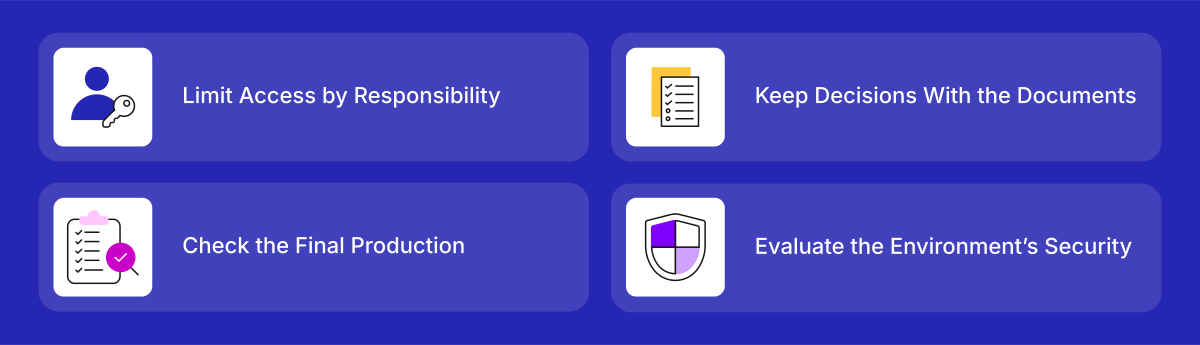
Patient information shouldn’t become harder to control once it reaches legal. A shared review environment gives teams a way to collaborate without passing around separate collections, but it needs controls that hold up through the final production:
-
Limit access by responsibility. Give reviewers access to the records they need, with a process for referring sensitive information to legal or privacy specialists.
-
Keep decisions with the documents. Record handling instructions and disclosure decisions where reviewers can find and apply them.
-
Check the final production. Verify that required redactions appear in the delivered files and that records marked for exclusion have been removed.
-
Evaluate the environment’s security. Review how the provider protects stored information and transfers, along with the independent assessments supporting its security practices.
Casepoint connects legal hold and eDiscovery in one platform, reducing transfers between systems while protecting sensitive information with encryption and role-based access controls. Its FedRAMP® High authorization provides further assurance through independent assessment against stringent federal security requirements.

Author
Senior Content Writer
Brian Neese is the Senior Content Writer at Casepoint, leading the strategy and development of thought leadership and marketing content that helps legal and government professionals connect with transformative technology. He brings more than 15 years of experience across technology, higher education, finance, and retail, including collaborations…
Categories:


