

Based on a Thomson Reuters survey, 80% of professionals think AI will have a high or transformational impact on their profession within five years, but only 38% expect to see high or transformational levels of change in their organization within a year.
Legal professionals were among the professionals surveyed, and this sentiment is true across workflows that encompass legal, investigative, regulatory, compliance, and data discovery. While expectations are high, the follow through isn’t expected to happen soon. Part of that reason is because leaders lack clear direction for implementation: data and infrastructure issues, security and compliance concerns, and performance and defensibility risks all loom.
“Legal Teams Acknowledge AI Risks but Fail To Mitigate Them”
This headline tells the story. Axiom found how “in-house [legal] teams have a dangerous disconnect between awareness and action” when it comes to implementing AI safely.
Sixty-nine percent of leaders see at least moderate risk to their companies, but most don’t implement corresponding safeguards. Fortunately, there are steps you can take to ensure your department is prepared.
A study done at the University of Gothenburg found that preparing for AI readiness can be as simple as starting IT collaboration with proof-of-concept projects. Legal IT departments can improve operational preparedness by using a holistic approach to prepare data for AI. For a legal IT department, a proof-of-concept project for data preparation might look like:
-
Showing understanding of the data landscape
-
Ensuring compliance with standards like FedRAMP®, DOD impact levels, and NIST frameworks
-
Data cleansing that ensures the removal of duplicates, incomplete records, and outdated information
-
Training AI on datasets that are representative of diverse populations
-
Ensuring robust feedback loops
A proof-of-concept project can help to create a neutral training ground for AI use. This idea is backed up by Nuala O’Connor, a global Fortune 10 technology governance leader and former SVP and Chief Counsel for Digital Citizenship at Walmart, in a panel discussion about AI transformation.
100%, the ‘walled garden approach’ is the right step for where we are right now in the evolution of this technology.
Rather than giving employees free use of public AI models, this approach provides employees a safe place to try out generative AI in the comfort of the organizational sandbox. IT can help set up a training landscape that helps workers use AI safely and with discernment.
Why Is There Such a Disconnect Between Awareness and Action?
Take a look at whoʼs leading the charge.
The identifying, vetting, and paying for AI in legal departments isnʼt IT. Legal departments are taking it on, “flying blind in AI procurement,ˮ according to the Axiom report, despite lacking the technical expertise to do so. Hybrid approaches are also common, but very few actually partner with IT.
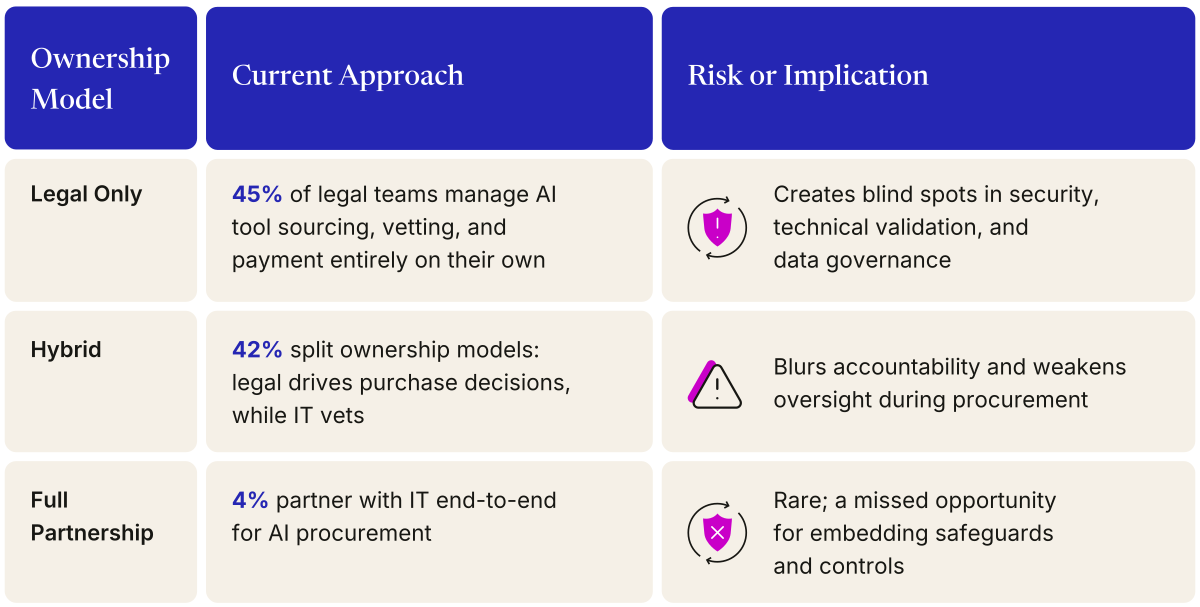
This trend persists regardless of the level of AI use. Forty-eight percent of mature teams bypass IT collaboration, signifying a level of overconfidence in technical capabilities during procurement. So even if legal teams are taking advantage of AI and using it strategically, risks can seep through.
Where Governance Gaps Meet Organizational Reality
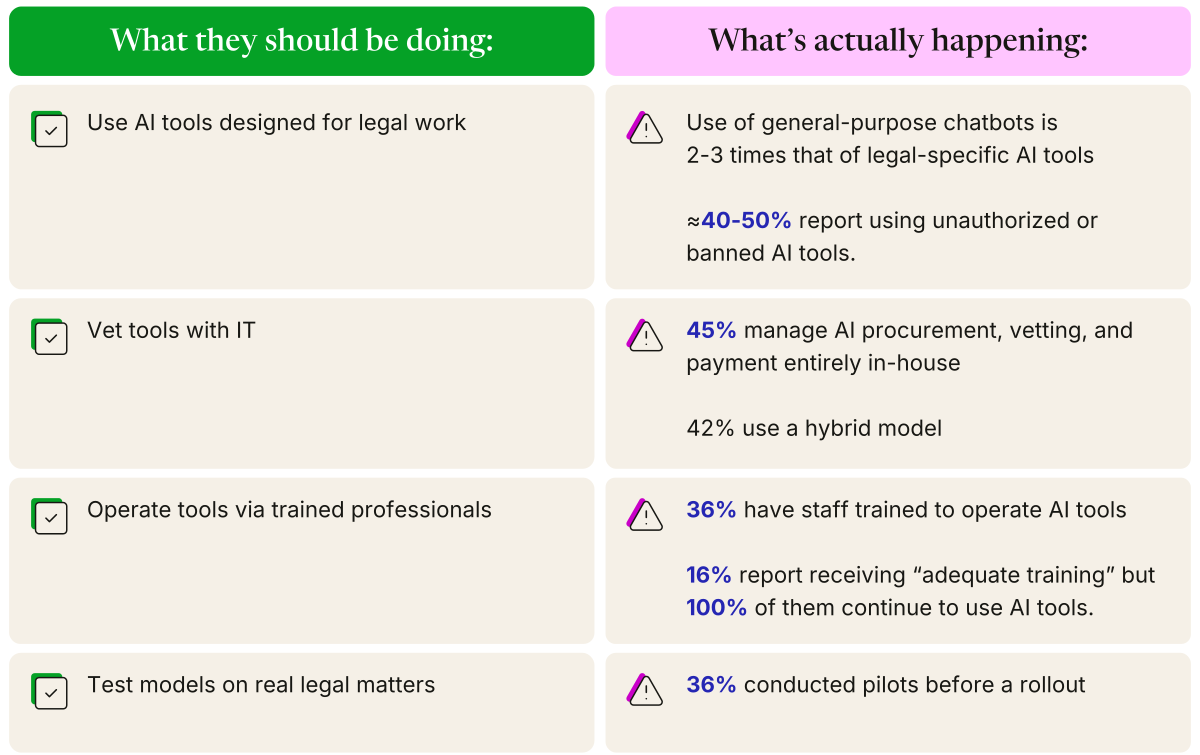
The disparity between legal and IT collaboration is apparent. Instead of “flying blind” with general-purpose tools that create risks, legal teams should take an alternative approach.
Here are some insights from our AI Maturity in the Legal Industry whitepaper.

Author
Director of Sales Engineering
Kevin Albert serves as Director of Sales Engineering at Casepoint. He leads the sales engineering function, aligning technical strategy, resources, and solution design with customer requirements and contractual obligations. He partners closely with sales, product, and operations to guide complex engagements, support demos and evaluations, and serve…
Categories:


