
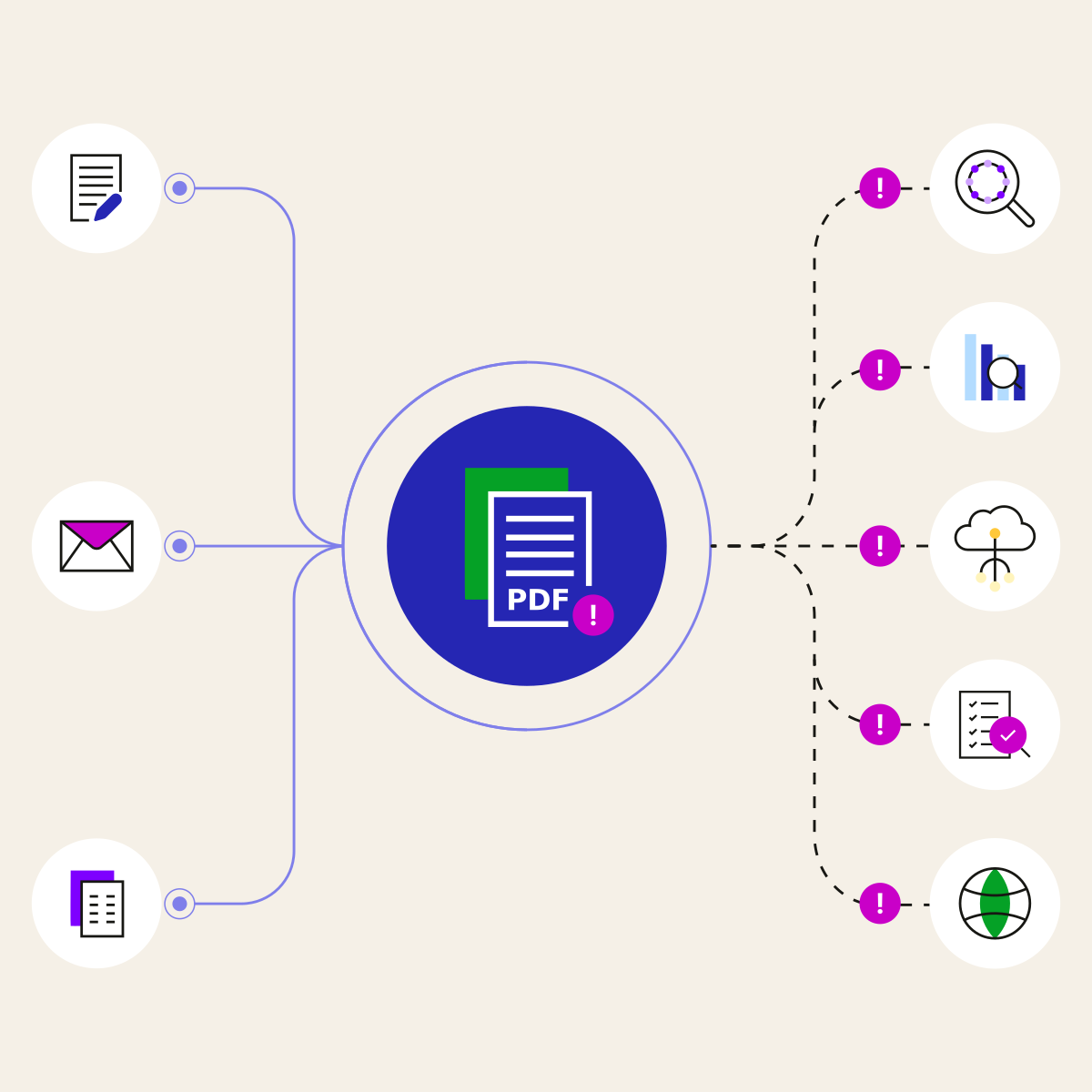
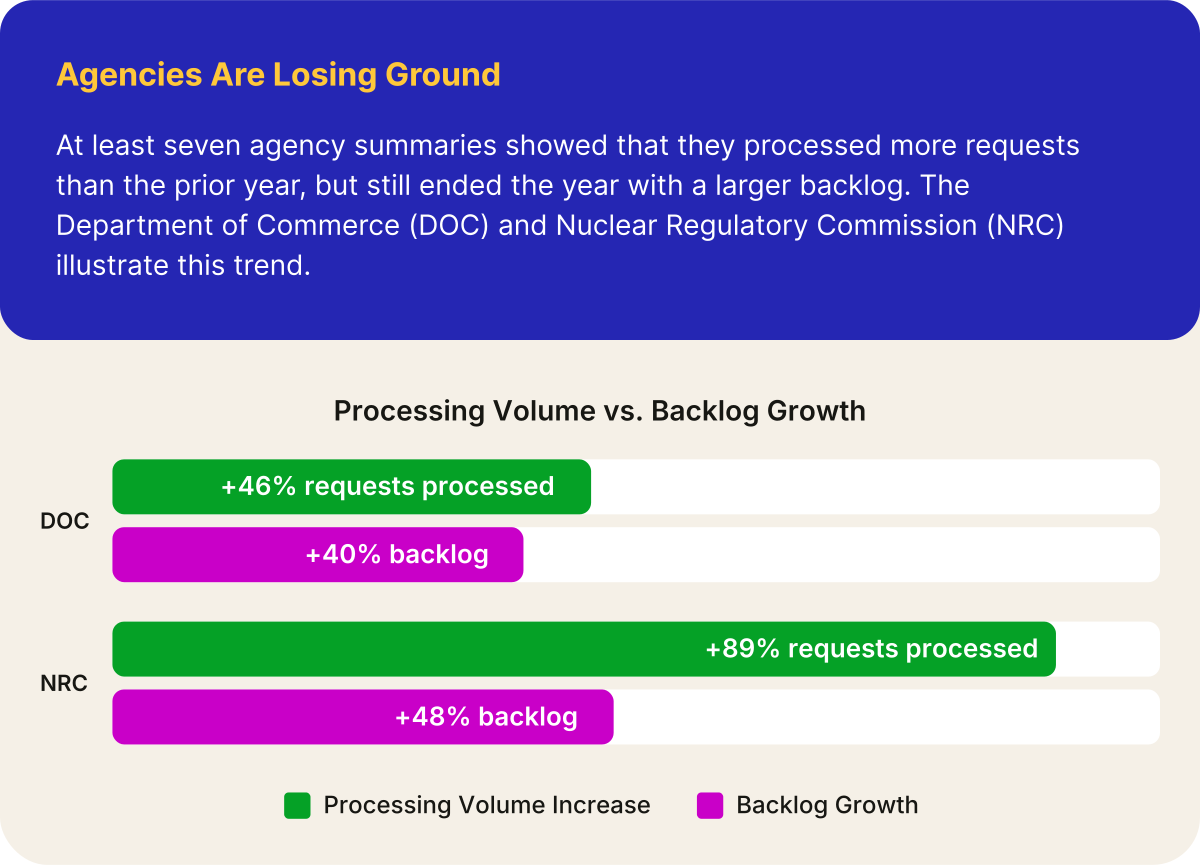
Agencies are processing more FOIA requests, but the vast majority still have a request backlog. Several agencies ended up with larger backlogs despite increased processing numbers.
Part of the problem is how work moves in FOIA environments. Casepoint’s analysis of 68 Chief FOIA Officer Reports found that 35 agencies showed signs of fragmented, manual, limited, legacy, or still-maturing technology environments. This is in addition to other stressors like staffing constraints and litigation demands.
PDFs, emails, and spreadsheets all play a useful role in FOIA. But problems arise when they become the connective tissue between disconnected stages of the process.
The Problem Appears in the Handoffs
Some agencies are stitching together FOIA, review, eDiscovery, file transfer, reporting, and publication work across separate systems. Others are still relying on manual steps, legacy systems, or newly deployed platforms that don’t yet cover the full lifecycle. In both cases, technology can create more handoffs instead of reducing them.
Those gaps can be easy to miss because the individual tools may still work well for their intended purpose. PDFs remain useful for reviewing, redacting, and releasing records. Email and spreadsheets can support coordination and tracking. Friction builds when records, decisions, or status information have to move between those tools as work advances.
The Department of Commerce offers one example. Its report described an enterprise FOIA case management system across 15 components, alongside separate tools for eDiscovery, review, file sharing, and related workflows.
FOIA modernization has to reduce those handoffs. Adding tools one layer at a time can make the workflow harder to see and harder to defend.
Fragmentation Gets More Expensive When Capacity Is Already Strained
Handoffs are harder to absorb when FOIA teams are working with limited capacity. Casepoint’s report found that more than 25 agencies explicitly cited request surges, while close to half cited some form of staffing strain. Several reported staffing losses or turnover of roughly 30% or more.
Staffing losses also create the loss of institutional knowledge and continuity, making it harder to keep complex or aging requests moving. To make better use of limited staff capacity, agencies should focus on clearer prioritization, stronger case visibility, reusable work product, and reduced manual effort.
Fragmented workflows aren’t an inconvenience. Each extra handoff can require staff to locate information again, reestablish context, or repeat work that has already been done elsewhere.
FOIA Work Doesn’t Stay in One Lane
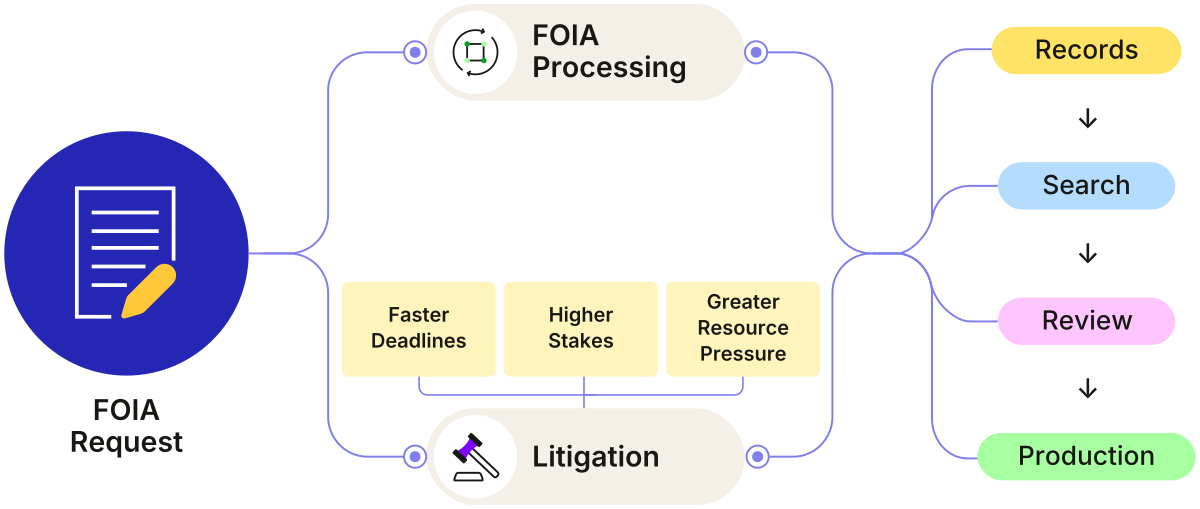
FOIA work that enters litigation does not suddenly exit the FOIA operation. The same records, searches, reviews, and productions often move into a court-driven track with tighter deadlines and higher consequences. Casepoint’s report found that 35 agencies were managing active FOIA litigation, including 11 with at least 25 active matters.
That creates another capacity challenge for teams already managing ordinary requests and backlogs. At the Department of State, FOIA requests in litigation accounted for approximately 1% of all requests but consumed approximately 90% of current FOIA review resources.
When the underlying workflow is fragmented, litigation can force teams to rebuild or transfer work into yet another queue. Connecting request processing with legal review and production helps preserve prior work and reduces the need for repeated handoffs.
Modernization Should Connect the Workflow, Not Add Another Tool
The risk is that agencies add tools one layer at a time until the workflow becomes harder to see and harder to defend. Modernization should reduce those handoffs instead of multiplying them.
FOIA leaders don’t need another disconnected layer of technology. They need a clearer path from request to release, with the security, visibility, and workflow control to make modernization sustainable.
Download The FOIA Technology Gap whitepaper to explore the findings from 68 Chief FOIA Officer Reports and what they mean for the next phase of FOIA modernization.

Author
Director, Product (FOIA)
As Casepoint’s Director of Product (FOIA), Victoria Cash is responsible for the strategic development and management of Casepoint's FOIA products, features, and capabilities. She brings over 14 years of product management experience, with the most recent 9 years managing software applications for federal-civilian and DOW clients. Prior to joining…
Categories:


