In 2026, Casepoint reviewed the Chief FOIA Officer reports of 68 federal agencies. More than half (35) showed signs of fragmented, manual, limited, legacy, or still-maturing FOIA tech environments.
For example, 80% of Department of War (DOW) component organizations (e.g., Department of the Army, National Security Agency, etc.) reported that they don’t use automation technologies, even though the components that use automation reported time and labor efficiencies, along with some financial savings.
As the analysis shows, fragmentation is widespread, but the costs of fragmented workflows often aren’t apparent. They might be hidden in different budget line items or take the form of tasks duplicated over time. This article illustrates some common challenges of fragmented workflows and how to address them.
The Challenge: Data Silos
Defense agencies handle a range of data-related tasks, such as FOIA requests, litigation eDiscovery, and regulatory/compliance matters. The same underlying data may be relevant to multiple matters, but it is often stored and handled in multiple locations.
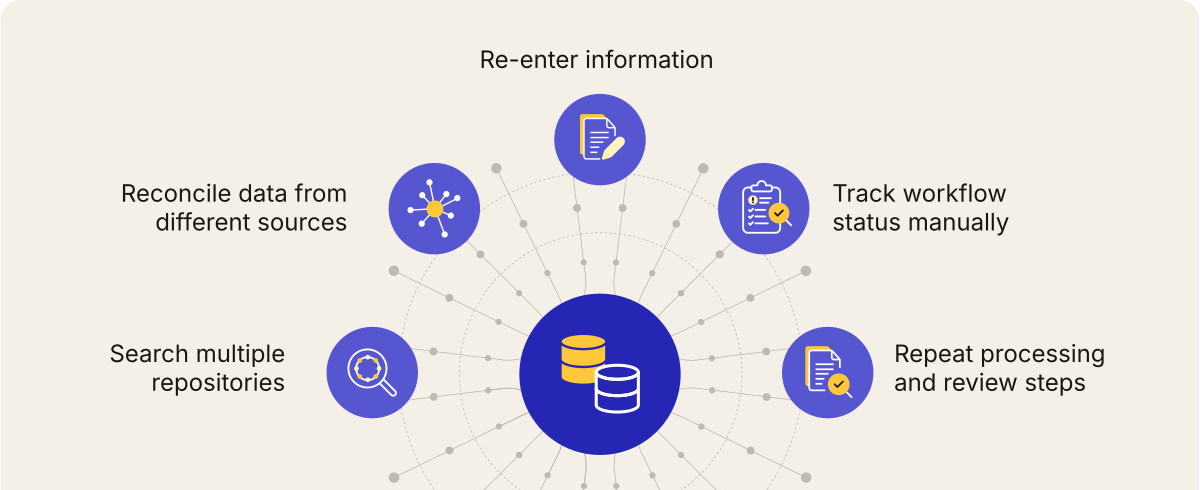
With data silos, personnel may need to:
-
Search multiple repositories
-
Reconcile data from different sources
-
Re-enter information
-
Track workflow status manually
-
Repeat processing and review steps
The result: different teams are reviewing and processing the same data, creating inefficiency in how documents and data are handled.
The Solution: A Unified Environment
An integrated environment ensures that everyone is working from the same baseline, even if workflows and procedures differ from one project to the next. To combat fragmentation, agencies can use a platform that’s robust enough to handle large data volumes but flexible enough to accommodate varying workflows and security needs.
With a single, unified platform, agencies can give personnel a shared view of the data and work in progress. Automation, audit trails, and dashboards help integrate tasks and assist personnel, while accommodating multiple workflows and use cases.
The Challenge: Manual Handling
Fragmentation also creates more manual handoffs.
When different systems and tools are used at each phase, documents may be manually exported, converted, uploaded, transferred, and processed. This opens up more opportunities for error, version-control issues, time loss, and security risks.
The Solution: Flexible, Repeatable Workflows
An integrated platform can bring disparate documents and data together. Even so, there’s no such thing as a one-size-fits-all process. Agencies need a platform that can support a range of tasks and all stages of eDiscovery, FOIA, investigations, and more. With role-based access, matter-specific processes, reusable work product where appropriate, and a clear audit trail, personnel can work more efficiently and consistently while reducing duplication and manual handoffs.
The Challenge: Outdated Formats
“Federal agencies increasingly create, use, and store records in electronic rather than paper form.”
That observation came from a 1990 report by the Administrative Conference of the United States.
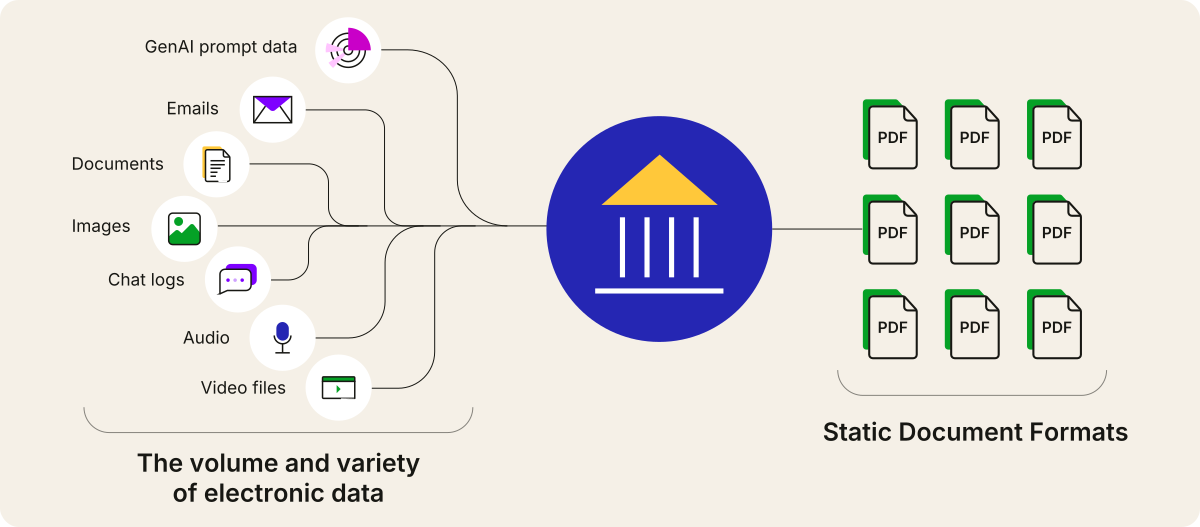
The volume and variety of electronic data have expanded dramatically since then: GenAI prompt data, emails, documents, images, chat logs, and audio and video files.
And yet, many agencies continue to use systems that revolve around static document formats, leaving teams to convert data into PDFs, search across disconnected collections, create multiple copies, and even manually redact and reassemble documents.
The Solution: Supporting Diverse Data
Data discovery platforms must support search, analytics, review, redaction, and production for a diverse range of data and documents. And for defense agencies, security is paramount and legacy systems are costly to maintain.
Look for a platform that supports the data types you manage today while giving you room to accommodate new ones. Technology is only part of the equation, however. The support that goes along with it is key. You need a partner who understands DOW procurement and can train and support your team as your needs change and capabilities expand.
Modernizing Through Integration
Federal agencies are pushing to modernize their data systems. Reducing fragmentation isn’t only about efficiency and cost savings. Integrating systems and processes is key to keeping defense agencies secure, agile, and prepared for changing data and mission requirements.

Author
Vice President of Business Development, Government
With over 26 years of experience in business development and sales strategy, Kelly Swank has a proven track record of driving revenue growth and fostering long-term relationships with key government customers. As the Vice President of Business Development for Government at Casepoint, Kelly oversees the company’s DOW sales strategy, strategic…
Categories:


