

At the 2026 CLOC Global Institute, the conversation around AI felt different. Legal teams are moving past experimentation and asking harder questions about execution, governance, and measurable business value.
That showed up in two places. The sessions themselves were more practical and more specific than in past years. And conversations with legal ops professionals on the floor made clear that adoption is still slower, messier, and more constrained than the market narrative often suggests.
What the Programming Signaled
The agenda reflected a clear shift toward practical execution. It leaned heavily on short-form sessions, peer conversations around what's working, and focused discussions on specific use cases. The emphasis was less on broad AI theory and more on how teams are applying these tools inside real legal workflows.
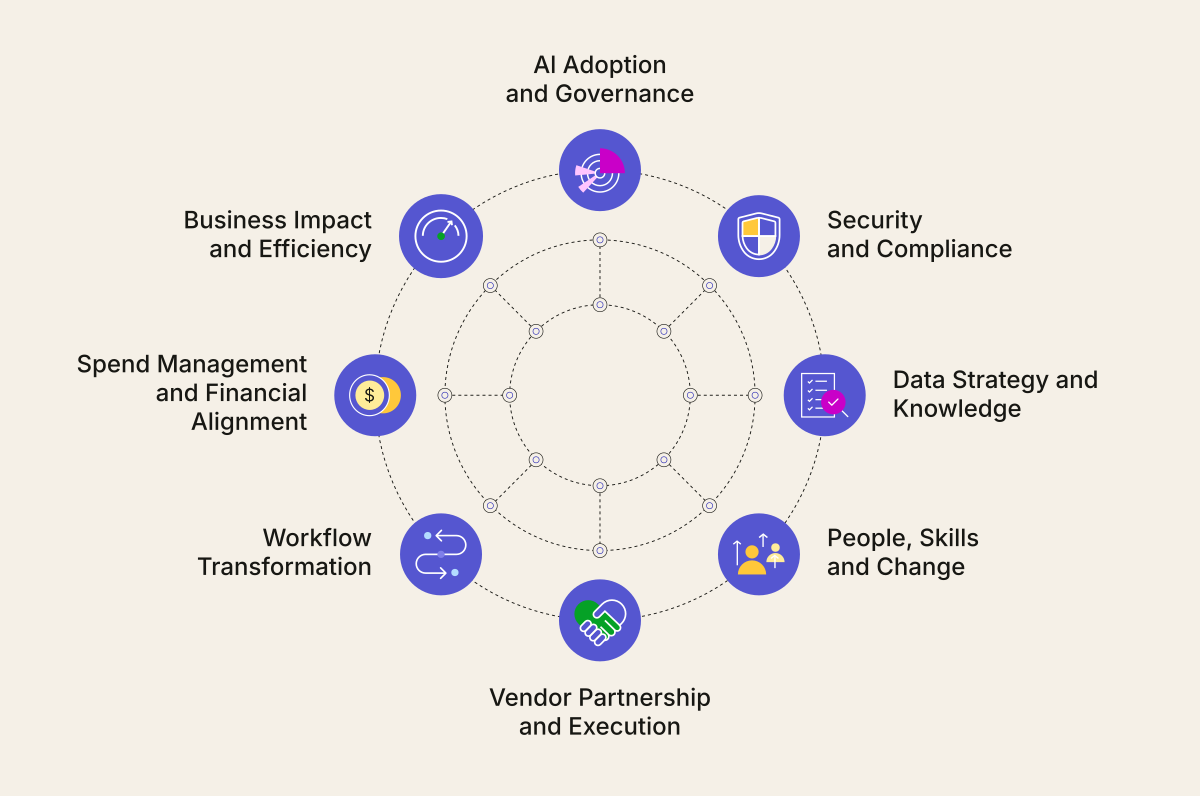
The sessions pointed to four clear priorities.
-
Legal ops is speaking more directly to finance: More sessions framed legal operations in terms of budget discipline, business impact, and cash efficiency. Legal leaders need to show how legal work affects risk, operating performance, and, in some areas, revenue timing rather than treating spend as a fixed back-office cost.
-
Knowledge strategy is moving higher on the agenda: Teams are looking beyond static repositories and asking how structured legal data can be made more useful. That includes finding prior work faster, surfacing internal expertise, and reducing the repetitive effort that comes from fragmented systems.
-
AI is getting more disciplined: Teams are thinking more carefully about which tools fit which tasks, where the source of truth sits, what kind of output they need, and how to preserve accuracy and traceability.
-
Buyers are selecting partners, not just software: When it comes to procurement, the selection lens has shifted. Legal ops leaders are evaluating vendors on total cost of ownership, change-management support, and cultural fit. Presenters were clear: "AI glitter," beta demos, and roadmap vaporware are immediate red flags that kill deals. Buyers want transparent roadmaps and vendors who can support execution over time.
What Casepoint Heard on the Floor
Our conversations with legal ops leaders were more grounded and, in some cases, more cautious. The themes from the sessions held up, but real adoption remains uneven and operational barriers persist.
CLOC 2026 showed that legal teams are serious about AI, but careful about how it’s deployed. The next phase belongs to solutions that can support governed execution, measurable impact, and practical adoption beyond demos.

Author
VP of Product Marketing and Revenue Enablement
Amit Dungarani serves as Vice President of Product Marketing and Revenue Enablement at Casepoint, where he leads strategic initiatives to align the company's comprehensive portfolio of enterprise solutions with the complex needs of large corporations and government agencies. With over 23 years of leadership experience spanning enterprise…
Categories:


