
Everyone talks about security. It’s so important that not talking about it would raise suspicion.
But when there’s so much hype from technology providers, the language can almost become meaningless. You find yourself reading security pages that devolve into branded security programs, security “pillars,” proprietary frameworks, and trust centers that provide marketing fluff rather than something definitive you can identify and bring back to your IT team.
You might even carry that skepticism toward “military-grade security” — and in all honesty, you probably should. So what does it mean?
When there’s objective evidence behind it, the phrase can provide much-needed clarity.
Security Is Easy To Claim, But Harder To Prove
Anyone can say that their solution is secure — and most of them do (quite creatively).
But what’s the evidence behind the claim? The next step is to look past the language and find independently verifiable proof.
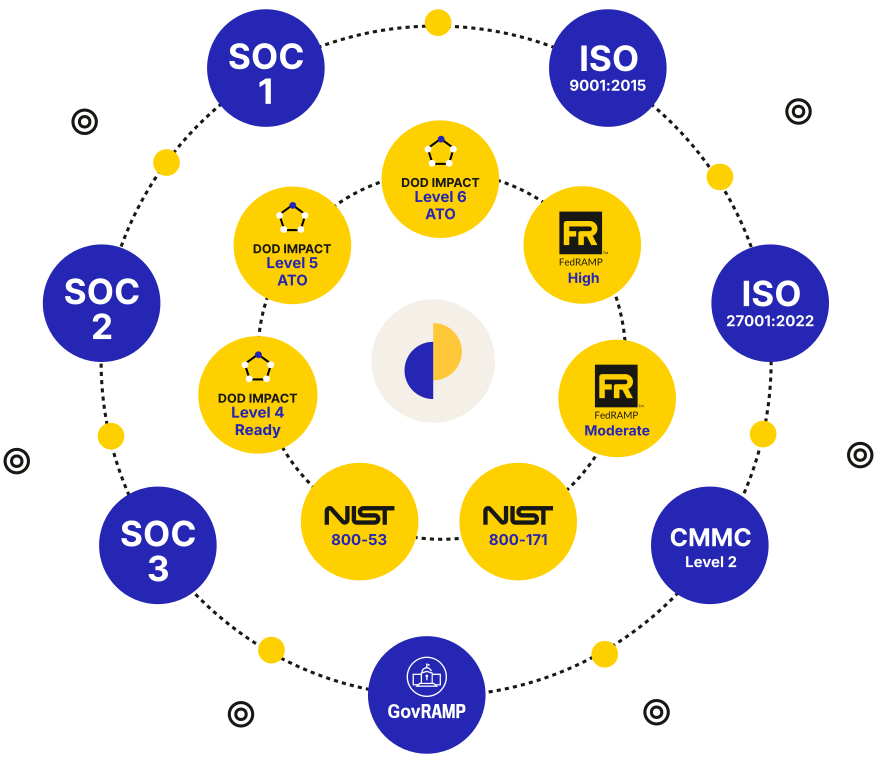
Standards like SOC 2 Type II and ISO 27001 are meaningful, especially for demonstrating mature security controls and information security management. However, they’re also relatively common across the legal technology market. FedRAMP® and DOD impact level authorizations set a much higher bar for increasingly sensitive government and military environments. For legal teams, that standard provides stronger external evidence that security is built into the platform or tool.
What does military-grade security look like in practice? That question inspired a trio of Casepoint whitepapers comparing providers across eDiscovery, legal hold, and FOIA against recognized security standards.
What the Results Say About Legal Technology Security
There’s a reason for the hype from so many providers. Across the landscape, they lack a strong security foundation. Take a look at the research results across the three whitepapers.
-
eDiscovery: Of seven providers reviewed, three had no FedRAMP or DOD authorization, three had FedRAMP Moderate but no FedRAMP High or DOD impact level authorization, and one, Casepoint, met all seven qualifications reviewed.
-
Legal Hold: Of nine providers reviewed, five had no FedRAMP or DOD authorization, three had FedRAMP Moderate but no FedRAMP High or DOD impact level authorization, and one, Casepoint, met all seven qualifications reviewed.
-
FOIA: Of 17 providers reviewed, eight had none of the five FedRAMP and DOD standards examined, eight had only one, and one, Casepoint, met all five.
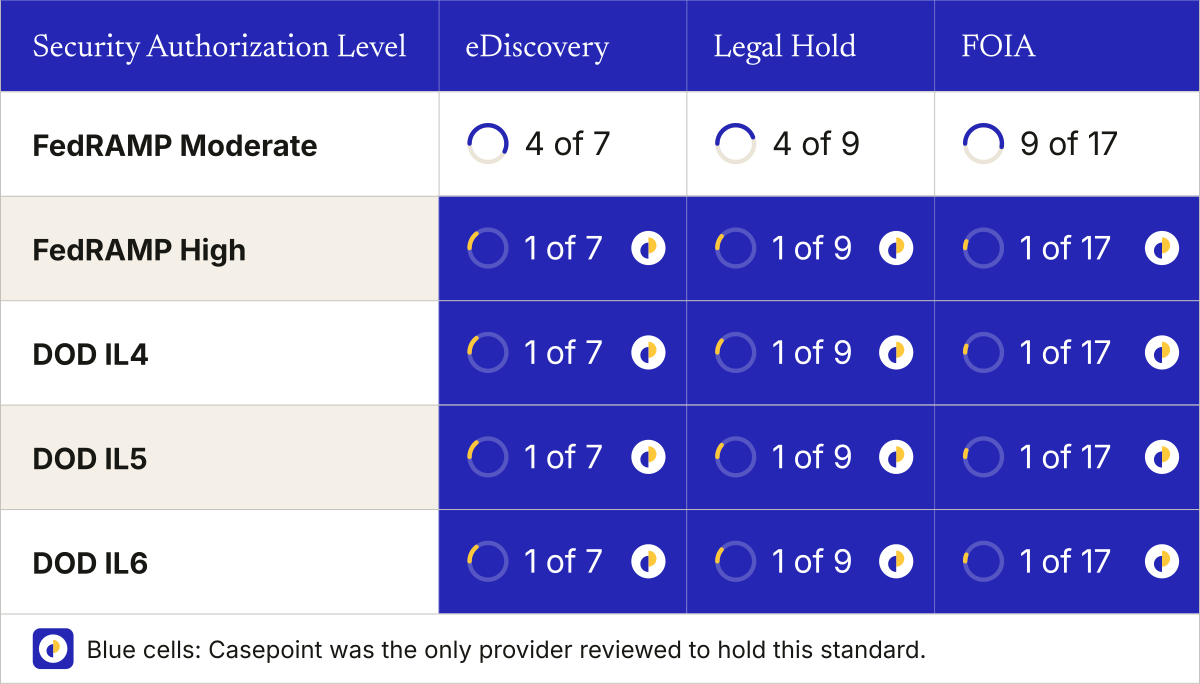
Across all three pieces of research, the same pattern emerged: many providers met common security benchmarks, but far fewer had FedRAMP or DOD authorizations. The higher the standard, the faster the field narrowed.
Fragmentation and AI Complicate Security
Separate tools introduce additional systems, permissions, data transfers, vendors, and governance models.
Fragmentation is not the answer. Even if the tool is secure — a claim that should always be treated carefully — adding it can create more risks. The challenge quickly becomes maintaining consistent protections across a technology stack.
And then there’s AI. Security is harder to evaluate when AI comes through separate point solutions layered on top of existing legal workflows. You might not know where your data is going, which permissions apply, and how AI-driven actions are governed.
Casepoint takes a different approach by keeping legal workflows and AI within the same unified environment. Legal hold, eDiscovery, investigations, FOIA, regulatory, and compliance work operate across one platform, while Casepoint IQ™ provides a shared AI foundation with common governance, permissions, auditability, and human oversight.

Author
Chief Information Officer
Sundhar Rajan is Casepoint’s Chief Information Officer where he is responsible for overseeing information technology strategy, global infrastructure, and security compliances for the company to ensure we meet our clients’ needs. He brings over 20 years of network engineering and infrastructure security experience. Prior to joining Casepoint…
Categories:


