
Corporate investigations depend on large digital record sets from email, chats, files, cloud repositories, and ESI. Those sources grow quickly, so manual review creates delay, missed context, and uneven issue coding. AI document review reduces that strain by ranking likely evidence and supporting faster review.
As teams move from collection to assessment, AI in corporate investigations connects patterns across custodians and communications. This connection improves accuracy because reviewers can see related records before decisions advance. Then compliance investigation AI helps teams verify risk signals with stronger control.
Compliance Monitoring
Compliance monitoring scans communications and data for policy violations, misuse, and misconduct signals. These findings support regulatory compliance while AI risk detection gives investigators a focused path for interviews, holds, and evidence review. The result is earlier risk visibility without uncontrolled data handling.
Early Case Assessment (ECA)
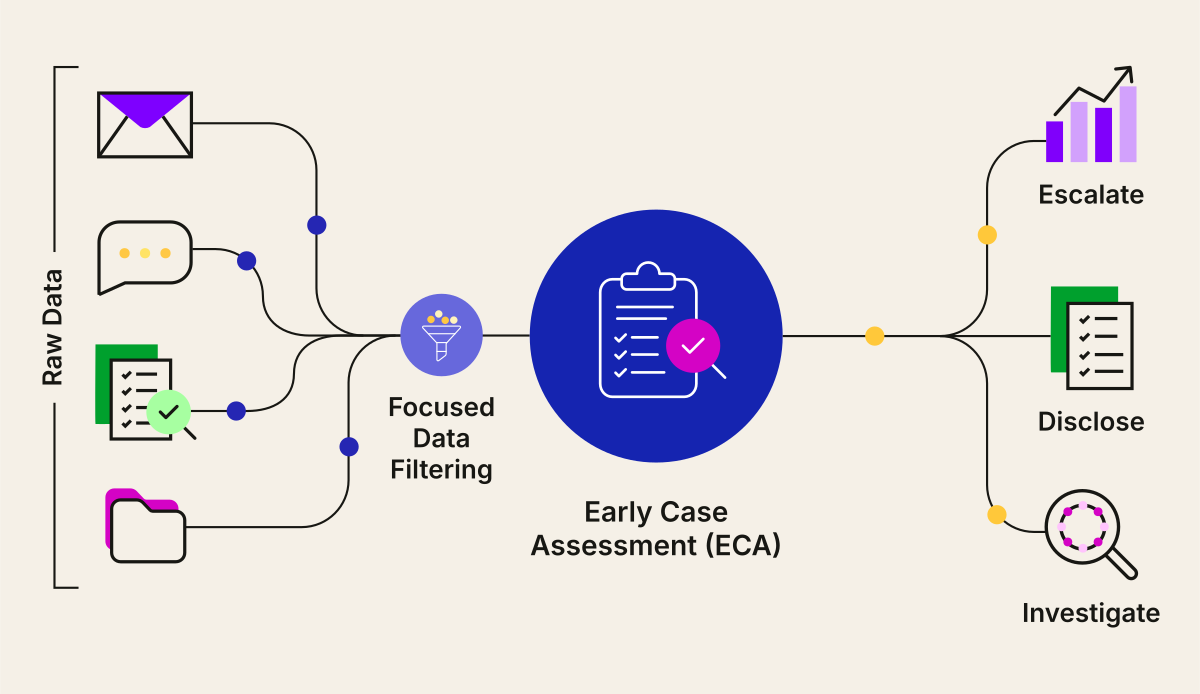
Early Case Assessment identifies key evidence before full review begins through focused data filtering. That early clarity helps teams decide whether to escalate, disclose, or investigate further. Reliable legal investigation software reduces review volume before outside counsel costs rise.
AI Search and Discovery
AI search and discovery uses natural language search to find relevant evidence faster. It reads intent, context, and wording differences across emails, chats, and files. Investigators can search misconduct or policy breaches, then corporate investigation tools connect results to custodians and timelines.
Faster Document Review
Faster review begins when AI scans emails, documents, chats, and attachments for key signals. That speed supports technology-assisted review and helps teams reduce manual sorting across evidence sets. Stronger AI document review also improves automated evidence review while attorneys retain final judgment.
Intelligent Data Analysis
Intelligent data analysis detects patterns, fraud signals, and anomalies across ESI timelines and communication records to surface fraud, insider threats, and policy violations. These findings strengthen AI risk detection because reviewers see suspicious behavior earlier. A secure AI investigation software keeps each signal tied to defensible evidence.
Automated Workflows
Automated workflows organize tagging, sorting, notifications, and legal holds through controlled task sequences. This structure connects legal hold automation with preservation and review assignment. Strong legal investigation software and compliance investigation AI save time and keep repeat investigations consistent across evidence teams.
Key Benefits Using AI in Investigations
-

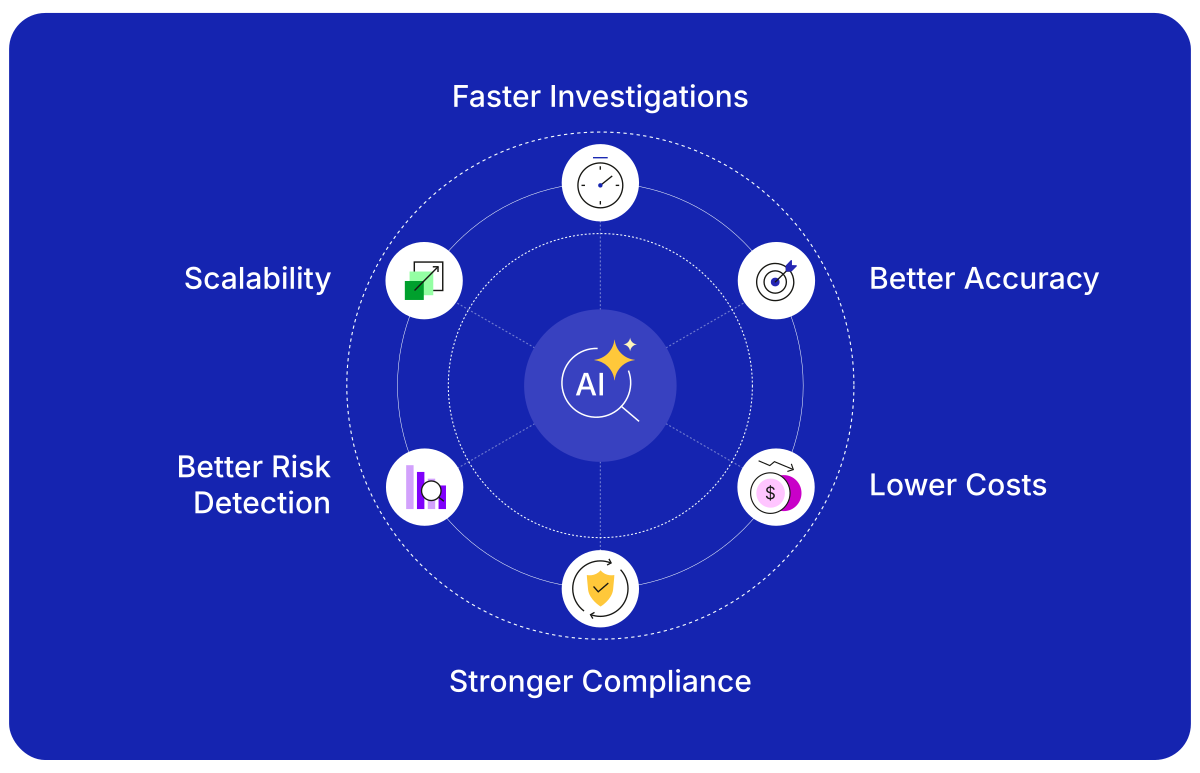
Faster Investigations
AI narrows large evidence sets quickly, so investigators reach key records earlier and reduce delays before interviews begin.
-

Better Accuracy
Pattern recognition helps reviewers catch related evidence that manual searches may miss across email, chat, and file collections.
-

Lower Costs
Reduced review volume lowers outside counsel time, hosting costs, repeated collection work, and late-stage rework.
-

Stronger Compliance
Connected audit trails help teams show how evidence was handled, reviewed, tagged, and produced under defined controls.
-

Better Risk Detection
Integrated corporate investigation tools connect signals across communications, custodians, timelines, and policy breach indicators.
-

Scalability
AI investigation software supports larger cases through AI document review and automated evidence review without adding unnecessary review layers.
Industries Using AI for Investigations
Several industries use AI because investigations now depend on digital records and rapid evidence review.
Government agencies, financial institutions, healthcare entities, and corporate legal departments need defensible tools for sensitive data. For enterprise teams, AI in corporate investigations works best when security, legal hold, and review tools stay connected.
-

Government
Government teams use AI to review FOIA records, investigations, and oversight requests with faster evidence prioritization.
-

Financial Services
Financial teams use AI to detect fraud, policy breaches, suspicious communications, and transaction patterns across large datasets.
-

Healthcare
Healthcare teams use AI to review privacy incidents, billing concerns, provider records, and regulated patient information.
-

Legal Teams
Law firms use AI to connect discovery records, custodians, timelines, and review decisions during active litigation.
-

Cybersecurity
Security teams use AI to examine insider threats, data loss, incident evidence, and unusual access patterns.
-

HR Investigations
HR teams use AI to review workplace conduct, retaliation, harassment evidence, and employee communications securely.
Casepoint supports eDiscovery, legal hold, investigations, FOIA, and compliance workflows inside one secure platform, helping legal teams reduce data silos, preserve ESI, accelerate review, and maintain defensible control across high-volume matters.
Challenges
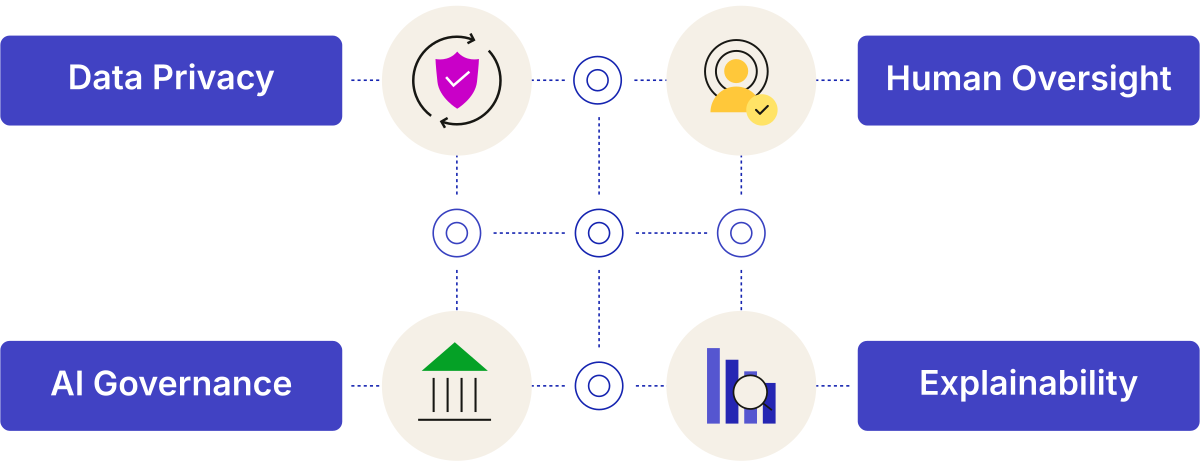
AI challenges arise when sensitive data, legal judgment, and security controls must work together. Data privacy regulations require strict handling of employee records, privileged content, and regulated information.
-

Data Privacy
Privacy controls must limit user access, protect sensitive fields, and document review activity across regulated datasets.
-

Human Oversight
Legal teams must review AI outputs before decisions affect employee records, productions, or disclosure obligations.
-

AI Governance
Governance rules should define model use, review standards, approval authority, and escalation paths for disputed outputs.
-

Explainability
Explainable results help investigators understand why records were ranked, flagged, grouped, or prioritized during review.
Together, these safeguards keep AI outputs controlled, reviewable, and tied to documented judgment. They also prevent automation from replacing legal analysis where privacy, privilege, or disclosure risk is present. This keeps investigation programs defensible while reducing avoidable disputes around AI use.
Final Thoughts
AI strengthens investigations by accelerating review, improving accuracy, and supporting compliance across large evidence sets. Those gains become more reliable when evidence handling, audit trails, and risk signals remain connected under pressure.
Human oversight still guides final decisions because privilege, intent, disclosure, and remediation require legal judgment. A secure human-in-the-loop process keeps AI useful, reviewable, and defensible throughout enterprise investigation work.
Frequently Asked Questions (FAQs)
-

How does AI help corporate investigations?
AI helps teams find relevant records, detect patterns, and prioritize evidence faster. It also supports defensible review when large ESI sets exceed manual capacity.
-

What is an AI-powered document review?
AI-powered document review is a process that uses AI analytics to sort, classify, and prioritize records. It helps teams find relevant evidence faster while attorneys control privilege, production, and final decisions.
-

How does AI improve compliance monitoring?
AI improves compliance monitoring by scanning communications, records, and activity patterns for policy violations, misuse, and suspicious behavior. These alerts help compliance teams review risks earlier and document appropriate follow-up actions.
-

Which industries use AI for investigations?
Industries that use AI for investigations include government, finance, healthcare, legal services, cybersecurity, and HR. These sectors rely on AI to review evidence, detect risks, and manage high-volume records securely.
-

What are the challenges of using AI in investigations?
AI investigation teams must protect private data, explain AI outputs, govern model use, and review decisions carefully. Clear policies help preserve defensibility and legal control during investigations.
Categories:


